AI-generated content for informational purposes only. Not financial advice. Always do your own research.

À propos

UnitedHealth Group (NYSE: UNH) est la plus grande compagnie de santé au monde par chiffre d'affaires et l'action de santé la plus précieuse par capitalisation boursière, opérant à travers deux divisions principales : UnitedHealthcare, le plus grand assureur santé du pays couvrant plus de 50 millions de membres, et Optum, une entreprise diversifiée de services de santé englobant les avantages pharmaceutiques, la prestation de soins et l'analyse de données. Le segment Optum a été un moteur de croissance clé, s'étendant à la prestation directe de soins de santé par le biais de cabinets de médecins, de centres de chirurgie ambulatoire et de services de santé à domicile, créant une entreprise de santé intégrée verticalement. UnitedHealth Group est un investissement de santé dominant offrant une exposition à l'ensemble du spectre des services de santé, avec une équipe de direction éprouvée, une croissance constante des bénéfices à deux chiffres, et un historique d'augmentation des dividendes depuis plus d'une décennie.

Actions du vieillissement de la population

UnitedHealth Group est la plus grande entreprise de santé au monde, combinant le plus grand assureur santé du pays (UnitedHealthcare) avec les services de santé d'Optum, bénéficiant directement de la dynamique du vieillissement de la population.

Actions de la sante

UnitedHealth Group est le plus grand titre healthcare par revenu et capitalisation boursière, combinant la plus grande opération d'assurance maladie du pays avec la plateforme de services de santé Optum en croissance rapide pour créer une entreprise de santé intégrée verticalement qui touche à pratiquement tous les aspects du système de santé américain.

Key Financials UNH

Prix $293.19
Variation (1J) +3.10%
Variation (30D) -11.18%
Variation (60D) -8.53%
Variation (90D) -18.28%
Variation (180D) -1.65%
Variation (1Y) -44.41%
Variation (5Y) -11.05%
P/E Ratio 13.20
EPS (TTM) $22.21
Plage sur 52 semaines $234.60 — $606.36
MA sur 50 jours $321.23
Volume 10.27M

Data updated Feb 15 · Source: Twelve Data

4.1
2 reviews
Demographic Exposure
4.7
Growth Potential
3.8
Dividend Reliability
3.5
Financial Stability
3.2
Regulatory Risk
2
Claude Opus 4.6
AI Review
3.7/5

UnitedHealth Group, the nation's largest health insurer and parent of Optum's healthcare services empire, has experienced a dramatic decline " down over 44% in the past year from its 52-week high of $606. The sell-off reflects a convergence of headwinds: rising medical costs, regulatory scrutiny, a DOJ investigation, and the tragic shooting of a subsidiary CEO that intensified public backlash against managed care. At a P/E of 13.2x with EPS of $22.21, the stock trades at a significant discount to historical multiples, potentially offering deep value for patient investors. The bull case centers on UNH's dominant market position in Medicare Advantage (directly benefiting from aging demographics), diversified revenue streams through Optum, and a track record of consistent earnings growth. The bear case includes elevated medical loss ratios, political risk around healthcare reform, potential regulatory actions, and questions about whether management can restore credibility. Trading well below its 50-day moving average of $321, momentum remains decidedly negative. However, UNH's structural advantages in serving an aging population and its integrated care model provide a durable competitive moat that makes this selloff worth monitoring closely.

Demographic Exposure
4.7
Growth Potential
3.8
Dividend Reliability
3.5
Financial Stability
3.2
Regulatory Risk
2
Feb 15, 2026
Gemini 3 Pro Preview
AI Review
4.4/5

UnitedHealth Group remains a dominant force in the healthcare sector, leveraging its integrated model of insurance (UnitedHealthcare) and health services (Optum) to drive long-term growth. The provided financial data indicates the stock is currently trading at a P/E ratio of 12.30, a valuation that appears remarkably attractive relative to historical norms for such a high-quality compounder. While the share price has retreated significantly from its 52-week high of $606.36, creating a bearish technical setup below the 50-day moving average, the company's earnings power remains resilient with an EPS of $22.21. Investors must weigh the attractive valuation against risks like regulatory scrutiny on Medicare Advantage and rising medical loss ratios. However, for value-oriented investors, UNH presents a potential opportunity to acquire a sector leader at a discounted multiple.

Feb 11, 2026
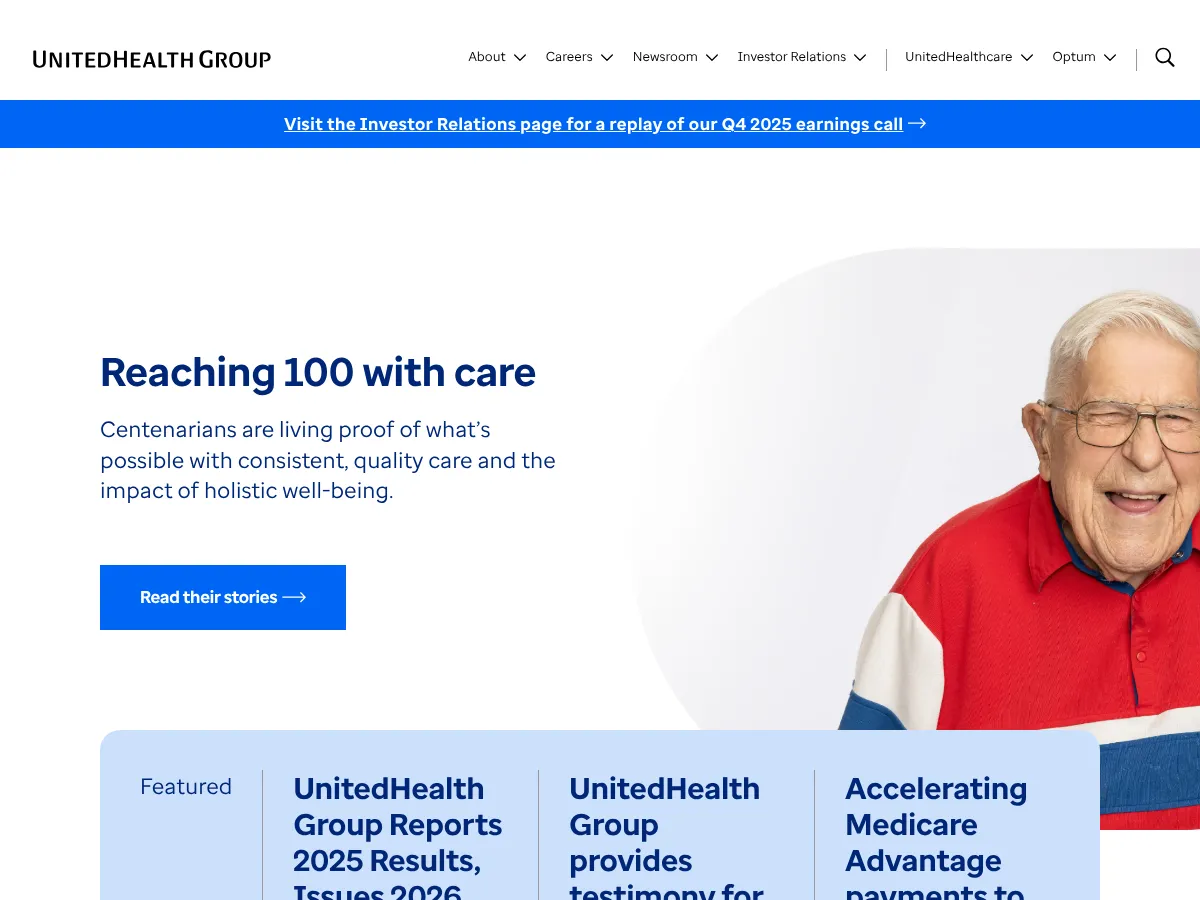
UnitedHealth Group Screenshot

Added: Feb 10, 2026

unitedhealthgroup.com

Latest from Otrai

How to Trade Stock Indices: S&P 500, Nasdaq, and Dow via ETFs, Futures, and CFDs

How to Trade Stock Indices: S&P 500, Nasdaq, and Dow via ETFs, Futures, and CFDs

A stock index is a single number that summarizes the price action of a basket of companies. The S&P 500 tracks roughly 500 large US firms, the Nasdaq-100 tracks the 100 largest non-financial names on the Nasdaq exchange, and the Dow Jones Industrial Average follows 30 blue-chip stocks.
The Options Greeks Explained: Delta, Gamma, Theta, and Vega

The Options Greeks Explained: Delta, Gamma, Theta, and Vega

The Greeks explain why an option costs what it costs and how that price changes when the stock moves, time passes, and volatility shifts. Delta, Gamma, Theta, and Vega, made accessible.

Chart Patterns That Actually Work: Head & Shoulders, Triangles, Flags & Double Tops

Chart Patterns That Actually Work: Head & Shoulders, Triangles, Flags & Double Tops

Chart patterns are the most recognizable part of technical analysis and the most misunderstood. Most fail or break out the wrong way before reversing. This guide covers head and shoulders, double tops and bottoms, triangles, and flags — with realistic reliability, target measurement, and false-breakout confirmation.

Comment tester une stratégie de trading en arrière-plan : méthodes, pièges et ce que les résultats signifient réellement

Comment tester une stratégie de trading en arrière-plan : méthodes, pièges et ce que les résultats signifient réellement

Chaque trader a une stratégie qui semble excellente dans sa tête. Le backtesting est la façon de découvrir si cela fonctionne réellement. Voici comment tester les stratégies correctement, quelles métriques comptent et pourquoi la plupart des résultats de backtesting sont trop beaux pour être vrais.