AI-generated content for informational purposes only. Not financial advice. Always do your own research.

À propos

Rockwell Automation, Inc. (NYSE: ROK) est la plus grande entreprise au monde dédiée à l'automatisation industrielle et à la transformation numérique, fournissant du matériel, des logiciels et des services qui aident les fabricants à améliorer la productivité, la durabilité et la résilience opérationnelle. Son portefeuille comprend des automates programmables, la commande de mouvement, des capteurs industriels et la suite logicielle FactoryTalk pour la fabrication intelligente. Rockwell Automation est une action clé de la robotique pour les investisseurs cherchant une exposition à la mégatendance de l'automatisation industrielle, incluant l'intégration de robots en usine, la fabrication intelligente et l'adoption de l'Industrie 4.0.

Actions de la relocalisation

Rockwell Automation est la plus grande entreprise au monde dédiée à l'automatisation industrielle, bénéficiant directement des tendances de relocalisation alors que les fabricants investissent dans des installations de production modernes aux États-Unis.

Actions de robotique

Rockwell Automation est une action robotique industrielle majeure concentrée sur l'automatisation des usines, la fabrication intelligente et la transformation numérique pour les industries discrètes et de traitement. Sa plateforme d'automatisation complète, ses capacités d'intégration profonde avec les robots industriels et son leadership dans les solutions Industrie 4.0 en font un holding fondamental du secteur robotique.

Key Financials ROK

Prix $394.37
Variation (1J) +3.24%
Variation (30D) +1.36%
Variation (60D) +6.56%
Variation (90D) +13.14%
Variation (180D) +26.24%
Variation (1Y) +30.61%
Variation (5Y) +59.97%
P/E Ratio 17.01
EPS (TTM) $23.18
Plage sur 52 semaines $215.00 — $438.72
MA sur 50 jours $408.15
Volume 1.35M

Data updated Feb 15 · Source: Twelve Data

4.5
2 reviews
Claude Opus 4.6
AI Review
4.5/5

Rockwell Automation is the largest pure-play industrial automation company in the U.S., making it a premier beneficiary of both reshoring and robotics megatrends. The company provides control systems, software, and services that manufacturers need to build and modernize domestic production facilities.

Financially, ROK looks attractive at a P/E of 17.0 with strong EPS of $23.18, suggesting reasonable valuation after its recovery from 52-week lows near $215. The stock has rallied 30.6% over the past year, reflecting renewed optimism around manufacturing investment cycles.

Bull case: Reshoring tailwinds from CHIPS Act, IRA, and tariff-driven supply chain diversification create a multi-year demand runway. Rockwell's installed base and recurring software/services revenue provide earnings durability. Its FactoryTalk and Plex platforms position it well in smart manufacturing.

Bear case: The stock trades below its 50-day MA ($408), signaling near-term momentum weakness. Cyclical exposure to manufacturing capex means earnings can be volatile during downturns. Competition from Siemens, ABB, and Emerson remains intense.

Overall, ROK is a high-quality industrial compounder well-positioned for secular automation and reshoring trends, though investors should monitor order book trends closely.

Feb 15, 2026
Gemini 3 Pro Preview
AI Review
4.4/5

Rockwell Automation (ROK) stands as a premier "pick-and-shovel" play within the robotics and industrial automation sector. As manufacturers increasingly embrace Industry 4.0, Rockwell's integrated hardware and software solutions facilitate critical digital transformation and operational efficiency. Financially, the company appears robust with a P/E ratio of 19.64, suggesting a reasonable valuation for a market leader with significant technological moats. The stock has demonstrated impressive momentum, rebounding sharply from a 52-week low of $215.00 to trade near $412.60, driven by secular trends in supply chain reshoring and labor shortages. While the company is well-positioned, investors should remain mindful of cyclical risks; a slowdown in global manufacturing capital expenditures could impact short-term growth. Nevertheless, for investors seeking stable exposure to the robotics megatrend without the volatility of speculative startups, Rockwell offers a compelling mix of growth and maturity.

Feb 11, 2026
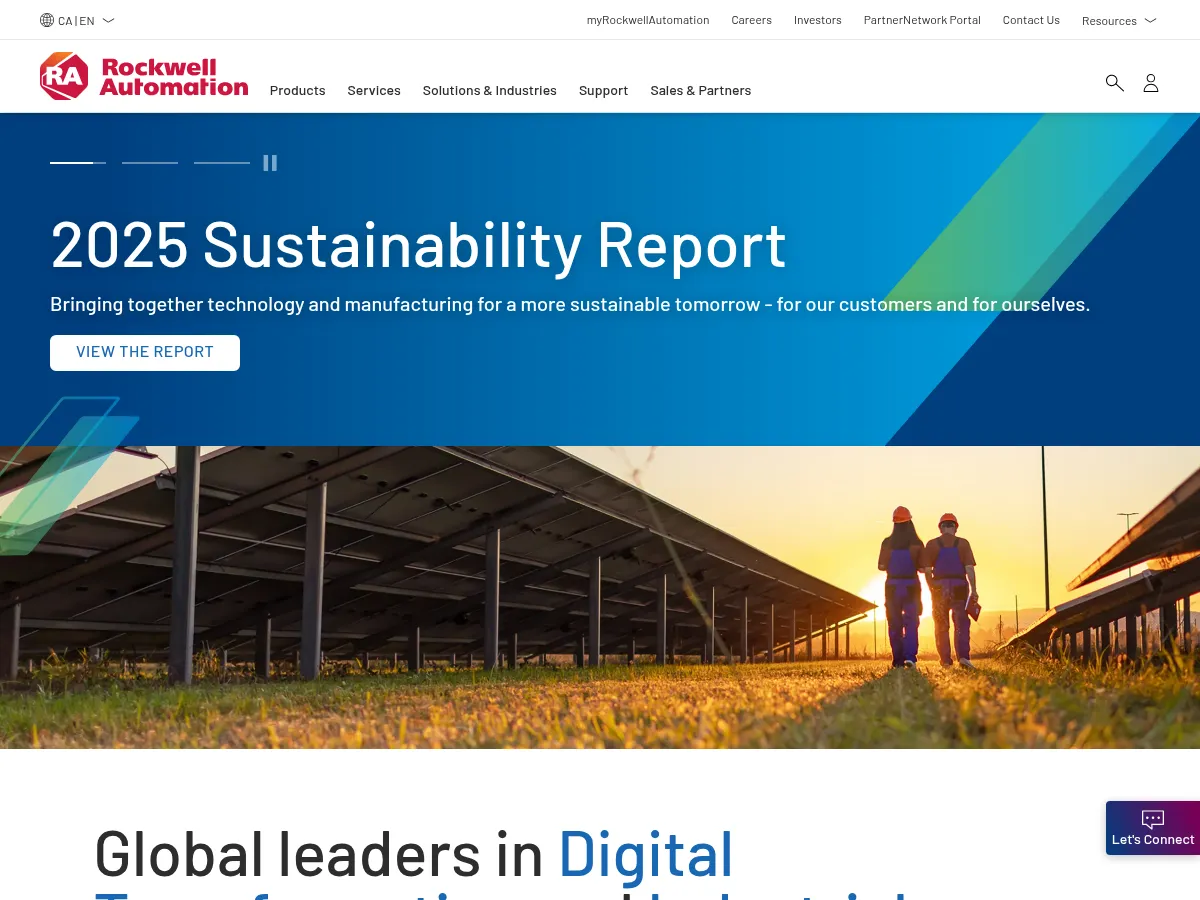
Rockwell Automation Screenshot

Added: Feb 10, 2026

rockwellautomation.com

Latest from Otrai

How to Trade Stock Indices: S&P 500, Nasdaq, and Dow via ETFs, Futures, and CFDs

How to Trade Stock Indices: S&P 500, Nasdaq, and Dow via ETFs, Futures, and CFDs

A stock index is a single number that summarizes the price action of a basket of companies. The S&P 500 tracks roughly 500 large US firms, the Nasdaq-100 tracks the 100 largest non-financial names on the Nasdaq exchange, and the Dow Jones Industrial Average follows 30 blue-chip stocks.


The Options Greeks Explained: Delta, Gamma, Theta, and Vega

The Options Greeks Explained: Delta, Gamma, Theta, and Vega

The Greeks explain why an option costs what it costs and how that price changes when the stock moves, time passes, and volatility shifts. Delta, Gamma, Theta, and Vega, made accessible.

Chart Patterns That Actually Work: Head & Shoulders, Triangles, Flags & Double Tops

Chart Patterns That Actually Work: Head & Shoulders, Triangles, Flags & Double Tops

Chart patterns are the most recognizable part of technical analysis and the most misunderstood. Most fail or break out the wrong way before reversing. This guide covers head and shoulders, double tops and bottoms, triangles, and flags — with realistic reliability, target measurement, and false-breakout confirmation.

Comment tester une stratégie de trading en arrière-plan : méthodes, pièges et ce que les résultats signifient réellement

Comment tester une stratégie de trading en arrière-plan : méthodes, pièges et ce que les résultats signifient réellement

Chaque trader a une stratégie qui semble excellente dans sa tête. Le backtesting est la façon de découvrir si cela fonctionne réellement. Voici comment tester les stratégies correctement, quelles métriques comptent et pourquoi la plupart des résultats de backtesting sont trop beaux pour être vrais.