AI-generated content for informational purposes only. Not financial advice. Always do your own research.

À propos

NuScale Power (NYSE: SMR) est une entreprise pionnière de petits réacteurs modulaires (SMR) qui a développé le premier et unique design de SMR à recevoir l'approbation de conception standard de la Commission de régulation nucléaire américaine. Le NuScale Power Module de l'entreprise est un réacteur à eau pressurisée modulaire, fabriqué en usine, conçu pour fournir une énergie flexible et sans carbone aux services publics, aux applications industrielles et aux communautés éloignées. NuScale représente un investissement à haut risque et haut rendement dans la technologie nucléaire de nouvelle génération, attirant les investisseurs qui croient que les SMR joueront un rôle critique pour répondre aux futurs besoins en énergie propre et à la demande énergétique des centres de données.

Actions nucléaires

NuScale Power est le principal développeur de réacteurs modulaires de petite taille avec le premier design SMR approuvé par la Commission de réglementation nucléaire des États-Unis, ce qui le place à l'avant-garde de la technologie nucléaire de prochaine génération. C'est un titre nucléaire qui représente un pari pur sur la commercialisation des designs de réacteurs avancés.

Key Financials SMR

Prix $14.31
Variation (1J) +2.29%
Variation (30D) +0.99%
Variation (60D) -32.05%
Variation (90D) -65.88%
Variation (180D) -59.54%
Variation (1Y) -45.80%
P/E Ratio -11.63
EPS (TTM) $-1.23
Plage sur 52 semaines $11.08 — $57.42
MA sur 50 jours $18.05
Volume 23.62M

Data updated Feb 15 · Source: Twelve Data

3.3
2 reviews
Management Quality
3.5
Valuation
3.2
Performance
3
Fundamentals
2.8
Risk Profile
2.5
Claude Opus 4.6
AI Review
3.2/5

NuScale Power is a pure-play small modular reactor (SMR) company and the first to receive NRC design approval for its SMR technology, giving it a meaningful regulatory moat. The company sits at the intersection of growing demand for clean baseload power driven by AI data centers and decarbonization goals. However, the investment case remains highly speculative. With a negative EPS of -$1.23 and P/E of -11.63, NuScale is pre-revenue and burning cash with no near-term path to profitability. The cancellation of the UAMPS Carbon Free Power Project in late 2023 was a significant setback that raised execution concerns. The stock has plummeted nearly 66% over 90 days from its speculative highs, reflecting reality catching up with hype. Bull case: first-mover advantage in SMR technology, massive addressable market, and strong policy tailwinds. Bear case: years from meaningful revenue, capital-intensive development, competition from other SMR developers, and dilution risk. Suitable only for investors with high risk tolerance and a very long time horizon.

Management Quality
3.5
Valuation
3.2
Performance
3
Fundamentals
2.8
Risk Profile
2.5
Feb 15, 2026
Gemini 3 Pro Preview
AI Review
3.4/5

NuScale Power represents a high-risk, high-reward play within the nuclear energy sector, distinguished as the first company with a U.S. Nuclear Regulatory Commission-certified SMR design. This regulatory advantage offers a significant head start in addressing the critical need for clean, reliable baseload power required by data centers and industrial decarbonization. However, the company's financial profile requires caution; with a negative EPS of -$1.23 and negative earnings, NuScale is currently burning cash without commercial profitability. The stock has endured extreme volatility, falling sharply from its 52-week high of $57.42 to under $17, reflecting investor concerns over previous project cancellations and cost economics. While the long-term thesis remains intact due to the global nuclear renaissance, SMR is currently a speculative asset dependent on successful future commercialization and execution.

Feb 11, 2026
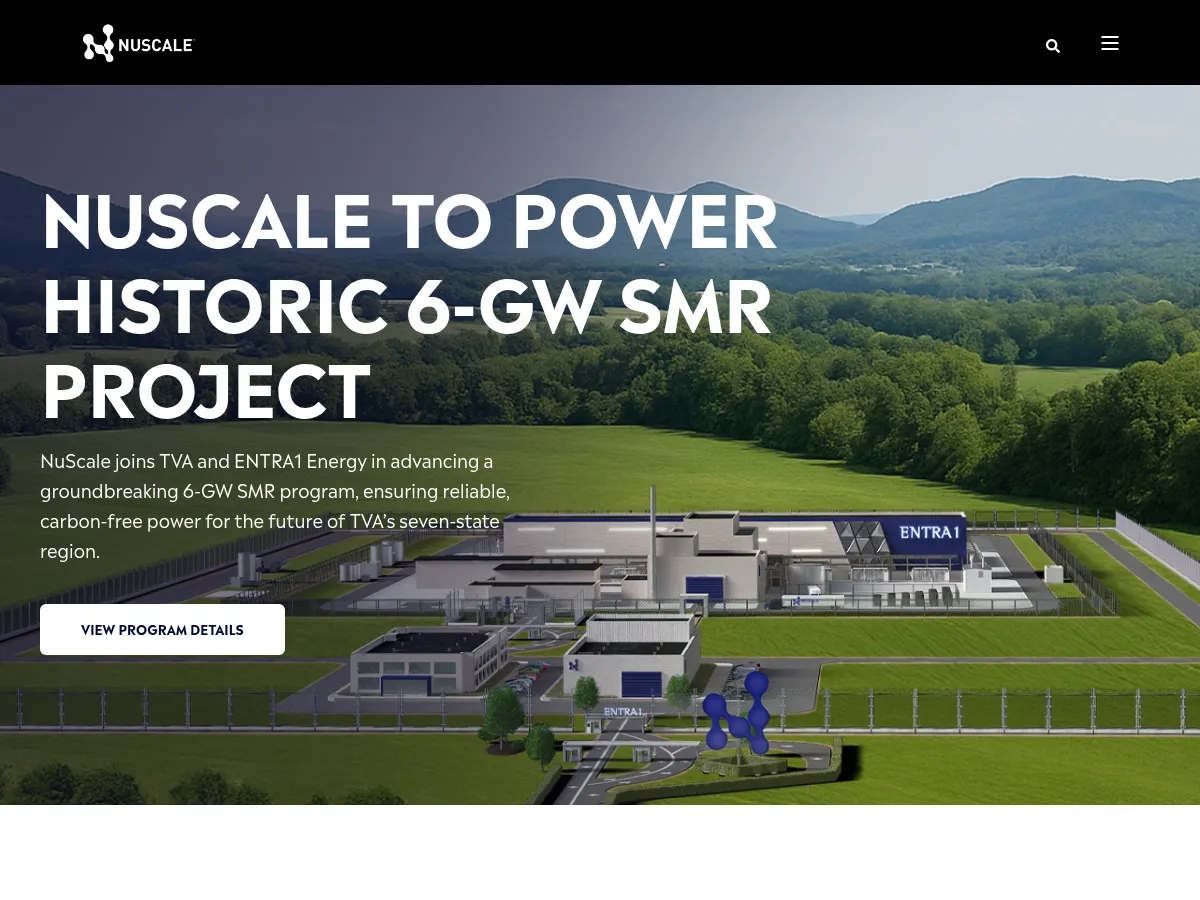
NuScale Power Screenshot

Added: Feb 10, 2026

nuscalepower.com

Latest from Otrai

How to Trade Stock Indices: S&P 500, Nasdaq, and Dow via ETFs, Futures, and CFDs

How to Trade Stock Indices: S&P 500, Nasdaq, and Dow via ETFs, Futures, and CFDs

A stock index is a single number that summarizes the price action of a basket of companies. The S&P 500 tracks roughly 500 large US firms, the Nasdaq-100 tracks the 100 largest non-financial names on the Nasdaq exchange, and the Dow Jones Industrial Average follows 30 blue-chip stocks.


The Options Greeks Explained: Delta, Gamma, Theta, and Vega

The Options Greeks Explained: Delta, Gamma, Theta, and Vega

The Greeks explain why an option costs what it costs and how that price changes when the stock moves, time passes, and volatility shifts. Delta, Gamma, Theta, and Vega, made accessible.

Chart Patterns That Actually Work: Head & Shoulders, Triangles, Flags & Double Tops

Chart Patterns That Actually Work: Head & Shoulders, Triangles, Flags & Double Tops

Chart patterns are the most recognizable part of technical analysis and the most misunderstood. Most fail or break out the wrong way before reversing. This guide covers head and shoulders, double tops and bottoms, triangles, and flags — with realistic reliability, target measurement, and false-breakout confirmation.

Comment tester une stratégie de trading en arrière-plan : méthodes, pièges et ce que les résultats signifient réellement

Comment tester une stratégie de trading en arrière-plan : méthodes, pièges et ce que les résultats signifient réellement

Chaque trader a une stratégie qui semble excellente dans sa tête. Le backtesting est la façon de découvrir si cela fonctionne réellement. Voici comment tester les stratégies correctement, quelles métriques comptent et pourquoi la plupart des résultats de backtesting sont trop beaux pour être vrais.