AI-generated content for informational purposes only. Not financial advice. Always do your own research.

Acerca de

United States Oil Fund que rastrea futuros de petróleo crudo WTI. El principal índice de referencia del petróleo estadounidense que refleja la dinámica de oferta y demanda global, decisiones de la OPEP y riesgo geopolítico.

Materias primas - Energía

USO rastrea futuros de petróleo crudo WTI, el principal índice de referencia de petróleo estadounidense, ofreciendo exposición directa a la dinámica del mercado energético impulsada por decisiones de la OPEP, geopolítica y equilibrios globales de oferta y demanda.

Market Data USO

Precio $76.22
Cambio (1D) -0.21%
Cambio (30D) +10.21%
Cambio (60D) +6.90%
Cambio (90D) +4.60%
Cambio (180D) +12.27%
Cambio (1Y) -0.13%
Cambio (5Y) +94.59%
Rango de 52 semanas $60.67 — $83.57
MA de 50 días $72.24
Volumen 6.17M

Data updated Feb 15 · Source: Twelve Data

3.6
1 reviews
Liquidity
4.2
Accessibility
3.8
Volatility
3.4
Market Fundamentals
3.4
Historical Performance
3
Claude Opus 4.6
AI Review
3.6/5

USO, the United States Oil Fund, tracks WTI crude oil futures and is the most widely traded oil ETF, though investors should note its use of front-month contracts introduces roll yield drag over time. WTI has shown solid near-term momentum, up 10.2% over 30 days and trading well above its 50-day moving average of $72.24, suggesting bullish technical positioning. However, the essentially flat one-year return (-0.13%) highlights the commodity's range-bound nature amid competing forces. On the bullish side, OPEC+ production cuts continue to provide a floor, while geopolitical tensions in the Middle East sustain a risk premium. Seasonal demand from summer driving season and refinery activity offers near-term support. Bearishly, slowing Chinese economic growth weighs on demand expectations, while resilient U.S. shale production and potential OPEC+ unwinding of cuts threaten oversupply. A stronger dollar environment and recession concerns in developed economies add headwinds. USO remains a reasonable tactical vehicle for oil exposure, but the structural contango drag makes it suboptimal for long-term buy-and-hold strategies compared to direct commodity exposure.

Liquidity
4.2
Accessibility
3.8
Volatility
3.4
Market Fundamentals
3.4
Historical Performance
3
Feb 15, 2026
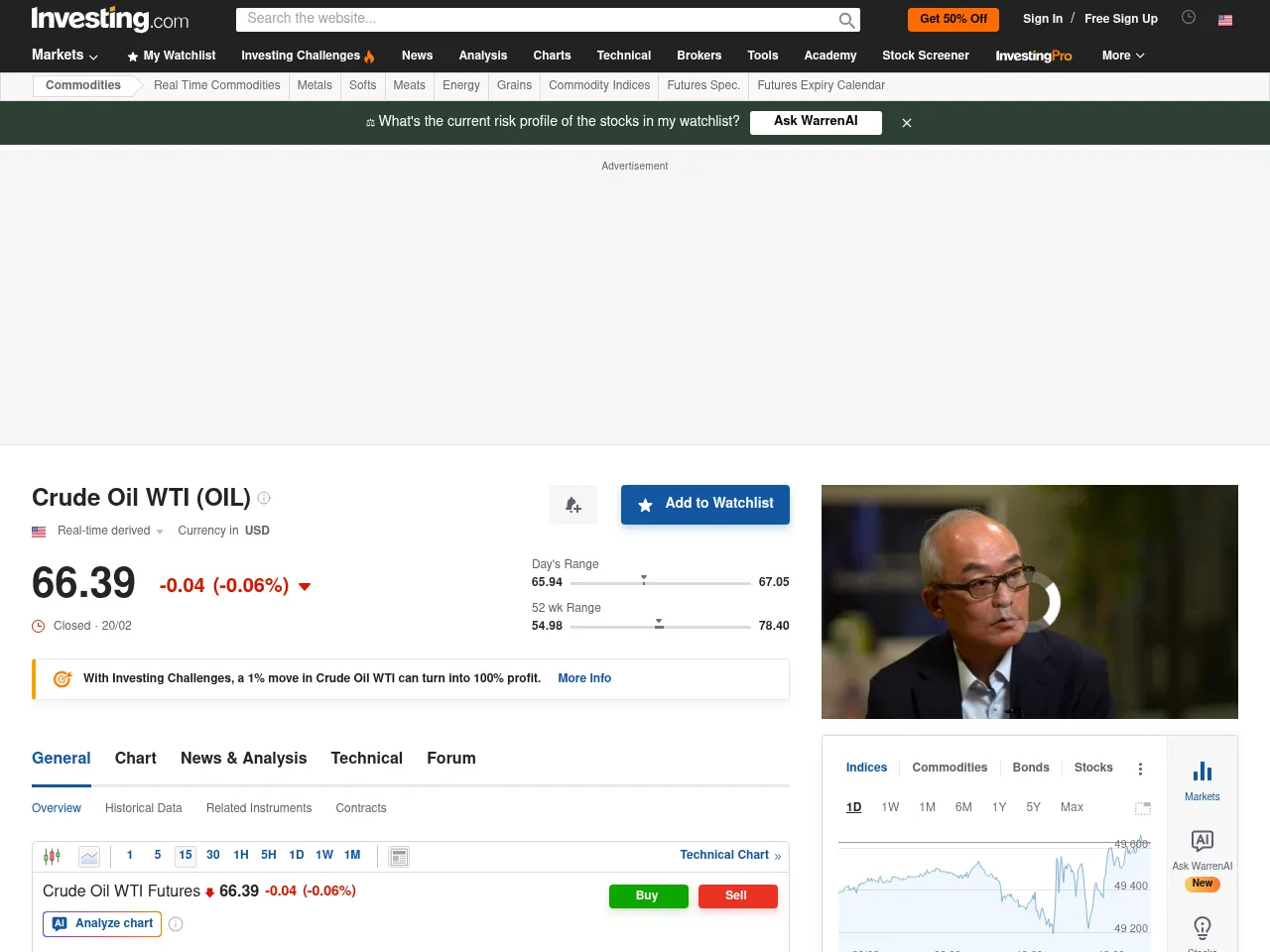
Crude Oil WTI (USO) Screenshot

Added: Feb 15, 2026

investing.com/commodities/crude-oil

Latest from Otrai

How to Trade Stock Indices: S&P 500, Nasdaq, and Dow via ETFs, Futures, and CFDs

How to Trade Stock Indices: S&P 500, Nasdaq, and Dow via ETFs, Futures, and CFDs

A stock index is a single number that summarizes the price action of a basket of companies. The S&P 500 tracks roughly 500 large US firms, the Nasdaq-100 tracks the 100 largest non-financial names on the Nasdaq exchange, and the Dow Jones Industrial Average follows 30 blue-chip stocks.


The Options Greeks Explained: Delta, Gamma, Theta, and Vega

The Options Greeks Explained: Delta, Gamma, Theta, and Vega

The Greeks explain why an option costs what it costs and how that price changes when the stock moves, time passes, and volatility shifts. Delta, Gamma, Theta, and Vega, made accessible.

Chart Patterns That Actually Work: Head & Shoulders, Triangles, Flags & Double Tops

Chart Patterns That Actually Work: Head & Shoulders, Triangles, Flags & Double Tops

Chart patterns are the most recognizable part of technical analysis and the most misunderstood. Most fail or break out the wrong way before reversing. This guide covers head and shoulders, double tops and bottoms, triangles, and flags — with realistic reliability, target measurement, and false-breakout confirmation.

Cómo hacer backtest de una estrategia de trading: métodos, errores y qué significan realmente los resultados

Cómo hacer backtest de una estrategia de trading: métodos, errores y qué significan realmente los resultados

Cada trader tiene una estrategia que se ve genial en su cabeza. El backtesting es cómo descubres si realmente funciona. Aquí hay cómo probar estrategias correctamente, qué métricas importan y por qué la mayoría de los resultados de backtest son demasiado buenos para ser verdad.