AI-generated content for informational purposes only. Not financial advice. Always do your own research.

Acerca de

Dólar estadounidense versus Rand sudafricano. Influenciado por los precios del oro, la estabilidad política y el sentimiento de los mercados emergentes.

Forex - Pares exóticos

USD/ZAR es un par de mercados emergentes influenciado por la producción de oro sudafricana, la estabilidad política y el sentimiento de riesgo más amplio de mercados emergentes.

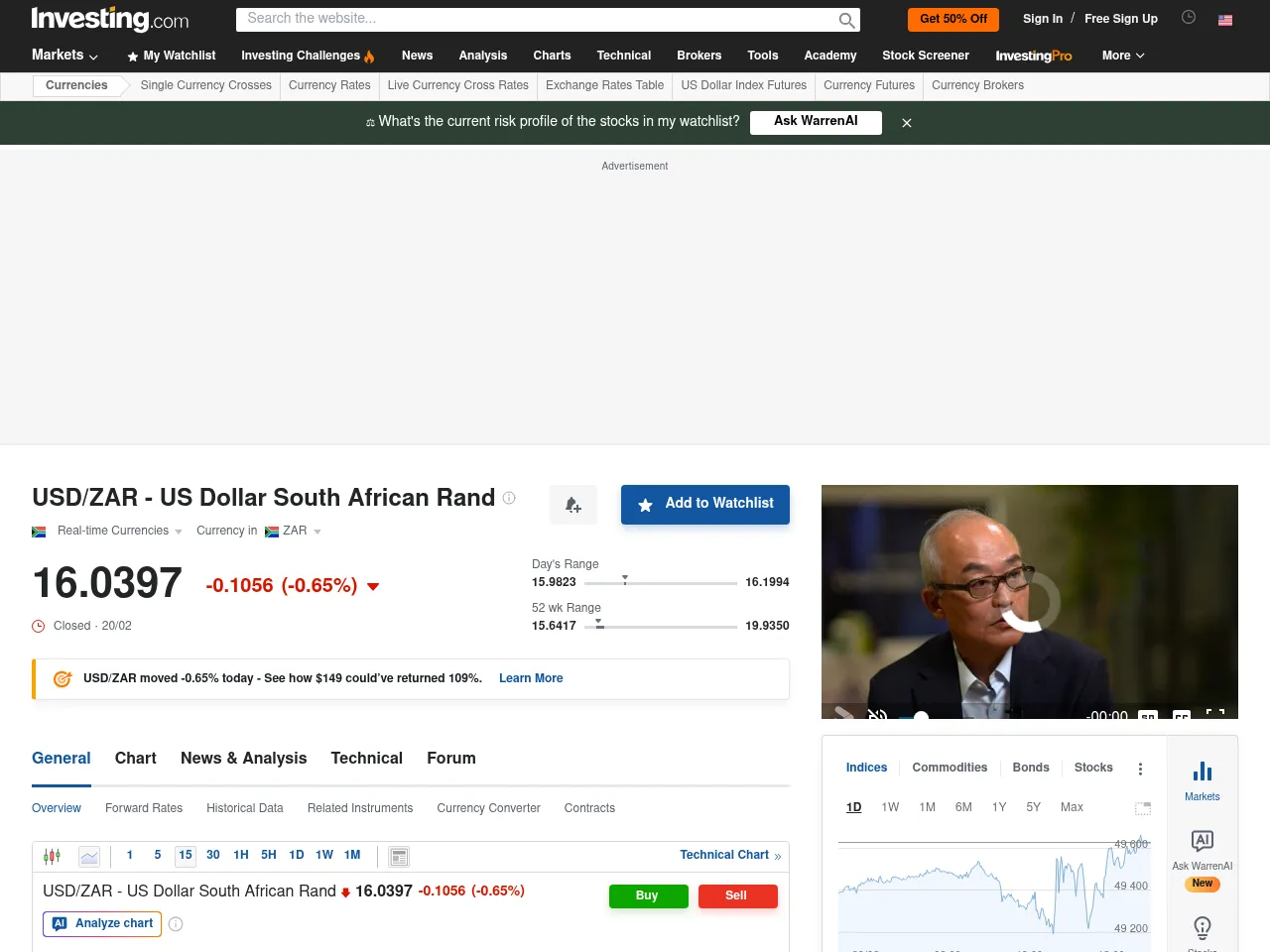
Market Data USD/ZAR

Precio 15.9500
Cambio (1D) -0.14%
Cambio (30D) -2.89%
Cambio (60D) -5.58%
Cambio (90D) -7.79%
Cambio (180D) -10.20%
Cambio (1Y) -13.96%
Cambio (5Y) +7.90%
Rango de 52 semanas 15.6400 — 19.9300
MA de 50 días 16.2500

Data updated Feb 15 · Source: Twelve Data

4.5
1 reviews
Historical Performance
4.7
Liquidity
4.6
Market Fundamentals
4.5
Volatility
4.4
Accessibility
4.3
Claude Opus 4.6
AI Review
4.5/5

USD/ZAR has experienced a pronounced downtrend, declining nearly 14% over the past year and trading near its 52-week low of 15.64. The rand's sustained strength reflects several converging factors: South Africa's relatively high interest rates maintained by the SARB, improved terms of trade from commodity exports, and a weakening US dollar amid shifting Fed rate expectations. The pair sits below its 50-day MA of 16.25, confirming bearish momentum. The multi-month decline of over 10% in six months is notable for this pair. Bullish USD/ZAR risks include South Africa's persistent load-shedding crisis, fiscal deterioration, and potential global risk-off events that typically punish EM currencies. Bearish factors (ZAR-positive) include narrowing rate differentials if the Fed cuts, continued commodity demand, and improving investor sentiment toward South African assets post-GNU coalition. The 5-year gain of 7.9% reminds traders of ZAR's long-term depreciation bias. Key support sits at 15.64; resistance near 16.25. High liquidity and volatility make this an excellent exotic pair for experienced traders seeking carry and momentum opportunities.

Historical Performance
4.7
Liquidity
4.6
Market Fundamentals
4.5
Volatility
4.4
Accessibility
4.3
Feb 15, 2026
USD/ZAR Screenshot

Added: Feb 15, 2026

investing.com/currencies/usd-zar

Latest from Otrai

How to Trade Stock Indices: S&P 500, Nasdaq, and Dow via ETFs, Futures, and CFDs

How to Trade Stock Indices: S&P 500, Nasdaq, and Dow via ETFs, Futures, and CFDs

A stock index is a single number that summarizes the price action of a basket of companies. The S&P 500 tracks roughly 500 large US firms, the Nasdaq-100 tracks the 100 largest non-financial names on the Nasdaq exchange, and the Dow Jones Industrial Average follows 30 blue-chip stocks.
The Options Greeks Explained: Delta, Gamma, Theta, and Vega

The Options Greeks Explained: Delta, Gamma, Theta, and Vega

The Greeks explain why an option costs what it costs and how that price changes when the stock moves, time passes, and volatility shifts. Delta, Gamma, Theta, and Vega, made accessible.

Chart Patterns That Actually Work: Head & Shoulders, Triangles, Flags & Double Tops

Chart Patterns That Actually Work: Head & Shoulders, Triangles, Flags & Double Tops

Chart patterns are the most recognizable part of technical analysis and the most misunderstood. Most fail or break out the wrong way before reversing. This guide covers head and shoulders, double tops and bottoms, triangles, and flags — with realistic reliability, target measurement, and false-breakout confirmation.

Cómo hacer backtest de una estrategia de trading: métodos, errores y qué significan realmente los resultados

Cómo hacer backtest de una estrategia de trading: métodos, errores y qué significan realmente los resultados

Cada trader tiene una estrategia que se ve genial en su cabeza. El backtesting es cómo descubres si realmente funciona. Aquí hay cómo probar estrategias correctamente, qué métricas importan y por qué la mayoría de los resultados de backtest son demasiado buenos para ser verdad.