AI-generated content for informational purposes only. Not financial advice. Always do your own research.

Acerca de

Dólar estadounidense versus Lira turca. Un par altamente volátil que refleja los desafíos económicos de Turquía y su política monetaria no convencional.

Forex - Pares exóticos

USD/TRY es uno de los pares forex más volátiles, reflejando los desafíos económicos de Turquía, la inflación alta y las políticas monetarias no convencionales que impulsan movimientos dramáticos de la lira.

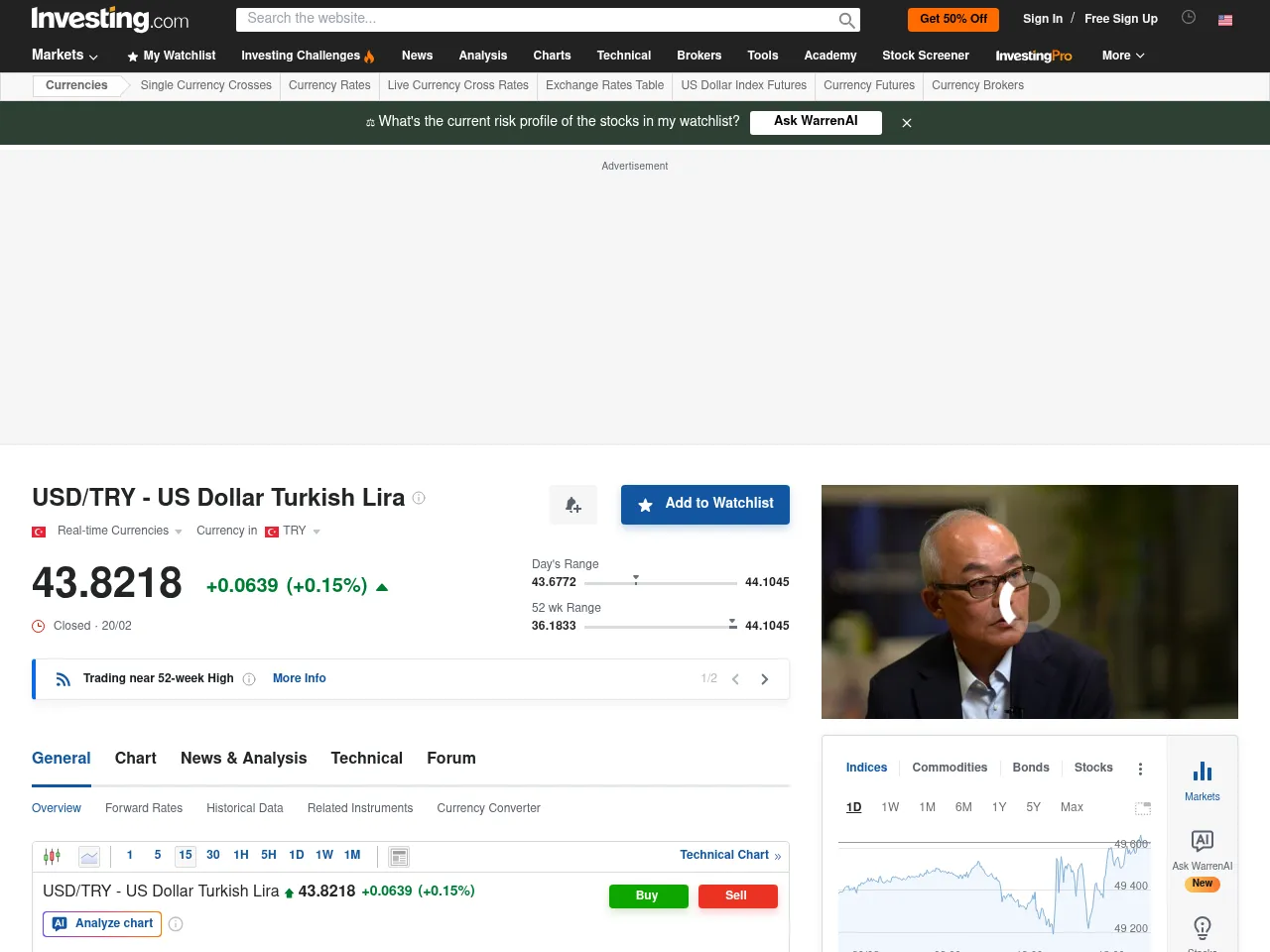
Market Data USD/TRY

Precio 43.6000
Cambio (1D) -0.06%
Cambio (30D) +0.74%
Cambio (60D) +2.10%
Cambio (90D) +3.29%
Cambio (180D) +7.89%
Cambio (1Y) +13.47%
Cambio (5Y) +405.99%
Rango de 52 semanas 36.1200 — 43.7900
MA de 50 días 43.3000

Data updated Feb 15 · Source: Twelve Data

4.6
1 reviews
Volatility
4.8
Historical Performance
4.7
Market Fundamentals
4.6
Liquidity
4.5
Accessibility
4.4
Claude Opus 4.6
AI Review
4.6/5

USD/TRY remains one of the most actively traded exotic pairs, defined by Turkey's persistent inflation challenges and the lira's structural depreciation. The pair has surged over 400% in five years, reflecting deep macroeconomic imbalances. The CBRT's shift toward orthodox monetary policy under Governor Erkan and successor Karahan"raising rates aggressively to 50%"has slowed the pace of lira depreciation but hasn't reversed it. The pair trades near its 52-week high of 43.79, with the 50-day MA at 43.30 providing near-term support. The steady 13.47% annual climb suggests a managed depreciation regime rather than free-floating dynamics. Bullish USD/TRY drivers include Turkey's still-elevated inflation (~70%+), current account deficits, and potential Fed hawkishness. Bearish risks include CBRT maintaining tight policy, improving foreign reserves, and carry trade inflows attracted by high Turkish yields. The pair offers significant carry trade opportunities but carries substantial gap and volatility risk. Traders should monitor Turkish CPI data, CBRT rate decisions, and geopolitical developments closely.

Volatility
4.8
Historical Performance
4.7
Market Fundamentals
4.6
Liquidity
4.5
Accessibility
4.4
Feb 15, 2026
USD/TRY Screenshot

Added: Feb 15, 2026

investing.com/currencies/usd-try

Latest from Otrai

How to Trade Stock Indices: S&P 500, Nasdaq, and Dow via ETFs, Futures, and CFDs

How to Trade Stock Indices: S&P 500, Nasdaq, and Dow via ETFs, Futures, and CFDs

A stock index is a single number that summarizes the price action of a basket of companies. The S&P 500 tracks roughly 500 large US firms, the Nasdaq-100 tracks the 100 largest non-financial names on the Nasdaq exchange, and the Dow Jones Industrial Average follows 30 blue-chip stocks.
The Options Greeks Explained: Delta, Gamma, Theta, and Vega

The Options Greeks Explained: Delta, Gamma, Theta, and Vega

The Greeks explain why an option costs what it costs and how that price changes when the stock moves, time passes, and volatility shifts. Delta, Gamma, Theta, and Vega, made accessible.

Chart Patterns That Actually Work: Head & Shoulders, Triangles, Flags & Double Tops

Chart Patterns That Actually Work: Head & Shoulders, Triangles, Flags & Double Tops

Chart patterns are the most recognizable part of technical analysis and the most misunderstood. Most fail or break out the wrong way before reversing. This guide covers head and shoulders, double tops and bottoms, triangles, and flags — with realistic reliability, target measurement, and false-breakout confirmation.

Cómo hacer backtest de una estrategia de trading: métodos, errores y qué significan realmente los resultados

Cómo hacer backtest de una estrategia de trading: métodos, errores y qué significan realmente los resultados

Cada trader tiene una estrategia que se ve genial en su cabeza. El backtesting es cómo descubres si realmente funciona. Aquí hay cómo probar estrategias correctamente, qué métricas importan y por qué la mayoría de los resultados de backtest son demasiado buenos para ser verdad.