AI-generated content for informational purposes only. Not financial advice. Always do your own research.

Acerca de

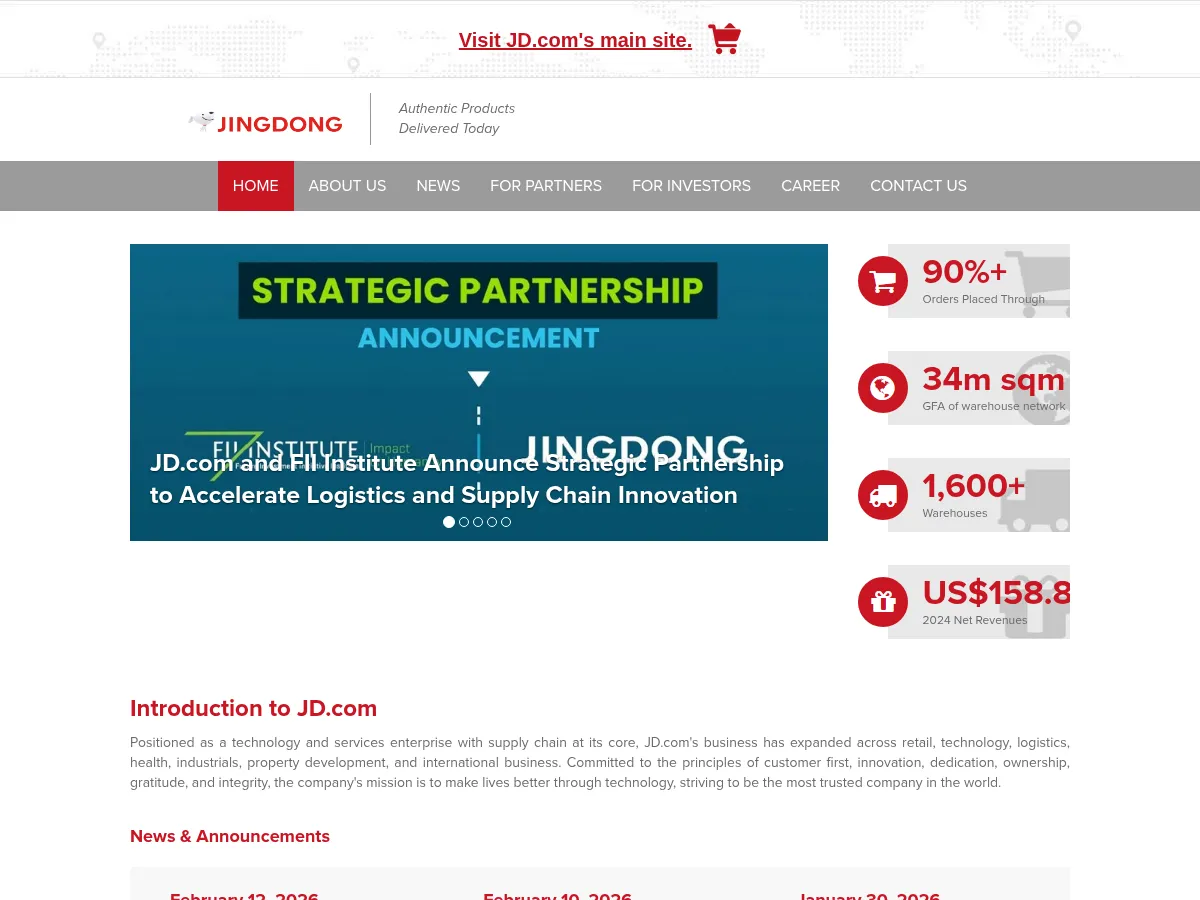
El minorista directo más grande de China, operando una red logística masiva con entrega el mismo día y al día siguiente. Conocido como el "Amazon de China" por su modelo de venta minorista de primer nivel.

Acciones ADR chinas

JD.com es el minorista directo más grande de China, conocido como el 'Amazon de China', operando una enorme red logística propia con capacidades de entrega el mismo día en todo el país.

Key Financials JD

Precio $27.14
Cambio (1D) -1.38%
Cambio (30D) -5.44%
Cambio (60D) -8.12%
Cambio (90D) -24.42%
Cambio (180D) -14.06%
Cambio (1Y) -30.96%
Cambio (5Y) -72.04%
P/E Ratio 2.60
EPS (TTM) $10.44
Rango de 52 semanas $27.02 — $46.45
MA de 50 días $29.06
Volumen 8.88M

Data updated Feb 15 · Source: Twelve Data

3.6
1 reviews
Valuation
4.2
Fundamentals
3.8
Management Quality
3.6
Performance
3.2
Risk Profile
2.8
Claude Opus 4.6
AI Review
3.6/5

JD.com presents a deeply contrarian value case with a remarkably low P/E ratio of 2.60 and strong EPS of $10.44, suggesting the market is pricing in significant structural risks. As China's largest direct retailer with robust logistics infrastructure, JD maintains a competitive moat in e-commerce fulfillment that rivals struggle to replicate.

**Bull Case:** The valuation is extraordinarily compressed " even modest earnings stability would suggest substantial upside. JD's first-party retail model offers better margin control than marketplace-only peers, and its logistics arm (Dada/JD Logistics) provides diversification. Share buybacks have been aggressive.

**Bear Case:** The stock's 72% decline over five years reflects persistent concerns: regulatory overhang from Beijing, intensifying competition from PDD Holdings and Douyin, slowing Chinese consumer spending, and ever-present ADR delisting risks. Trading near its 52-week low with negative momentum across all timeframes signals continued selling pressure.

**Bottom Line:** JD offers deep value for risk-tolerant investors willing to weather China-specific uncertainties. The disconnect between earnings power and market price is striking, but geopolitical and competitive headwinds justify a meaningful discount. Position sizing should reflect the elevated risk profile.

Valuation
4.2
Fundamentals
3.8
Management Quality
3.6
Performance
3.2
Risk Profile
2.8
Feb 15, 2026
JD.com Screenshot

Added: Feb 15, 2026

jd.com

Latest from Otrai

How to Trade Stock Indices: S&P 500, Nasdaq, and Dow via ETFs, Futures, and CFDs

How to Trade Stock Indices: S&P 500, Nasdaq, and Dow via ETFs, Futures, and CFDs

A stock index is a single number that summarizes the price action of a basket of companies. The S&P 500 tracks roughly 500 large US firms, the Nasdaq-100 tracks the 100 largest non-financial names on the Nasdaq exchange, and the Dow Jones Industrial Average follows 30 blue-chip stocks.
The Options Greeks Explained: Delta, Gamma, Theta, and Vega

The Options Greeks Explained: Delta, Gamma, Theta, and Vega

The Greeks explain why an option costs what it costs and how that price changes when the stock moves, time passes, and volatility shifts. Delta, Gamma, Theta, and Vega, made accessible.

Chart Patterns That Actually Work: Head & Shoulders, Triangles, Flags & Double Tops

Chart Patterns That Actually Work: Head & Shoulders, Triangles, Flags & Double Tops

Chart patterns are the most recognizable part of technical analysis and the most misunderstood. Most fail or break out the wrong way before reversing. This guide covers head and shoulders, double tops and bottoms, triangles, and flags — with realistic reliability, target measurement, and false-breakout confirmation.

Cómo hacer backtest de una estrategia de trading: métodos, errores y qué significan realmente los resultados

Cómo hacer backtest de una estrategia de trading: métodos, errores y qué significan realmente los resultados

Cada trader tiene una estrategia que se ve genial en su cabeza. El backtesting es cómo descubres si realmente funciona. Aquí hay cómo probar estrategias correctamente, qué métricas importan y por qué la mayoría de los resultados de backtest son demasiado buenos para ser verdad.