AI-generated content for informational purposes only. Not financial advice. Always do your own research.

Über uns

ProShares VIX Short-Term Futures ETF, das Exposure zu S&P 500 VIX-Futures bietet. Steigt bei Marktvolatilität und Unsicherheit, wird häufig als Absicherungsinstrument verwendet.

Marktindizes - USA

VIXY bildet VIX-Kurzzeit-Futures ab und bietet Exposition gegenüber S&P 500 Volatilitätserwartungen, die typischerweise während Marktbelastungen steigen und in ruhigen Perioden sinken.

Market Data VIXY

Preis $28.31
Veränderung (1T) +1.47%
Veränderung (30D) +10.41%
Veränderung (60D) -19.80%
Veränderung (90D) -11.97%
Veränderung (180D) -45.81%
Veränderung (1Y) -32.64%
Veränderung (5Y) -97.37%
52-Wochen-Spanne $24.81 — $89.14
50-Tage-Durchschnitt $26.89
Volumen 7.72M

Data updated Feb 15 · Source: Twelve Data

1.8
1 reviews
Management Quality
2.5
Valuation
2
Risk Profile
1.5
Fundamentals
1.2
Performance
1
Claude Opus 4.6
AI Review
1.8/5

VIXY tracks short-term VIX futures, providing exposure to S&P 500 implied volatility rather than functioning as a traditional market index investment. Its structural design makes it a critical tool for hedging but a deeply flawed long-term holding. The ETF suffers from persistent negative roll yield as VIX futures are typically in contango, causing relentless value erosion " evidenced by a staggering -97.37% decline over five years. The recent 10.41% monthly gain reflects short-term volatility spikes tied to trade policy uncertainty and shifting Fed rate expectations, but the -45.81% six-month decline illustrates how quickly gains evaporate. Currently trading at $28.31, well below its 52-week high of $89.14, VIXY sits modestly above its 50-day moving average, suggesting mild near-term elevated uncertainty. This instrument serves exclusively as a tactical, short-duration hedge against equity drawdowns " not a portfolio allocation. Investors must understand that holding periods beyond days or weeks virtually guarantee capital destruction. Suitable only for sophisticated traders managing specific downside risk scenarios.

Management Quality
2.5
Valuation
2
Risk Profile
1.5
Fundamentals
1.2
Performance
1
Feb 15, 2026
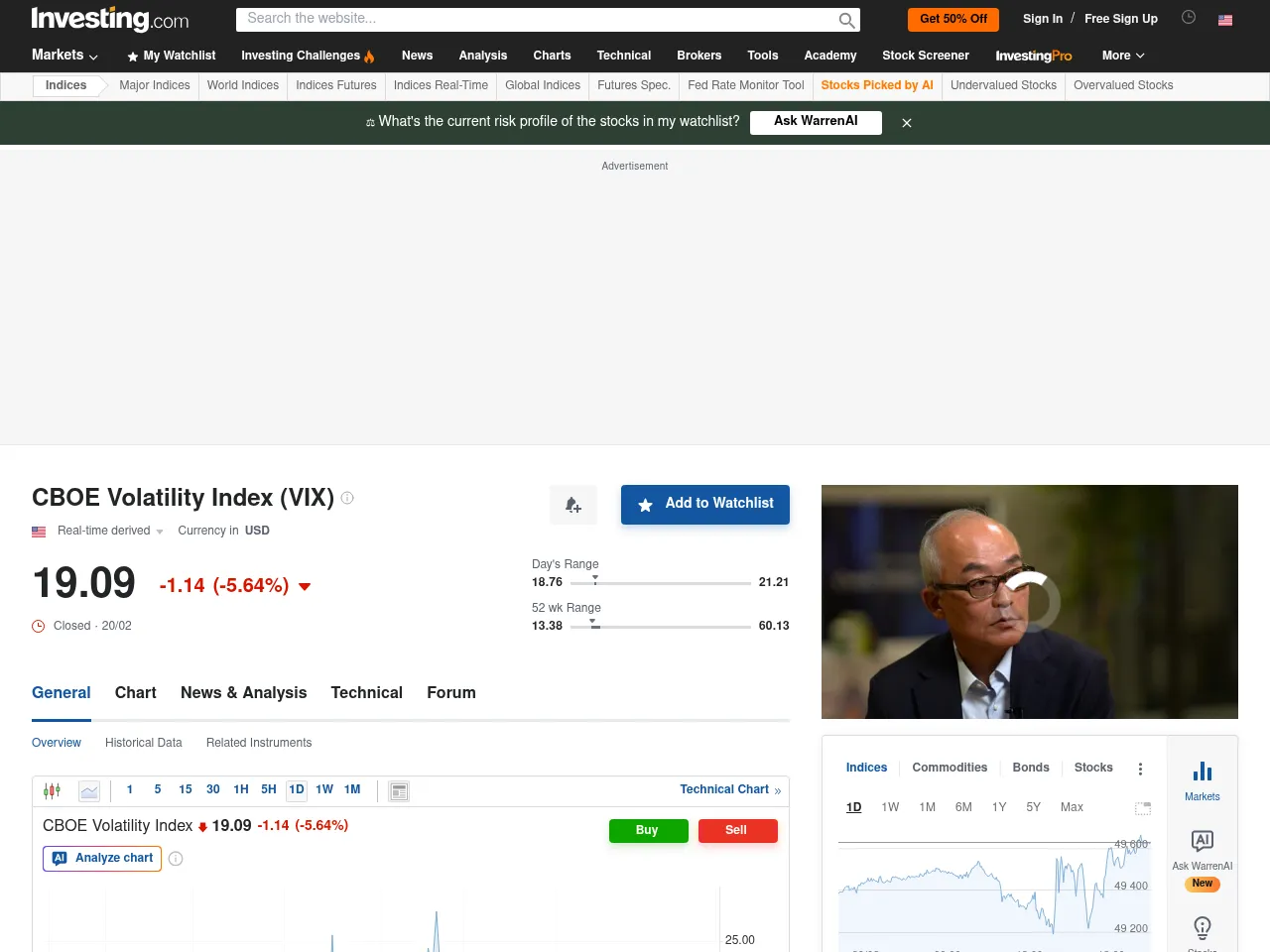
VIX Short-Term Futures (VIXY) Screenshot

Added: Feb 15, 2026

investing.com/indices/volatility-s-p-500

Latest from Otrai

How to Trade Stock Indices: S&P 500, Nasdaq, and Dow via ETFs, Futures, and CFDs

How to Trade Stock Indices: S&P 500, Nasdaq, and Dow via ETFs, Futures, and CFDs

A stock index is a single number that summarizes the price action of a basket of companies. The S&P 500 tracks roughly 500 large US firms, the Nasdaq-100 tracks the 100 largest non-financial names on the Nasdaq exchange, and the Dow Jones Industrial Average follows 30 blue-chip stocks.


The Options Greeks Explained: Delta, Gamma, Theta, and Vega

The Options Greeks Explained: Delta, Gamma, Theta, and Vega

The Greeks explain why an option costs what it costs and how that price changes when the stock moves, time passes, and volatility shifts. Delta, Gamma, Theta, and Vega, made accessible.

Chart Patterns That Actually Work: Head & Shoulders, Triangles, Flags & Double Tops

Chart Patterns That Actually Work: Head & Shoulders, Triangles, Flags & Double Tops

Chart patterns are the most recognizable part of technical analysis and the most misunderstood. Most fail or break out the wrong way before reversing. This guide covers head and shoulders, double tops and bottoms, triangles, and flags — with realistic reliability, target measurement, and false-breakout confirmation.

So backtesten Sie eine Handelsstrategie: Methoden, Fallstricke und was die Ergebnisse tatsächlich bedeuten

So backtesten Sie eine Handelsstrategie: Methoden, Fallstricke und was die Ergebnisse tatsächlich bedeuten

Jeder Trader hat eine Strategie, die in seinem Kopf großartig aussieht. Backtesting ist die Art herauszufinden, ob sie tatsächlich funktioniert. Hier erfahren Sie, wie Sie Strategien richtig testen, welche Kennzahlen wichtig sind und warum die meisten Backtest-Ergebnisse zu gut sind, um wahr zu sein.