AI-generated content for informational purposes only. Not financial advice. Always do your own research.

Über uns

Führender Anbieter von Umwelt- und Industriedienstleistungen, einschließlich Entsorgung gefährlicher Abfälle, Notfalleinsätze und Industriereinigung in Nordamerika.

Abfall- und Recycling-Aktien

Clean Harbors ist der führende US-amerikanische Anbieter von Umwelt- und Gefahrenstoffentsorgungsdiensten und besetzt eine verteidigbare Nische in der regulierten Abfallwirtschaft und Notfallreaktion.

4.3
1 reviews
Management Quality
4.4
Fundamentals
4.4
Performance
4.4
Risk Profile
3.8
Valuation
3.8
Claude Opus 4.6
AI Review
4.3/5

Clean Harbors is North America's leading provider of environmental and industrial services, specializing in hazardous waste management, emergency response, and environmental cleanup. The company occupies a strong competitive moat due to high regulatory barriers to entry"operating permitted hazardous waste incinerators and treatment facilities that are extremely difficult to replicate. Its Safety-Kleen subsidiary adds a valuable used oil re-refining and parts-cleaning business, creating a circular economy model.

Bull case: Increasing environmental regulations, PFAS cleanup demand, and infrastructure spending create durable tailwinds. Clean Harbors has demonstrated consistent revenue growth and margin expansion, with management executing well on pricing power and operational efficiency. The company benefits from essential, non-discretionary services that provide recession resilience.

Bear case: The stock often trades at a premium valuation relative to traditional waste peers. Capital intensity is high, and any regulatory relaxation could reduce demand. Exposure to industrial and energy end markets introduces cyclicality, and acquisition-driven growth carries integration risk.

Overall, Clean Harbors represents a high-quality environmental services franchise with strong secular tailwinds, though investors should be mindful of valuation entry points.

Performance
4.4
Fundamentals
4.4
Management Quality
4.4
Risk Profile
3.8
Valuation
3.8
Feb 15, 2026
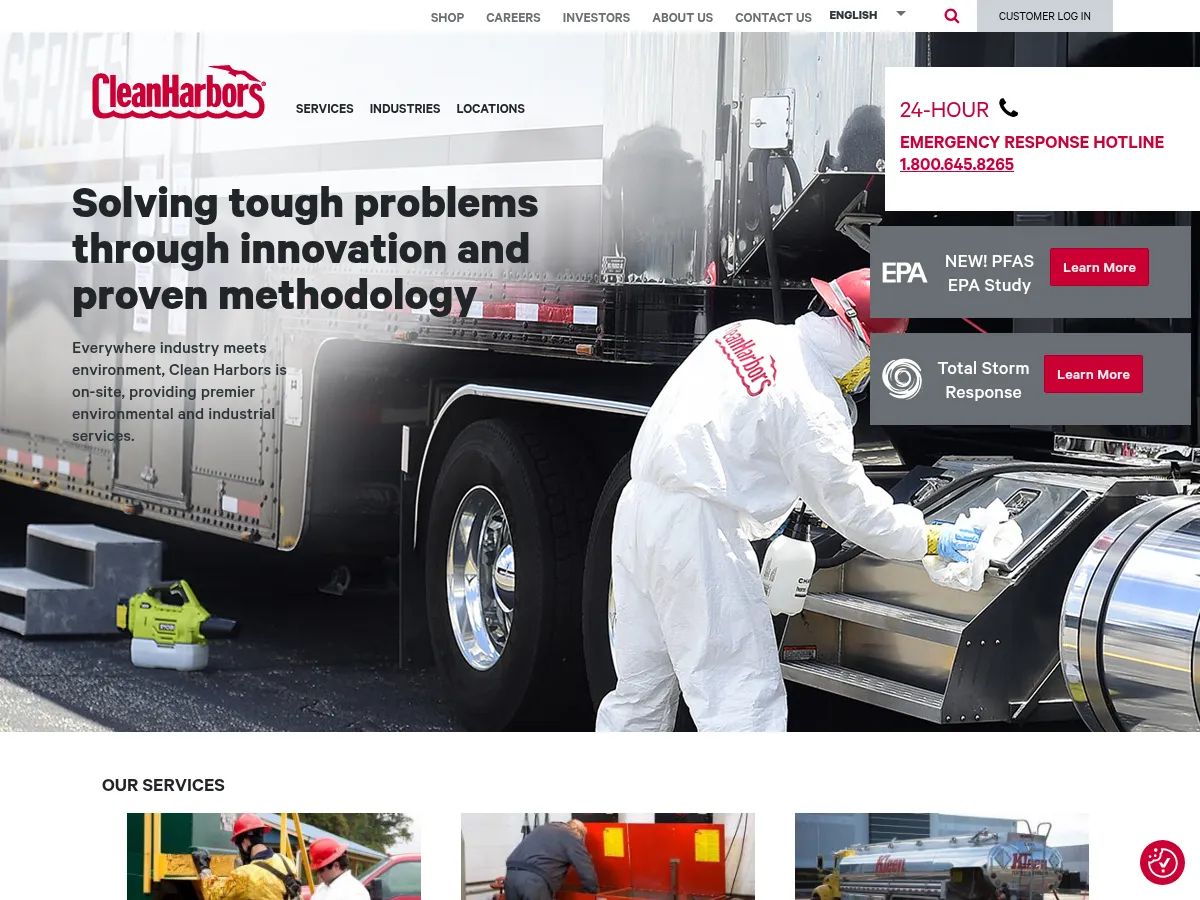
Clean Harbors Screenshot

Added: Feb 15, 2026

cleanharbors.com

Latest from Otrai

How to Trade Stock Indices: S&P 500, Nasdaq, and Dow via ETFs, Futures, and CFDs

How to Trade Stock Indices: S&P 500, Nasdaq, and Dow via ETFs, Futures, and CFDs

A stock index is a single number that summarizes the price action of a basket of companies. The S&P 500 tracks roughly 500 large US firms, the Nasdaq-100 tracks the 100 largest non-financial names on the Nasdaq exchange, and the Dow Jones Industrial Average follows 30 blue-chip stocks.
The Options Greeks Explained: Delta, Gamma, Theta, and Vega

The Options Greeks Explained: Delta, Gamma, Theta, and Vega

The Greeks explain why an option costs what it costs and how that price changes when the stock moves, time passes, and volatility shifts. Delta, Gamma, Theta, and Vega, made accessible.

Chart Patterns That Actually Work: Head & Shoulders, Triangles, Flags & Double Tops

Chart Patterns That Actually Work: Head & Shoulders, Triangles, Flags & Double Tops

Chart patterns are the most recognizable part of technical analysis and the most misunderstood. Most fail or break out the wrong way before reversing. This guide covers head and shoulders, double tops and bottoms, triangles, and flags — with realistic reliability, target measurement, and false-breakout confirmation.

So backtesten Sie eine Handelsstrategie: Methoden, Fallstricke und was die Ergebnisse tatsächlich bedeuten

So backtesten Sie eine Handelsstrategie: Methoden, Fallstricke und was die Ergebnisse tatsächlich bedeuten

Jeder Trader hat eine Strategie, die in seinem Kopf großartig aussieht. Backtesting ist die Art herauszufinden, ob sie tatsächlich funktioniert. Hier erfahren Sie, wie Sie Strategien richtig testen, welche Kennzahlen wichtig sind und warum die meisten Backtest-Ergebnisse zu gut sind, um wahr zu sein.