AI-generated content for informational purposes only. Not financial advice. Always do your own research.

Über uns

Weltgrößter Anbieter von Datencenter- und Colocation-Services, betreibt über 260 Datenzentren in mehr als 70 Ballungsräumen auf sechs Kontinenten. Kritische Infrastruktur für Cloud Computing und digitale Transformation.

KI-Infrastrukturaktien

Equinix betreibt das weltgrößte Netzwerk von über 260 Rechenzentren auf sechs Kontinenten und bietet wesentliche Interconnection- und Colocation-Infrastruktur für KI- und Cloud-Computing-Workloads.

Rechenzentrumsaktien

Equinix ist der weltweit größte Anbieter von Rechenzentren und Colocation-Diensten mit über 260 Einrichtungen weltweit und dient als kritische digitale Infrastruktur für Cloud- und KI-Implementierungen in Unternehmen.

Key Financials EQIX

Preis $956.19
Veränderung (1T) -0.18%
Veränderung (30D) +24.80%
Veränderung (60D) +23.08%
Veränderung (90D) +21.06%
Veränderung (180D) +8.58%
Veränderung (1Y) +2.24%
Veränderung (5Y) +27.41%
KGV 89.11
EPS (TTM) $10.73
52-Wochen-Spanne $701.41 — $992.90
50-Tage-Durchschnitt $790.21
Volumen 1.06M

Data updated Feb 15 · Source: Twelve Data

4.5
1 reviews
Market Share Position
5
Future Pipeline
4.8
Revenue Growth
4
Profit Margins
3.5
R&D Investment
3.5
Claude Opus 4.6
AI Review
4.5/5

Equinix is the world's largest data center REIT, operating 260+ facilities across 70+ metros globally. Its interconnection-rich colocation model creates powerful network effects and high switching costs, forming a durable competitive moat. The company is a direct beneficiary of AI infrastructure buildout, as hyperscalers and enterprises expand their digital footprints.

The stock has surged ~25% over the past 30 days, now trading near its 52-week high and well above its 50-day MA ($790), suggesting strong momentum but potential near-term overextension. The P/E of 89x appears elevated, though REIT investors should focus on AFFO multiples, which are more reasonable but still premium. EPS of $10.73 reflects heavy depreciation typical of the asset-heavy model.

Bull case: Secular demand from AI, cloud, and hybrid IT deployments; recurring revenue model with 95%+ retention rates; global scale is nearly impossible to replicate. Bear case: High valuation leaves little margin for error; rising interest rates pressure REIT valuations; capital-intensive expansion could strain returns if demand softens. Equinix remains a cornerstone data center holding, though entry at current levels requires patience.

Market Share Position
5
Future Pipeline
4.8
Revenue Growth
4
R&D Investment
3.5
Profit Margins
3.5
Feb 15, 2026
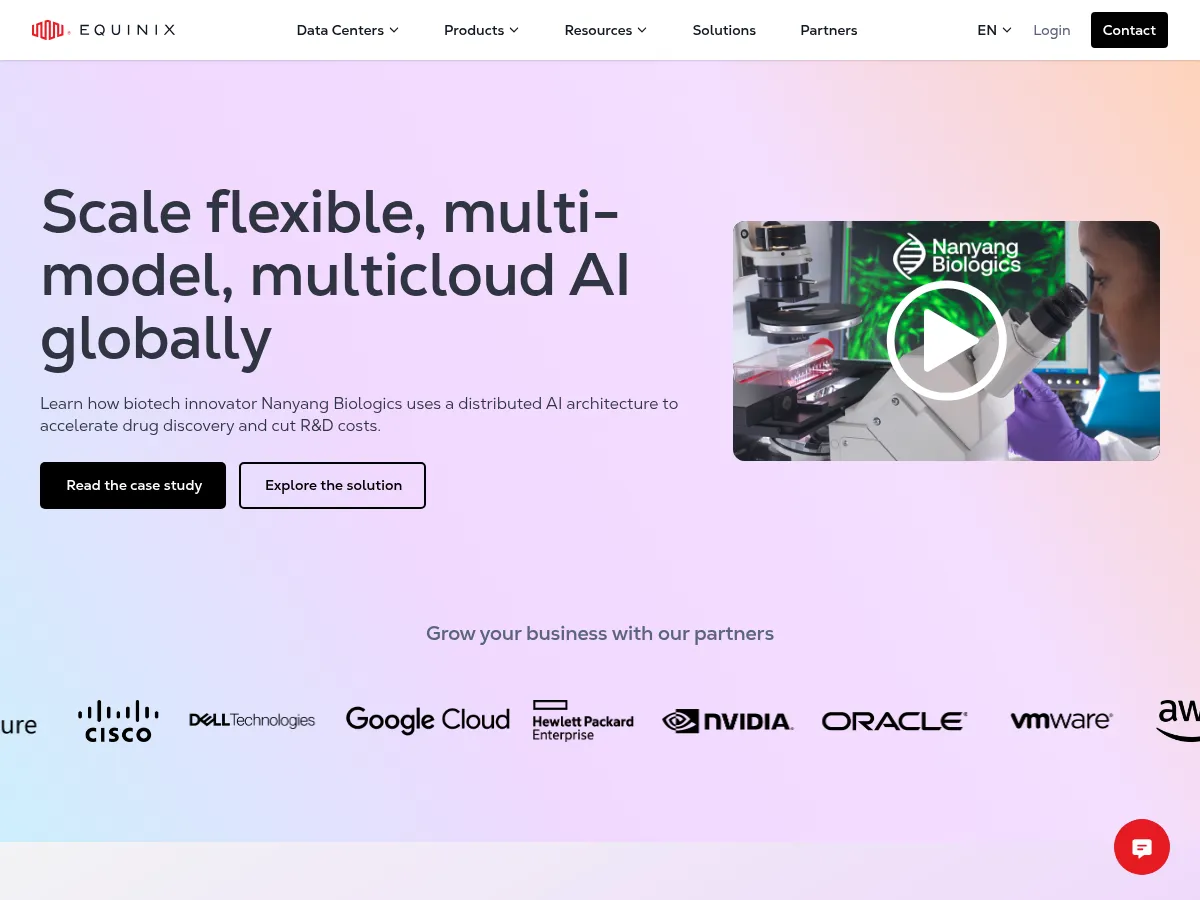
Equinix Screenshot

Added: Feb 15, 2026

equinix.com

Latest from Otrai

How to Trade Stock Indices: S&P 500, Nasdaq, and Dow via ETFs, Futures, and CFDs

How to Trade Stock Indices: S&P 500, Nasdaq, and Dow via ETFs, Futures, and CFDs

A stock index is a single number that summarizes the price action of a basket of companies. The S&P 500 tracks roughly 500 large US firms, the Nasdaq-100 tracks the 100 largest non-financial names on the Nasdaq exchange, and the Dow Jones Industrial Average follows 30 blue-chip stocks.
The Options Greeks Explained: Delta, Gamma, Theta, and Vega

The Options Greeks Explained: Delta, Gamma, Theta, and Vega

The Greeks explain why an option costs what it costs and how that price changes when the stock moves, time passes, and volatility shifts. Delta, Gamma, Theta, and Vega, made accessible.

Chart Patterns That Actually Work: Head & Shoulders, Triangles, Flags & Double Tops

Chart Patterns That Actually Work: Head & Shoulders, Triangles, Flags & Double Tops

Chart patterns are the most recognizable part of technical analysis and the most misunderstood. Most fail or break out the wrong way before reversing. This guide covers head and shoulders, double tops and bottoms, triangles, and flags — with realistic reliability, target measurement, and false-breakout confirmation.

So backtesten Sie eine Handelsstrategie: Methoden, Fallstricke und was die Ergebnisse tatsächlich bedeuten

So backtesten Sie eine Handelsstrategie: Methoden, Fallstricke und was die Ergebnisse tatsächlich bedeuten

Jeder Trader hat eine Strategie, die in seinem Kopf großartig aussieht. Backtesting ist die Art herauszufinden, ob sie tatsächlich funktioniert. Hier erfahren Sie, wie Sie Strategien richtig testen, welche Kennzahlen wichtig sind und warum die meisten Backtest-Ergebnisse zu gut sind, um wahr zu sein.