AI-generated content for informational purposes only. Not financial advice. Always do your own research.

Über uns

Tractor Supply Company ist der größte Einzelhändler für ländlichen Lifestyle in den Vereinigten Staaten und versorgt Freizeitbauern, Rancher und ländliche Hausbesitzer mit Tierfutter, Haustierbedarf, Werkzeugen, Zaunmaterial und Outdoor-Ausrüstung. Das Unternehmen nimmt eine einzigartige Einzelhandelsnische ein mit begrenztem direktem Wettbewerb von großen Box-Einzelhändlern und E-Commerce, was ihm dauerhafte Preissetzungsmacht und Kundenloyalität verleiht. Growth- und Qualitätsinvestoren schätzen Tractor Supply für sein konsistentes same-store sales Wachstum, die wachsende Filialzahl und die defensive ländliche Kundenbasis.

Dividend Stocks

Tractor Supply hat seine Dividende über mehr als ein Jahrzehnt erhöht und strebt eine wachsende Ausschüttungsquote an, unterstützt durch die vorhersehbare Nachfrage nach wesentlichen Produkten für den ländlichen Lebensstil, die Kunden unabhängig von der wirtschaftlichen Situation kaufen.

Growth Stocks

Tractor Supply hat Jahre konstanten zweistelligen Gewinnwachstums geliefert, angetrieben durch neue Filialeröffnungen, erweiterte Produktsortimente und ein wachsendes Loyalitätsprogramm, das Kundenbeziehungen und Marktanteile vertieft.

Einzelhandelsaktien

Tractor Supply ist der führende Einzelhändler für ländliche Amerika und verkauft alles von Tierfutter und Zaunmaterial bis zu Elektrowerkzeugen und Outdoor-Kleidung durch ein Netz von über 2.200 Filialen mit praktisch keiner direkten Konkurrenz in seinem Segment.

Key Financials TSCO

Preis $55.03
Veränderung (1T) +1.14%
Veränderung (30D) +10.04%
Veränderung (60D) +2.51%
Veränderung (90D) +0.62%
Veränderung (180D) +12.17%
Veränderung (1Y) -1.50%
Veränderung (5Y) +73.60%
KGV 12.80
EPS (TTM) $4.30
52-Wochen-Spanne $46.85 — $63.99
50-Tage-Durchschnitt $52.56
Volumen 4.38M

Data updated Feb 15 · Source: Twelve Data

4.0
2 reviews
Financial Stability
4.2
Dividend Growth
3.8
Sector Performance
3.5
Payout Ratio
3.5
Dividend Yield
2.5
Claude Opus 4.6
AI Review
3.7/5

Tractor Supply is the largest rural lifestyle retail chain in the U.S., serving a loyal customer base of farmers, ranchers, and rural homeowners. This niche positioning provides a meaningful competitive moat, as big-box retailers struggle to replicate its specialized product mix and knowledgeable service.

The stock trades at a P/E of 12.8, which appears attractively valued relative to its historical averages and retail peers. The 73.6% five-year return demonstrates solid long-term wealth creation, though the flat one-year performance (-1.5%) suggests recent headwinds, likely from consumer spending normalization post-pandemic and weather-related demand variability.

TSCO maintains a consistent dividend growth track record, though its yield remains modest. The company's strong free cash flow generation supports both dividends and share buybacks. Current price sits above its 50-day moving average ($52.56), signaling positive near-term momentum.

Bull case: Resilient rural consumer, store expansion runway, and defensive characteristics. Bear case: Discretionary spending sensitivity, weather dependency, and potential margin compression from inflation. Overall, a high-quality retail compounder at a reasonable valuation.

Financial Stability
4.2
Dividend Growth
3.8
Payout Ratio
3.5
Sector Performance
3.5
Dividend Yield
2.5
Feb 15, 2026
Gemini 3 Pro Preview
AI Review
4.3/5

Tractor Supply Company (TSCO) stands out as a best-in-class operator within the niche rural lifestyle market. Trading at a P/E ratio of 12.68 based on the provided data, the stock appears attractively valued compared to its historical premiums, offering a compelling entry point into a highly resilient business model. Unlike generalist retailers, TSCO benefits from a wide economic moat built on recurring sales of consumables like livestock feed and pet supplies, which insulates it somewhat from e-commerce competition.

The company's strategic initiatives, including store remodeling and loyalty program expansion, continue to support a strong growth narrative. However, investors should remain mindful of risks, including weather dependency which impacts seasonal sales, and potential margin pressure from supply chain costs. Currently trading above its 50-day moving average of $52.51, TSCO offers a robust mix of capital appreciation potential and dividend reliability, making it a top-tier selection in the retail sector.

Feb 12, 2026
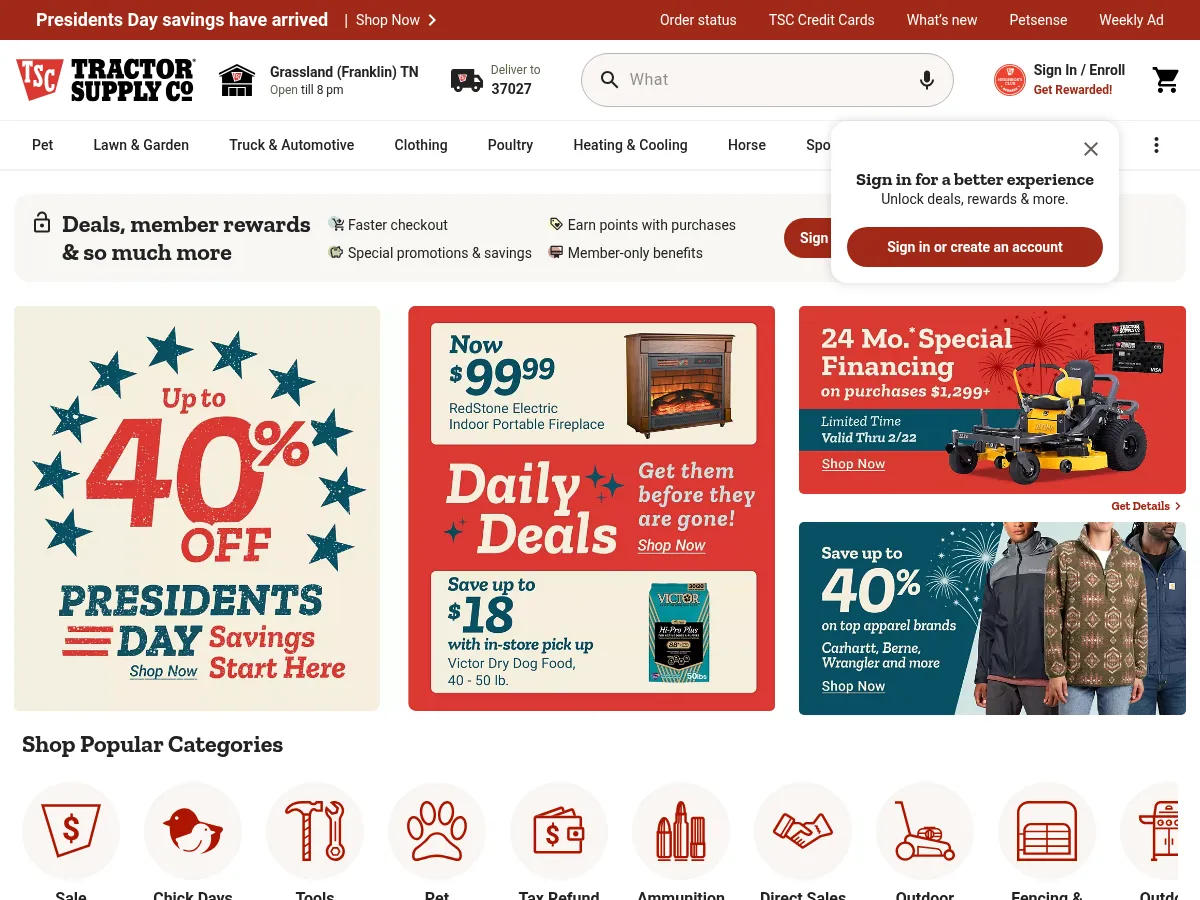
Tractor Supply Screenshot

Added: Feb 11, 2026

tractorsupply.com

Latest from Otrai

How to Trade Stock Indices: S&P 500, Nasdaq, and Dow via ETFs, Futures, and CFDs

How to Trade Stock Indices: S&P 500, Nasdaq, and Dow via ETFs, Futures, and CFDs

A stock index is a single number that summarizes the price action of a basket of companies. The S&P 500 tracks roughly 500 large US firms, the Nasdaq-100 tracks the 100 largest non-financial names on the Nasdaq exchange, and the Dow Jones Industrial Average follows 30 blue-chip stocks.

The Options Greeks Explained: Delta, Gamma, Theta, and Vega

The Options Greeks Explained: Delta, Gamma, Theta, and Vega

The Greeks explain why an option costs what it costs and how that price changes when the stock moves, time passes, and volatility shifts. Delta, Gamma, Theta, and Vega, made accessible.

Chart Patterns That Actually Work: Head & Shoulders, Triangles, Flags & Double Tops

Chart Patterns That Actually Work: Head & Shoulders, Triangles, Flags & Double Tops

Chart patterns are the most recognizable part of technical analysis and the most misunderstood. Most fail or break out the wrong way before reversing. This guide covers head and shoulders, double tops and bottoms, triangles, and flags — with realistic reliability, target measurement, and false-breakout confirmation.

So backtesten Sie eine Handelsstrategie: Methoden, Fallstricke und was die Ergebnisse tatsächlich bedeuten

So backtesten Sie eine Handelsstrategie: Methoden, Fallstricke und was die Ergebnisse tatsächlich bedeuten

Jeder Trader hat eine Strategie, die in seinem Kopf großartig aussieht. Backtesting ist die Art herauszufinden, ob sie tatsächlich funktioniert. Hier erfahren Sie, wie Sie Strategien richtig testen, welche Kennzahlen wichtig sind und warum die meisten Backtest-Ergebnisse zu gut sind, um wahr zu sein.