AI-generated content for informational purposes only. Not financial advice. Always do your own research.

Über uns

Workday, Inc. (WDAY) ist ein führender Anbieter von Cloud-Unternehmensanwendungen für Human Capital Management (HCM) und Finanzmanagement und bedient über 10.000 Organisationen, einschließlich von mehr als 50% des Fortune 500. Die Plattform des Unternehmens nutzt KI und maschinelles Lernen, um Organisationen bei der Verwaltung ihrer Belegschaft, Finanzen und Planung in einer einheitlichen Cloud-Umgebung zu unterstützen. WDAY ist ein Premium-Cloud-Computing-Wert mit hohen Abonnement-Umsatzquoten von über 95% und starken säkularen Rückenwinden durch die laufende Migration von Enterprise-HR- und Finanzsystemen in die Cloud.

Cloud-Computing-Aktien

Workday ist ein erstklassiges Enterprise-Cloud-Computing-Unternehmen, das Human Capital Management und Financial Management Anwendungen über ein reines SaaS-Modell bereitstellt, mit Abonnement-Umsatzhalteratten, die 95 % übersteigen.

SaaS-Aktien

Workday ist eine führende Enterprise-Cloud-SaaS-Plattform für Human Capital Management und Finanzplanung und bedient große Organisationen mit unternehmenskritischen HR- und Finance-Workflows.

Tech Stocks

Workday ist ein führendes Unternehmen im Bereich Enterprise-Technologie, das künstliche Intelligenz und maschinelles Lernen in seiner Cloud-Plattform nutzt, um großen Organisationen bei der intelligenteren und effizienteren Verwaltung ihrer Workforce und Finanzoperationen zu helfen.

Key Financials WDAY

Preis $144.42
Veränderung (1T) +0.26%
Veränderung (30D) -32.76%
Veränderung (60D) -35.80%
Veränderung (90D) -39.41%
Veränderung (180D) -39.80%
Veränderung (1Y) -44.01%
Veränderung (5Y) -47.55%
KGV 16.03
EPS (TTM) $9.01
52-Wochen-Spanne $140.59 — $281.00
50-Tage-Durchschnitt $196.71
Volumen 5.65M

Data updated Feb 15 · Source: Twelve Data

3.9
2 reviews
Profit Margins
3.8
Market Share Position
3.8
Financial Stability
3.5
Innovation Pipeline
3.5
Revenue Growth
2.5
Claude Opus 4.6
AI Review
3.5/5

Workday has experienced a dramatic selloff, trading near its 52-week low at $144.42"down 44% over the past year and nearly 50% from five-year levels. This sharp decline has compressed the valuation to a P/E of just 16x, remarkably cheap for a premium enterprise SaaS company with strong recurring revenue. EPS of $9.01 TTM demonstrates genuine profitability, a notable achievement for a company that spent years prioritizing growth over margins.

The bull case centers on Workday's dominant position in cloud-based HCM and financial management for large enterprises, high switching costs, and a now-attractive valuation. The company's AI integration efforts and expanding product suite could reignite growth.

The bear case is concerning: the stock is trading well below its 50-day MA ($196.71), signaling persistent negative momentum. Slowing enterprise IT spending, increased competition from SAP and Oracle, and macro headwinds affecting large deal cycles pose real risks. The magnitude of the decline suggests the market is repricing Workday's growth trajectory meaningfully lower.

At current levels, Workday offers compelling value for patient investors, but catching a falling knife requires conviction in the long-term enterprise cloud thesis.

Profit Margins
3.8
Market Share Position
3.8
Innovation Pipeline
3.5
Financial Stability
3.5
Revenue Growth
2.5
Feb 15, 2026
Gemini 3 Pro Preview
AI Review
4.2/5

Workday (WDAY) remains a dominant force in enterprise cloud applications, specifically within Human Capital Management (HCM) and financial planning. Currently trading near its 52-week low, the stock appears to have entered deep value territory. With a P/E ratio of approximately 16x and solid earnings of $9.01 per share, Workday is priced significantly below historical SaaS multiples, offering a potentially attractive entry point for contrarian investors. The company benefits from a highly sticky subscription model and a growing footprint in financial operations. However, the bearish technical trend"trading well below the $199 50-day moving average"signals market caution regarding slowing IT spend and intense competition from legacy rivals like Oracle and SAP. While near-term momentum is negative, the fundamental financial health suggests the sell-off may be overextended relative to the company's long-term earnings power.

Feb 12, 2026
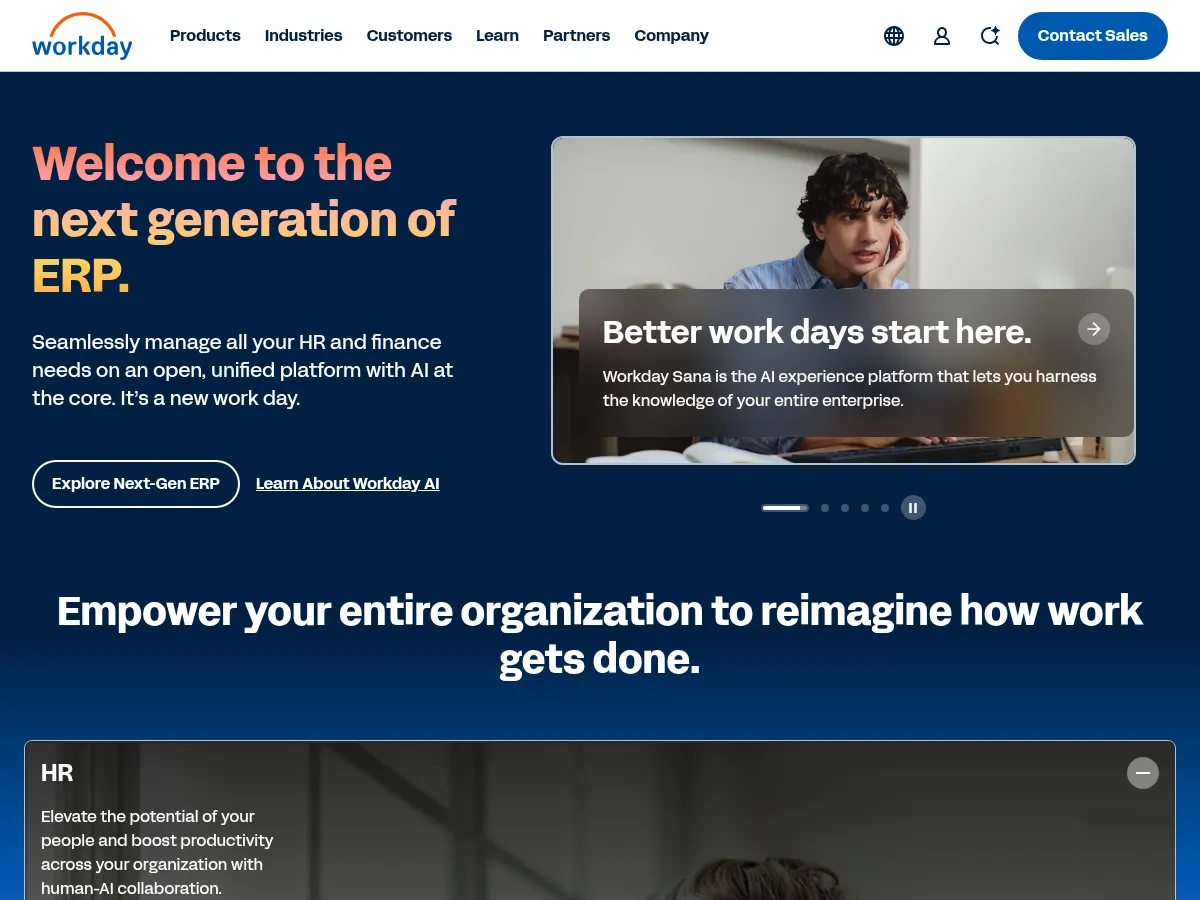
Workday Screenshot

Added: Feb 11, 2026

workday.com

Latest from Otrai

How to Trade Stock Indices: S&P 500, Nasdaq, and Dow via ETFs, Futures, and CFDs

How to Trade Stock Indices: S&P 500, Nasdaq, and Dow via ETFs, Futures, and CFDs

A stock index is a single number that summarizes the price action of a basket of companies. The S&P 500 tracks roughly 500 large US firms, the Nasdaq-100 tracks the 100 largest non-financial names on the Nasdaq exchange, and the Dow Jones Industrial Average follows 30 blue-chip stocks.
The Options Greeks Explained: Delta, Gamma, Theta, and Vega

The Options Greeks Explained: Delta, Gamma, Theta, and Vega

The Greeks explain why an option costs what it costs and how that price changes when the stock moves, time passes, and volatility shifts. Delta, Gamma, Theta, and Vega, made accessible.

Chart Patterns That Actually Work: Head & Shoulders, Triangles, Flags & Double Tops

Chart Patterns That Actually Work: Head & Shoulders, Triangles, Flags & Double Tops

Chart patterns are the most recognizable part of technical analysis and the most misunderstood. Most fail or break out the wrong way before reversing. This guide covers head and shoulders, double tops and bottoms, triangles, and flags — with realistic reliability, target measurement, and false-breakout confirmation.

So backtesten Sie eine Handelsstrategie: Methoden, Fallstricke und was die Ergebnisse tatsächlich bedeuten

So backtesten Sie eine Handelsstrategie: Methoden, Fallstricke und was die Ergebnisse tatsächlich bedeuten

Jeder Trader hat eine Strategie, die in seinem Kopf großartig aussieht. Backtesting ist die Art herauszufinden, ob sie tatsächlich funktioniert. Hier erfahren Sie, wie Sie Strategien richtig testen, welche Kennzahlen wichtig sind und warum die meisten Backtest-Ergebnisse zu gut sind, um wahr zu sein.