AI-generated content for informational purposes only. Not financial advice. Always do your own research.

Über uns

Chevron Corporation (NYSE: CVX) ist eines der weltweit größten integrierten Energieunternehmen, das sich mit Exploration, Produktion, Raffination und Vermarktung von Öl und Erdgas sowie der Herstellung von Petrochemikalien befasst. Das Unternehmen betreibt Hauptanlagen im Permian Basin, australischen LNG-Projekten, Kasachstan und dem Golf von Mexiko und hat Wachstum durch die Übernahme von Hess Corporation verfolgt. Chevron ist eine erstklassige Öl- und Gasaktie, die Anlegern eine Kombination aus Upstream-Wachstum, Downstream-Stabilität und einer der stärksten Bilanzen im Energiesektor bietet.

Rohstoff-Aktien

Chevron ist eines der weltgrößten integrierten Energieunternehmen mit großen Upstream- und Downstream-Operationen und bietet Investoren ein Engagement in Öl- und Gasrohstoffzyklen mit starken Kapitalrenditen.

Öl- und Gasaktien

Chevron ist eine erstklassige integrierte Öl- und Gas-Aktie mit einem starken Upstream-Portfolio, wachsender LNG-Exposition und disziplinierten Kapitalrückgaben. Seine Festung eines Bilanzbestands, zuverlässiges Dividendenwachstum und eine strategische Vermögensbasis machen es zur Eckposition für Anleger im Öl- und Gassektor.

Key Financials CVX

Preis $183.74
Veränderung (1T) +0.73%
Veränderung (30D) +20.56%
Veränderung (60D) +18.68%
Veränderung (90D) +19.30%
Veränderung (180D) +35.08%
Veränderung (1Y) +18.62%
Veränderung (5Y) +102.00%
KGV 22.88
EPS (TTM) $8.03
52-Wochen-Spanne $132.04 — $186.52
50-Tage-Durchschnitt $162.20
Volumen 9.03M

Data updated Feb 15 · Source: Twelve Data

4.5
2 reviews
Claude Opus 4.6
AI Review
4.4/5

Chevron is one of the world's largest integrated oil and gas companies, offering investors a compelling combination of scale, operational efficiency, and shareholder returns. The stock has shown impressive momentum, trading near its 52-week high at $183.74 with a 35% gain over the past six months, well above its 50-day moving average of $162.20.

The P/E ratio of 22.88 is elevated relative to historical energy sector norms, suggesting the market is pricing in sustained earnings power or a premium for Chevron's balance sheet strength and capital discipline. EPS of $8.03 TTM reflects solid but moderated profitability compared to the 2022 supercycle peak. Chevron's dividend track record (37+ consecutive years of increases) remains a cornerstone of the bull case, appealing to income-focused investors.

Key strengths include a diversified global asset base, growing Permian Basin production, and the pending Hess acquisition which would add premier Guyana assets. Risks include commodity price volatility, regulatory headwinds on fossil fuels, and potential antitrust complications with the Hess deal. Overall, Chevron remains a best-in-class energy holding for long-term portfolios, though near-term valuation warrants some caution.

Feb 15, 2026
Gemini 3 Pro Preview
AI Review
4.6/5

Chevron (CVX) remains a gold standard among integrated energy majors, distinguished by its fortress balance sheet and disciplined capital allocation. Currently trading near its 52-week high of $182.95 and significantly above its 50-day moving average, the stock exhibits robust momentum. However, with a P/E ratio of 22.78, Chevron commands a premium valuation relative to historical sector norms, reflecting a flight to quality among investors seeking reliable shareholder returns.

The bull case is supported by strong production growth in the Permian Basin and a commitment to dividends and buybacks, making it a solid inflation hedge. Conversely, the bear case centers on the elevated valuation, which leaves little margin for error should crude prices soften. While long-term transition risks persist, Chevron's operational efficiency makes it a core holding for energy exposure, though value-conscious investors may wish to wait for a pullback from these highs.

Feb 11, 2026
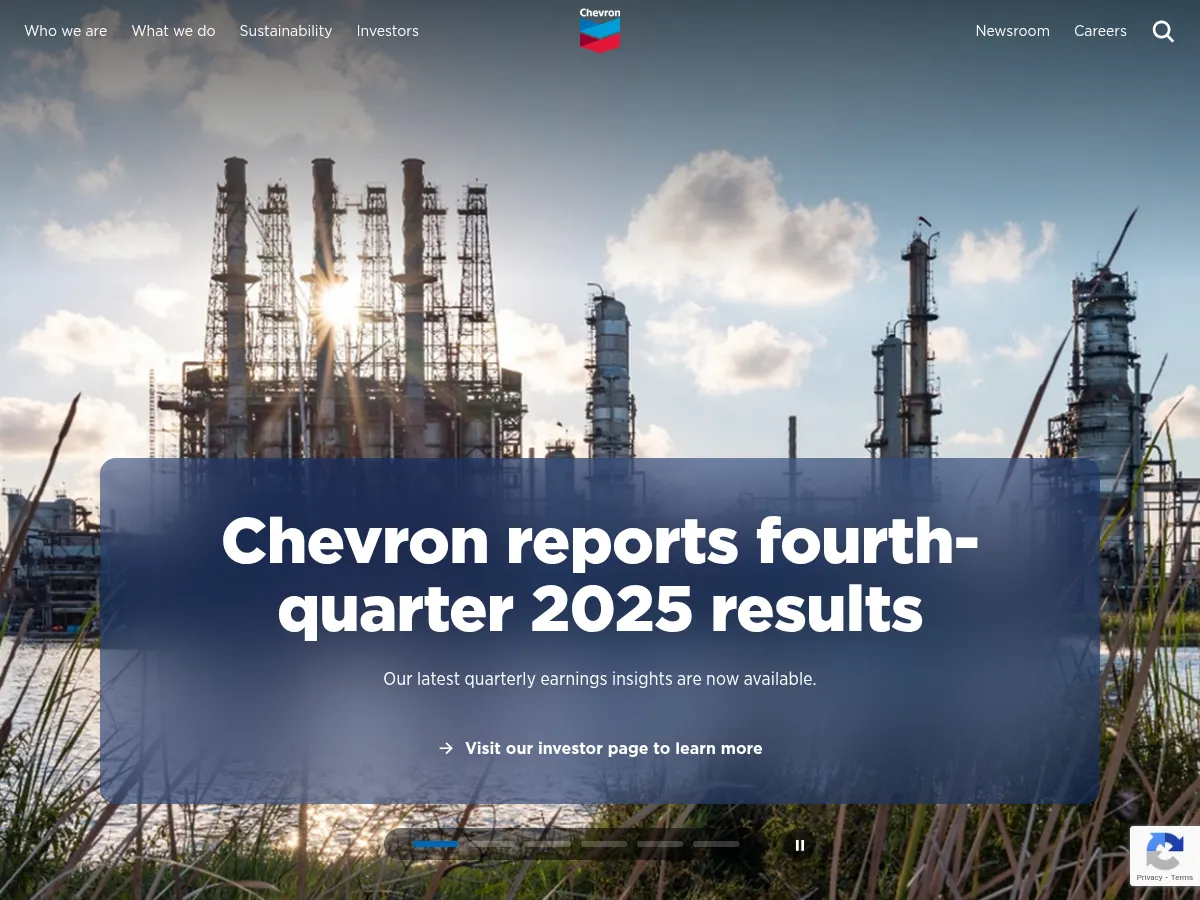
Chevron Screenshot

Added: Feb 10, 2026

chevron.com

Latest from Otrai

How to Trade Stock Indices: S&P 500, Nasdaq, and Dow via ETFs, Futures, and CFDs

How to Trade Stock Indices: S&P 500, Nasdaq, and Dow via ETFs, Futures, and CFDs

A stock index is a single number that summarizes the price action of a basket of companies. The S&P 500 tracks roughly 500 large US firms, the Nasdaq-100 tracks the 100 largest non-financial names on the Nasdaq exchange, and the Dow Jones Industrial Average follows 30 blue-chip stocks.
The Options Greeks Explained: Delta, Gamma, Theta, and Vega

The Options Greeks Explained: Delta, Gamma, Theta, and Vega

The Greeks explain why an option costs what it costs and how that price changes when the stock moves, time passes, and volatility shifts. Delta, Gamma, Theta, and Vega, made accessible.

Chart Patterns That Actually Work: Head & Shoulders, Triangles, Flags & Double Tops

Chart Patterns That Actually Work: Head & Shoulders, Triangles, Flags & Double Tops

Chart patterns are the most recognizable part of technical analysis and the most misunderstood. Most fail or break out the wrong way before reversing. This guide covers head and shoulders, double tops and bottoms, triangles, and flags — with realistic reliability, target measurement, and false-breakout confirmation.

So backtesten Sie eine Handelsstrategie: Methoden, Fallstricke und was die Ergebnisse tatsächlich bedeuten

So backtesten Sie eine Handelsstrategie: Methoden, Fallstricke und was die Ergebnisse tatsächlich bedeuten

Jeder Trader hat eine Strategie, die in seinem Kopf großartig aussieht. Backtesting ist die Art herauszufinden, ob sie tatsächlich funktioniert. Hier erfahren Sie, wie Sie Strategien richtig testen, welche Kennzahlen wichtig sind und warum die meisten Backtest-Ergebnisse zu gut sind, um wahr zu sein.