

AI-generated content for informational purposes only. Not financial advice. Always do your own research.

Aerospace Stocks - Directory w/ AI Reviews

Aerospace and defense remains one of the most capital-intensive and strategically critical sectors in global markets. Giants like Lockheed Martin, Northrop Grumman, and Boeing design and manufacture aircraft, satellites, missile systems, and space vehicles. Government contracts provide revenue stability, while growing commercial space activity adds a long-term growth dimension for investors.

Airbus SE 1 4.5 Airbus SE EADSY $57.14 +1.55% P/E: 10.7 1 review Airbus leads global commercial aircraft deliveries and competes head-to-head with Boeing, offering investors pure-play exposure to the secular growth in global air travel demand. Howmet Aerospace 2 4.5 Howmet Aerospace HWM $250.21 +2.21% P/E: 45.7 1 review Howmet Aerospace manufactures advanced engineered components for jet engines and airframes, including titanium and nickel superalloy parts critical to modern aerospace propulsion. Lockheed Martin 3 4.5 Lockheed Martin LMT $652.58 +2.38% P/E: 46.3 2 reviews Lockheed Martin is the world's largest defense contractor, producing the F-35 fighter jet, advanced missile defense systems, and space technology for the US military and allied nations. RTX Corporation 4 4.5 RTX Corporation RTX $200.06 -0.54% P/E: 30.1 2 reviews RTX Corporation is a major aerospace and defense conglomerate formed from the merger of Raytheon and United Technologies' aerospace businesses, producing jet engines, missiles, and avionics systems. HEICO Corporation 5 4.3 HEICO Corporation HEI $332.52 +1.24% P/E: 63.8 1 review HEICO is a high-margin niche aerospace manufacturer specializing in FAA-approved jet engine and aircraft component replacement parts, delivering consistent growth through aftermarket demand. L3Harris Technologies 6 4.2 L3Harris Technologies LHX $345.50 +1.65% P/E: 32.1 2 reviews L3Harris is a major US defense contractor providing advanced technology solutions across space, air, land, sea, and cyber domains, with a focus on communications and electronic warfare systems. Northrop Grumman 7 4.2 Northrop Grumman NOC $702.57 +1.08% P/E: 71.0 2 reviews Northrop Grumman specializes in autonomous systems, cybersecurity, and next-generation bombers including the B-21 Raider, serving as a critical US defense and aerospace technology contractor. Huntington Ingalls Industries 8 3.6 Huntington Ingalls Industries HII 1 review Huntington Ingalls builds nuclear-powered aircraft carriers and submarines for the US Navy, representing mission-critical aerospace and defense manufacturing capabilities. Boeing 9 3.4 Boeing BA $242.96 +1.51% P/E: 156.8 2 reviews Boeing is one of only two major commercial aircraft manufacturers globally and a leading US defense contractor, though recent quality and safety challenges present both risk and recovery upside. ARM Holdings 10 1.5 ARM Holdings ARM $125.28 +2.53% P/E: 28.9 2 reviews ARM's energy-efficient chip architectures are increasingly adopted in aerospace and defense applications, from satellite systems to advanced avionics requiring low-power, high-performance computing. Spirit AeroSystems 11 1.2 Spirit AeroSystems SPR $0.02 P/E: 0.0 1 review Spirit AeroSystems is one of the world's largest aerostructures manufacturers, producing fuselages, pylons, and wing components primarily for Boeing aircraft programs.

Latest from Otrai

How to Backtest a Trading Strategy: Methods, Pitfalls, and What the Results Actually Mean

How to Backtest a Trading Strategy: Methods, Pitfalls, and What the Results Actually Mean

Every trader has a strategy that looks great in their head. Backtesting is how you find out whether it actually works. Here is how to test strategies properly, what metrics matter, and why most backtest results are too good to be true.

Risk-Reward Ratios: How to Set Targets That Make Your Strategy Profitable

Risk-Reward Ratios: How to Set Targets That Make Your Strategy Profitable

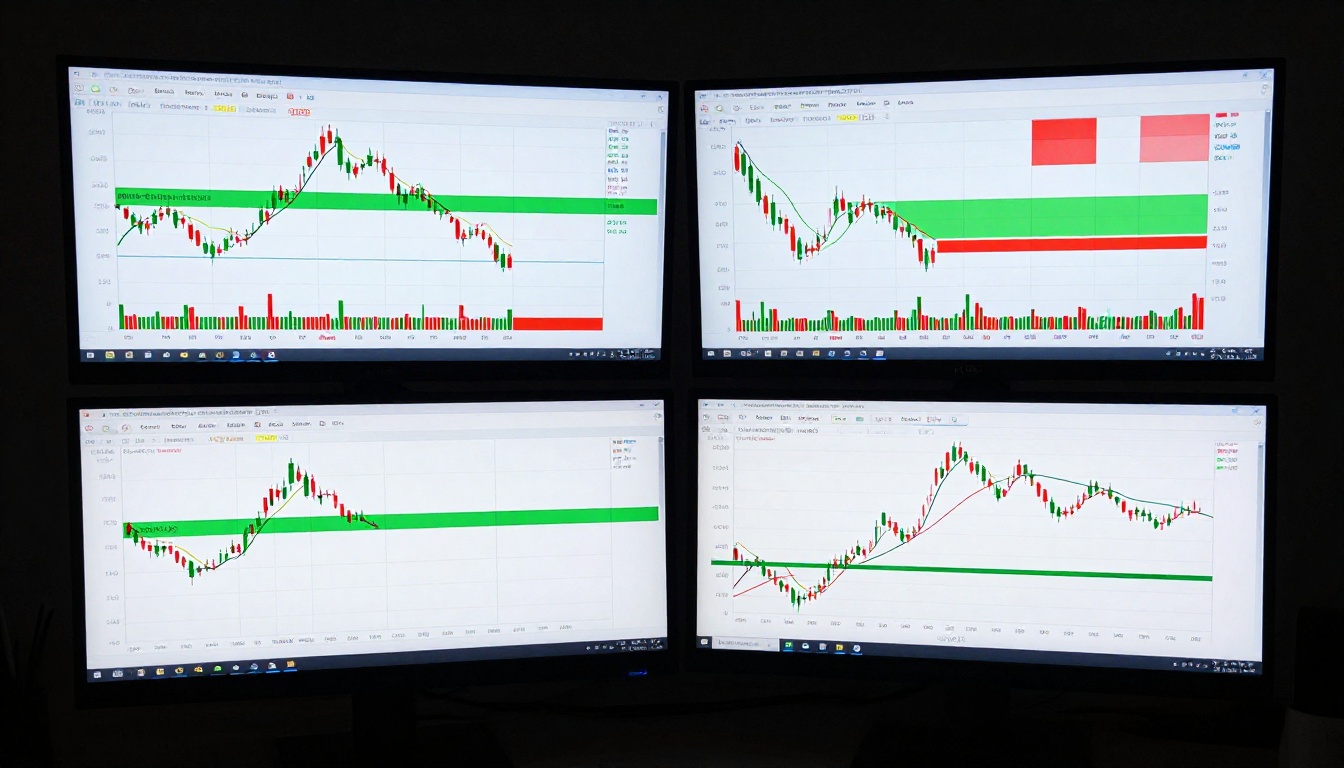
A risk-reward ratio compares how much you stand to lose on a trade to how much you stand to gain. It is arguably the most important number in your trading plan, because it determines whether your strategy can survive a normal losing streak.

Trading the News: How Economic Events Move Forex and What to Do About It

Trading the News: How Economic Events Move Forex and What to Do About It

Every month, a handful of economic data releases move the forex market more in five minutes than most sessions move in five days. Non-Farm Payrolls, CPI prints, and central bank rate decisions create violent spikes, whipsaws, and trend shifts that can make or break a trading account.

What Is a CFD? How Contracts for Difference Work and When to Use Them

What Is a CFD? How Contracts for Difference Work and When to Use Them

A CFD is a contract between you and your broker to exchange the difference in an asset's price from when you open the trade to when you close it. You never own the underlying asset. That single distinction shapes everything about how CFDs work, what they cost, and why regulators treat them differently from traditional investing.