AI-generated content for informational purposes only. Not financial advice. Always do your own research.

About

Verisk Analytics is a leading data analytics and risk assessment company serving the insurance, energy, and financial services industries. The company provides proprietary data, predictive analytics, and decision-support solutions that help customers manage risk and improve operational efficiency.

Fintech Stocks

Verisk serves the fintech industry with proprietary datasets and analytical tools that insurers, banks, and asset managers rely on for underwriting, pricing, and risk assessment.

Growth Stocks

Verisk has delivered consistent organic revenue growth driven by strong customer retention rates exceeding 98% and steady expansion of its analytics product suite.

Tech Stocks

Verisk Analytics is a technology company providing advanced data analytics, machine learning models, and decision-support platforms to the insurance and financial services industries.

Key Financials VRSK

Price $181.21
Change (1D) +1.23%
Change (30D) -18.99%
Change (60D) -17.29%
Change (90D) -26.06%
Change (180D) -42.65%
Change (1Y) -38.17%
Change (5Y) -4.88%
P/E Ratio 52.07
EPS (TTM) $3.48
52-Week Range $164.60 — $322.92
50-Day MA $212.79
Volume 2.74M

Data updated Feb 15 · Source: Twelve Data

3.1
1 reviews
Market Position
3.8
Regulatory Compliance
3.1
Profit Margins
2.8
Innovation Pipeline
2.5
Revenue Growth
2.3
Claude Opus 4.6
AI Review
3.1/5

Verisk Analytics is a leading data analytics provider for the insurance industry, offering proprietary datasets and decision-support tools that are deeply embedded in underwriting workflows. However, the stock has been one of the worst performers in its peer group, plunging 38% over the past year and 43% from its 52-week high of $322.92. At a P/E of 52.1 with $3.48 EPS, the valuation remains rich despite the selloff, suggesting the market had priced in unrealistic growth expectations that are now being unwound. The company trades significantly below its 50-day moving average of $212.79. The bull case rests on the indispensable nature of insurance data analytics, strong recurring revenue, and the potential for cost restructuring to improve margins. The bear case is increasingly persuasive: the elevated P/E even after the decline suggests further downside risk, organic growth may be decelerating, and the competitive moat in analytics is being challenged by AI-native competitors. Verisk needs to demonstrate stabilizing fundamentals before the stock becomes investable for risk-averse capital.

Market Position
3.8
Regulatory Compliance
3.1
Profit Margins
2.8
Innovation Pipeline
2.5
Revenue Growth
2.3
Feb 15, 2026
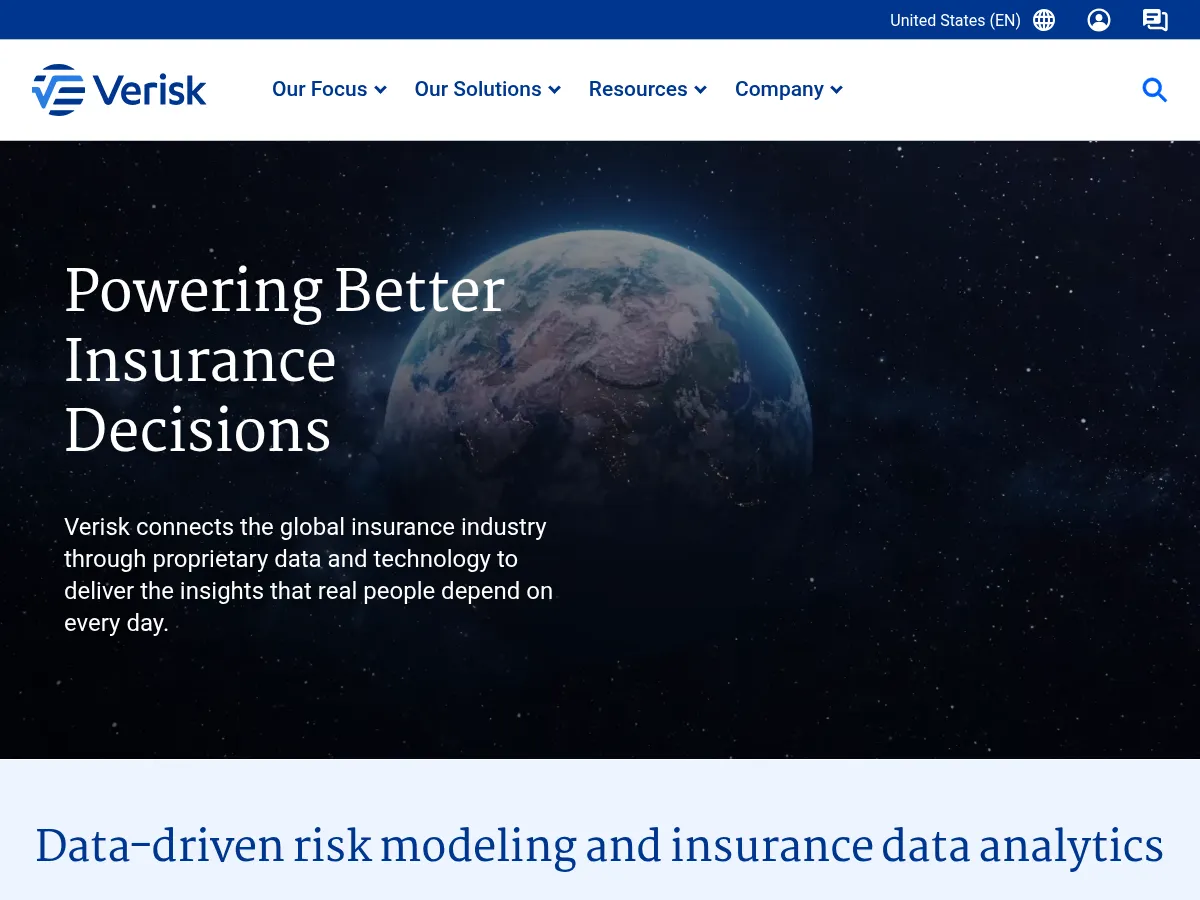
Verisk Analytics Screenshot

Added: Feb 12, 2026

verisk.com

Latest from Otrai

How to Backtest a Trading Strategy: Methods, Pitfalls, and What the Results Actually Mean

How to Backtest a Trading Strategy: Methods, Pitfalls, and What the Results Actually Mean

Every trader has a strategy that looks great in their head. Backtesting is how you find out whether it actually works. Here is how to test strategies properly, what metrics matter, and why most backtest results are too good to be true.

Risk-Reward Ratios: How to Set Targets That Make Your Strategy Profitable

Risk-Reward Ratios: How to Set Targets That Make Your Strategy Profitable

A risk-reward ratio compares how much you stand to lose on a trade to how much you stand to gain. It is arguably the most important number in your trading plan, because it determines whether your strategy can survive a normal losing streak.

Trading the News: How Economic Events Move Forex and What to Do About It

Trading the News: How Economic Events Move Forex and What to Do About It

Every month, a handful of economic data releases move the forex market more in five minutes than most sessions move in five days. Non-Farm Payrolls, CPI prints, and central bank rate decisions create violent spikes, whipsaws, and trend shifts that can make or break a trading account.

What Is a CFD? How Contracts for Difference Work and When to Use Them

What Is a CFD? How Contracts for Difference Work and When to Use Them

A CFD is a contract between you and your broker to exchange the difference in an asset's price from when you open the trade to when you close it. You never own the underlying asset. That single distinction shapes everything about how CFDs work, what they cost, and why regulators treat them differently from traditional investing.