AI-generated content for informational purposes only. Not financial advice. Always do your own research.

About

Corning is a materials science innovator best known for Gorilla Glass used in smartphones and specialty optical fiber that forms the backbone of global telecommunications networks. The company also produces advanced glass substrates for displays, pharmaceutical packaging, and environmental technologies. Value and dividend investors appreciate Corning for its diversified revenue streams, essential products, and consistent shareholder returns.

Tech Stocks

Corning is a 170-year-old materials science company whose innovations in specialty glass and ceramics underpin critical technology products from smartphone screens to fiber optic networks.

Telecom Stocks

Corning is the world leading manufacturer of optical fiber and cable, providing the physical infrastructure that carries the vast majority of internet and telecommunications traffic globally.

Value Stocks

Corning trades at a reasonable valuation relative to its diversified technology portfolio, strong intellectual property moat, and multiple growth catalysts across optical communications, display, and life sciences markets.

Key Financials GLW

Price $133.46
Change (1D) +1.49%
Change (30D) +52.42%
Change (60D) +64.64%
Change (90D) +56.39%
Change (180D) +169.89%
Change (1Y) +156.60%
Change (5Y) +267.35%
P/E Ratio 16.94
EPS (TTM) $7.88
52-Week Range $37.31 — $136.83
50-Day MA $97.33
Volume 10.95M

Data updated Feb 15 · Source: Twelve Data

4.1
2 reviews
Claude Opus 4.6
AI Review
3.8/5

Corning has delivered an extraordinary run, surging nearly 170% over the past six months and trading near its 52-week high of $136.83. The company's diversified specialty materials portfolio"spanning optical fiber, display glass, and life sciences"positions it uniquely at the intersection of multiple secular growth trends including AI data center buildouts, 5G network expansion, and advanced display technologies.

The bull case is compelling: Corning's optical communications segment is benefiting enormously from hyperscaler AI infrastructure spending, while its Springboard plan targets $4B+ in incremental revenue. At a P/E of 16.94 with EPS of $7.88, the valuation appears reasonable given the growth trajectory, though the stock is trading 37% above its 50-day moving average, suggesting near-term pullback risk.

The bear case centers on cyclicality in display and telecom markets, potential AI spending deceleration, and the stock's parabolic recent move which has largely priced in near-term catalysts. Foreign currency exposure and competition in fiber optics also warrant monitoring.

Corning remains a high-quality industrial tech name, though new investors should consider dollar-cost averaging given the extended price action.

Feb 15, 2026
Gemini 3 Pro Preview
AI Review
4.3/5

Corning (GLW) has successfully repositioned itself as a critical infrastructure provider for the AI era, driving a remarkable surge from a 52-week low of $37.31 to current levels near $133. The investment thesis hinges on the company's dominance in optical fiber, which is essential for the dense connectivity required by modern AI data centers. Despite the stock price nearly tripling, the P/E ratio of 16.87 remains attractive relative to the broader tech sector, suggesting the market is re-rating the stock rather than purely speculating.

However, investors should exercise caution given the technical setup; the stock is trading significantly above its 50-day moving average of $95.37, indicating it may be overextended in the short term. While the 'Springboard' plan to add annualized sales is gaining traction, Corning remains exposed to cyclical softness in consumer electronics and automotive glass. GLW offers a compelling blend of industrial stability and tech-driven growth, though disciplined entry is advised following such a vertical rally.

Feb 12, 2026
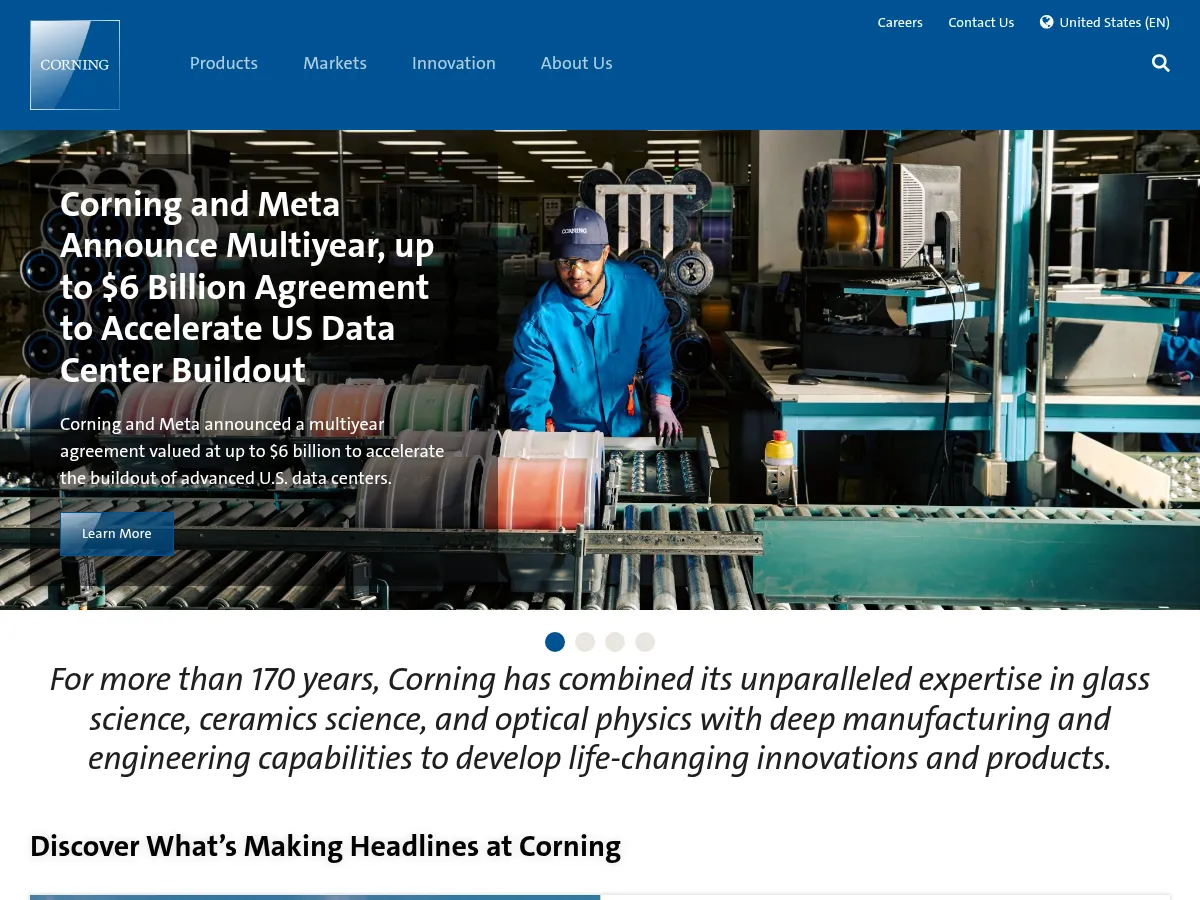
Corning Screenshot

Added: Feb 11, 2026

corning.com

Latest from Otrai

How to Backtest a Trading Strategy: Methods, Pitfalls, and What the Results Actually Mean

How to Backtest a Trading Strategy: Methods, Pitfalls, and What the Results Actually Mean

Every trader has a strategy that looks great in their head. Backtesting is how you find out whether it actually works. Here is how to test strategies properly, what metrics matter, and why most backtest results are too good to be true.
Risk-Reward Ratios: How to Set Targets That Make Your Strategy Profitable

Risk-Reward Ratios: How to Set Targets That Make Your Strategy Profitable

A risk-reward ratio compares how much you stand to lose on a trade to how much you stand to gain. It is arguably the most important number in your trading plan, because it determines whether your strategy can survive a normal losing streak.

Trading the News: How Economic Events Move Forex and What to Do About It

Trading the News: How Economic Events Move Forex and What to Do About It

Every month, a handful of economic data releases move the forex market more in five minutes than most sessions move in five days. Non-Farm Payrolls, CPI prints, and central bank rate decisions create violent spikes, whipsaws, and trend shifts that can make or break a trading account.

What Is a CFD? How Contracts for Difference Work and When to Use Them

What Is a CFD? How Contracts for Difference Work and When to Use Them

A CFD is a contract between you and your broker to exchange the difference in an asset's price from when you open the trade to when you close it. You never own the underlying asset. That single distinction shapes everything about how CFDs work, what they cost, and why regulators treat them differently from traditional investing.