
AI-generated content for informational purposes only. Not financial advice. Always do your own research.

Semiconductor Stocks - Directory w/ AI Reviews

Semiconductors are the foundational technology layer of the modern economy, enabling everything from smartphones and data centers to automotive electronics and medical devices. NVIDIA has become the most valuable semiconductor company in history on the back of its AI GPU franchise, while TSMC manufactures the most advanced chips for Apple, NVIDIA, and AMD at its foundries in Taiwan. ASML holds a monopoly on extreme ultraviolet lithography — the critical machines required to produce the world's most advanced chips.

NVIDIA 1 5.0 NVIDIA NVDA $182.81 -2.21% P/E: 32.5 2 reviews NVIDIA is the world's most valuable semiconductor company, designing the GPUs and accelerator chips that power gaming, professional visualization, data center computing, and autonomous systems. As a semiconductor stock, it represents the pinnacle of chip design innovation, with its products commandi ASML Holding 2 4.8 ASML Holding ASML $1,406.61 -0.02% P/E: 192.2 1 review ASML holds a global monopoly on extreme ultraviolet lithography machines, making it an irreplaceable supplier in the semiconductor manufacturing chain for cutting-edge chip production. TSMC 3 4.8 TSMC TSM $366.36 -0.47% P/E: 34.4 2 reviews TSMC is the world's largest and most technologically advanced semiconductor foundry, manufacturing the cutting-edge chips designed by nearly every major fabless chipmaker on the planet. Its irreplaceable role in the global semiconductor supply chain makes it an essential semiconductor stock represen Broadcom 4 4.7 Broadcom AVGO $325.17 -1.81% P/E: 52.3 2 reviews Broadcom is a top-tier semiconductor stock designing custom AI accelerators, networking chips, and connectivity solutions that are critical to data center infrastructure and next-generation wireless networks. AMD 5 4.4 AMD AMD $207.32 +0.67% 2 reviews AMD is a leading semiconductor company that designs CPUs, GPUs, and AI accelerators competing at the highest performance tiers across data center, gaming, and embedded markets. Its successful EPYC server chip lineup and growing Instinct AI accelerator business make it a major semiconductor stock wit Intel 6 3.6 Intel INTC $46.79 +0.67% P/E: 20.8 2 reviews Intel is a major semiconductor stock as one of the few companies that both designs and manufactures its own chips, investing tens of billions into cutting-edge fabrication nodes to compete with TSMC and Samsung.

Latest from Otrai

How to Backtest a Trading Strategy: Methods, Pitfalls, and What the Results Actually Mean

How to Backtest a Trading Strategy: Methods, Pitfalls, and What the Results Actually Mean

Every trader has a strategy that looks great in their head. Backtesting is how you find out whether it actually works. Here is how to test strategies properly, what metrics matter, and why most backtest results are too good to be true.

Risk-Reward Ratios: How to Set Targets That Make Your Strategy Profitable

Risk-Reward Ratios: How to Set Targets That Make Your Strategy Profitable

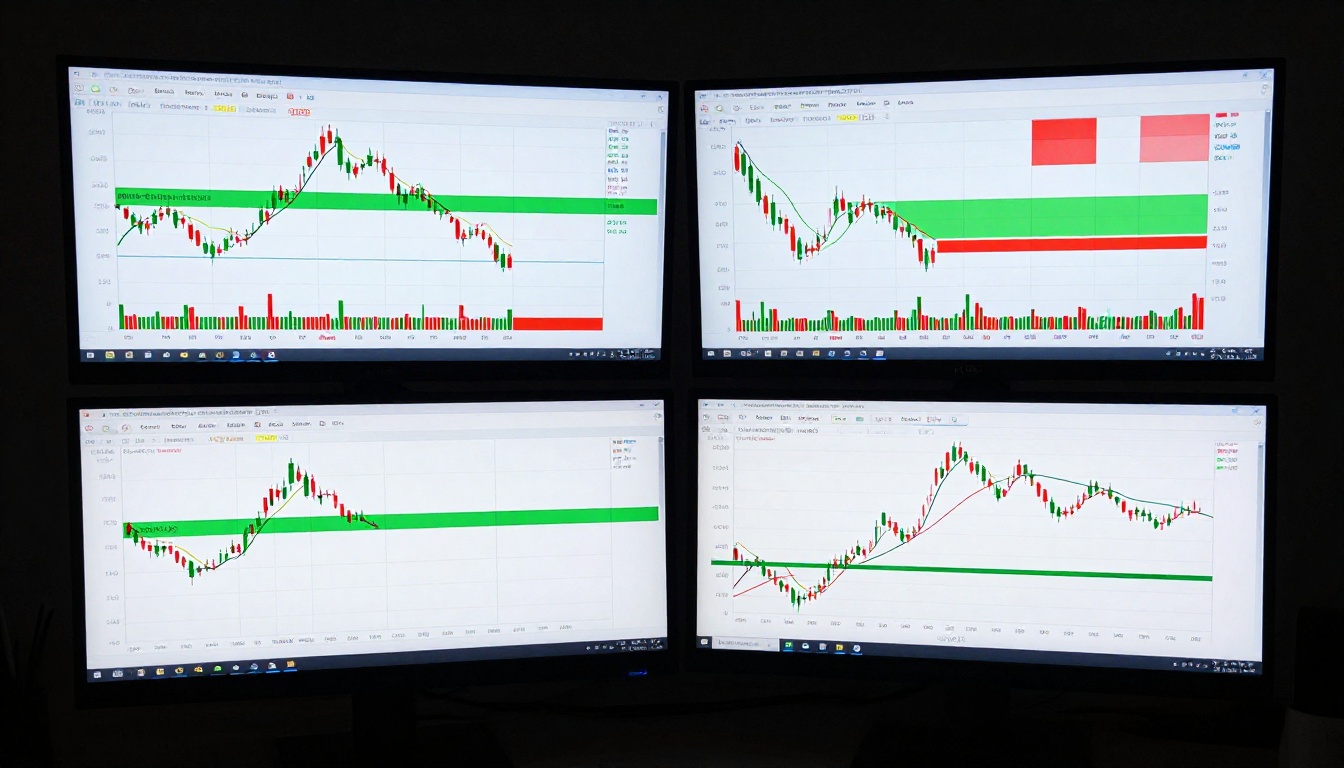
A risk-reward ratio compares how much you stand to lose on a trade to how much you stand to gain. It is arguably the most important number in your trading plan, because it determines whether your strategy can survive a normal losing streak.

Trading the News: How Economic Events Move Forex and What to Do About It

Trading the News: How Economic Events Move Forex and What to Do About It

Every month, a handful of economic data releases move the forex market more in five minutes than most sessions move in five days. Non-Farm Payrolls, CPI prints, and central bank rate decisions create violent spikes, whipsaws, and trend shifts that can make or break a trading account.

What Is a CFD? How Contracts for Difference Work and When to Use Them

What Is a CFD? How Contracts for Difference Work and When to Use Them

A CFD is a contract between you and your broker to exchange the difference in an asset's price from when you open the trade to when you close it. You never own the underlying asset. That single distinction shapes everything about how CFDs work, what they cost, and why regulators treat them differently from traditional investing.