AI-generated content for informational purposes only. Not financial advice. Always do your own research.

Chinese ADR Stocks - Directory w/ AI Reviews

Chinese companies listed on US exchanges as American Depositary Receipts offer access to the world's second-largest economy through familiar trading infrastructure. Alibaba, Baidu, and JD.com represent China's tech giants, while NIO and Li Auto give exposure to the country's booming electric vehicle market. ADR investing comes with additional geopolitical and regulatory risk, including the ongoing scrutiny of Chinese listings under US accounting standards.

Alibaba Group 1 4.3 Alibaba Group BABA $155.73 -1.89% P/E: 17.9 1 review Alibaba is China's largest e-commerce and cloud computing company, offering US-listed exposure to Chinese consumer spending and digital transformation through its ADR shares. NetEase 2 4.3 NetEase NTES $120.61 +2.06% 1 review NetEase offers US-listed exposure to China's gaming industry as one of the country's leading game developers, competing with Tencent in mobile and PC gaming markets. Baidu 3 4.2 Baidu BIDU $137.01 -0.99% P/E: 2.4 1 review Baidu dominates China's search engine market and is investing heavily in AI through its Ernie large language model and Apollo autonomous driving platform. PDD Holdings 4 4.2 PDD Holdings PDD $100.28 +0.06% P/E: 3.3 1 review PDD Holdings is the parent of Pinduoduo, China's largest agriculture-focused e-commerce platform, and Temu, the rapidly expanding global discount marketplace disrupting Western retail. Bilibili 5 3.9 Bilibili BILI $30.60 +1.02% P/E: 10.5 1 review Bilibili offers US-listed exposure to China's Gen Z digital entertainment market through its dominant video-sharing platform for anime, gaming, and lifestyle content. Li Auto 6 3.9 Li Auto LI $18.46 -1.81% P/E: 5.6 1 review Li Auto offers US-listed exposure to China's booming EV market through its popular extended-range electric SUVs that address range anxiety concerns in the Chinese consumer market. JD.com 7 3.6 JD.com JD $27.14 -1.38% P/E: 2.6 1 review JD.com is China's largest direct retailer, known as the 'Amazon of China,' operating a massive owned logistics network with same-day delivery capabilities across the country. XPeng Inc 8 3.4 XPeng Inc XPEV $17.94 +1.36% P/E: 7.4 1 review XPeng offers US-listed exposure to China's tech-forward EV market through its autonomous driving-focused electric vehicles competing in the premium Chinese EV segment. NIO Inc 9 2.8 NIO Inc NIO $4.95 P/E: 4.5 1 review NIO offers US-listed exposure to China's premium EV market through its battery-swappable electric vehicles competing against Tesla, Li Auto, and XPeng.

Latest from Otrai

How to Backtest a Trading Strategy: Methods, Pitfalls, and What the Results Actually Mean

How to Backtest a Trading Strategy: Methods, Pitfalls, and What the Results Actually Mean

Every trader has a strategy that looks great in their head. Backtesting is how you find out whether it actually works. Here is how to test strategies properly, what metrics matter, and why most backtest results are too good to be true.
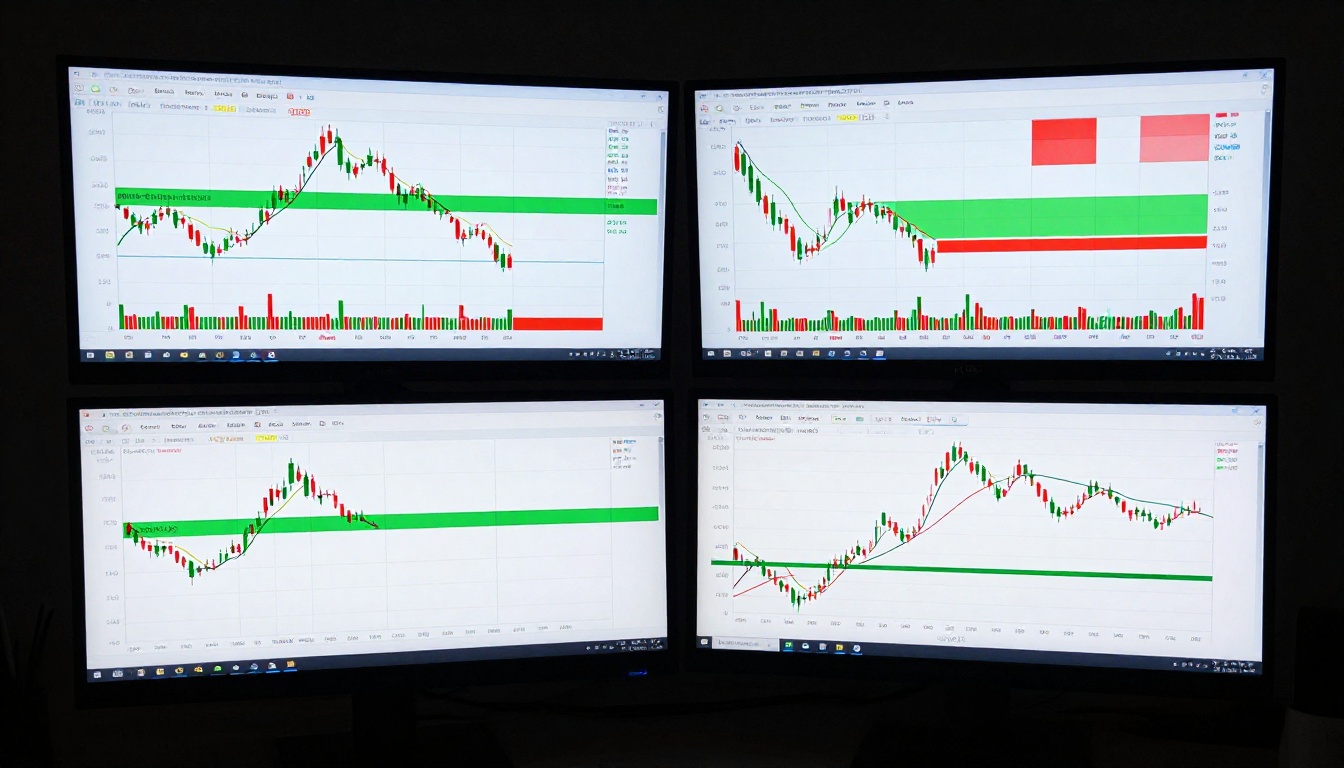

Risk-Reward Ratios: How to Set Targets That Make Your Strategy Profitable

Risk-Reward Ratios: How to Set Targets That Make Your Strategy Profitable

A risk-reward ratio compares how much you stand to lose on a trade to how much you stand to gain. It is arguably the most important number in your trading plan, because it determines whether your strategy can survive a normal losing streak.

Trading the News: How Economic Events Move Forex and What to Do About It

Trading the News: How Economic Events Move Forex and What to Do About It

Every month, a handful of economic data releases move the forex market more in five minutes than most sessions move in five days. Non-Farm Payrolls, CPI prints, and central bank rate decisions create violent spikes, whipsaws, and trend shifts that can make or break a trading account.

What Is a CFD? How Contracts for Difference Work and When to Use Them

What Is a CFD? How Contracts for Difference Work and When to Use Them

A CFD is a contract between you and your broker to exchange the difference in an asset's price from when you open the trade to when you close it. You never own the underlying asset. That single distinction shapes everything about how CFDs work, what they cost, and why regulators treat them differently from traditional investing.