AI-generated content for informational purposes only. Not financial advice. Always do your own research.

AI Infrastructure Stocks - Directory w/ AI Reviews

Behind every large language model and AI application is a vast infrastructure layer of chips, data centers, and networking hardware. NVIDIA's GPUs have become the essential currency of AI training, while Broadcom supplies custom AI accelerators and AMD competes in the accelerated compute market. Equinix and Vertiv Holdings represent the data center and power management side of this buildout, making AI infrastructure one of the most actively invested themes in the market.

NVIDIA 1 5.0 NVIDIA NVDA $182.81 -2.21% P/E: 32.5 2 reviews Nvidia is the undisputed leader in AI computing, designing the GPU accelerator chips and software platforms that power virtually all major AI training and inference workloads worldwide. Broadcom 2 4.7 Broadcom AVGO $325.17 -1.81% P/E: 52.3 2 reviews Broadcom designs critical networking and custom AI accelerator chips for hyperscale data centers, making it a core infrastructure supplier in the AI computing buildout. Applied Materials 3 4.6 Applied Materials AMAT $354.91 +8.08% P/E: 49.8 2 reviews Applied Materials is the world's largest semiconductor equipment supplier, providing the essential manufacturing tools that chipmakers need to produce advanced AI and computing chips. Vertiv Holdings 4 4.5 Vertiv Holdings VRT $234.53 -0.84% P/E: 49.6 1 review Vertiv provides critical power management, thermal management, and IT infrastructure solutions that are essential for AI data centers operating at increasing power densities. Equinix 5 4.3 Equinix EQIX $956.19 -0.18% P/E: 89.1 1 review Equinix operates the world's largest network of 260+ data centers across six continents, providing essential interconnection and colocation infrastructure for AI and cloud computing workloads. Marvell Technology 6 4.3 Marvell Technology MRVL $78.61 +0.49% P/E: 23.6 2 reviews Marvell designs custom AI accelerators, networking chips, and storage semiconductors for data center infrastructure, growing rapidly as a key supplier for cloud and AI computing buildouts. AMD 7 4.0 AMD AMD $207.32 +0.67% 2 reviews AMD designs high-performance GPUs and data center processors that are emerging as a competitive alternative to Nvidia in the rapidly growing AI infrastructure market. Intel 8 3.2 Intel INTC $46.79 +0.67% P/E: 20.8 2 reviews Intel is investing heavily to regain semiconductor leadership with new foundry services and AI chip products, representing both a turnaround opportunity and a critical piece of US chip independence.

Latest from Otrai

How to Backtest a Trading Strategy: Methods, Pitfalls, and What the Results Actually Mean

How to Backtest a Trading Strategy: Methods, Pitfalls, and What the Results Actually Mean

Every trader has a strategy that looks great in their head. Backtesting is how you find out whether it actually works. Here is how to test strategies properly, what metrics matter, and why most backtest results are too good to be true.

Risk-Reward Ratios: How to Set Targets That Make Your Strategy Profitable

Risk-Reward Ratios: How to Set Targets That Make Your Strategy Profitable

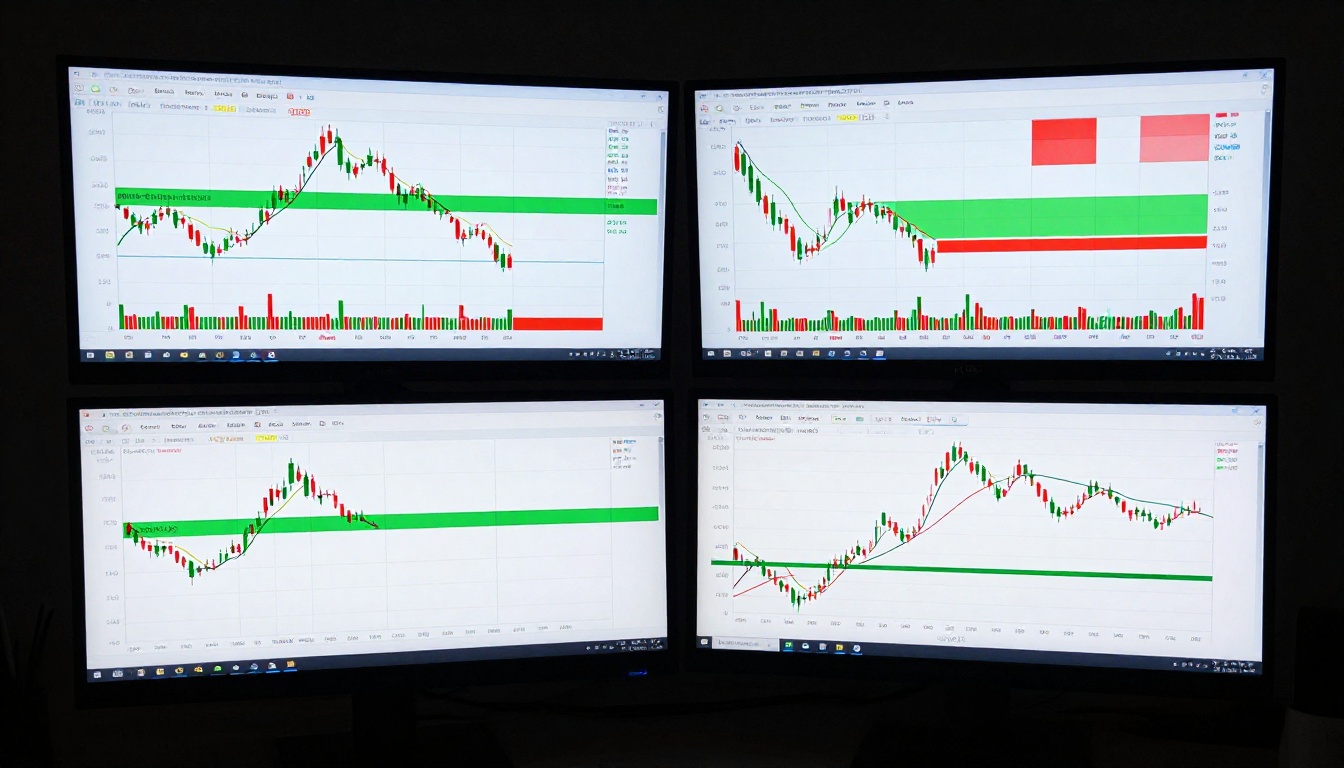
A risk-reward ratio compares how much you stand to lose on a trade to how much you stand to gain. It is arguably the most important number in your trading plan, because it determines whether your strategy can survive a normal losing streak.

Trading the News: How Economic Events Move Forex and What to Do About It

Trading the News: How Economic Events Move Forex and What to Do About It

Every month, a handful of economic data releases move the forex market more in five minutes than most sessions move in five days. Non-Farm Payrolls, CPI prints, and central bank rate decisions create violent spikes, whipsaws, and trend shifts that can make or break a trading account.

What Is a CFD? How Contracts for Difference Work and When to Use Them

What Is a CFD? How Contracts for Difference Work and When to Use Them

A CFD is a contract between you and your broker to exchange the difference in an asset's price from when you open the trade to when you close it. You never own the underlying asset. That single distinction shapes everything about how CFDs work, what they cost, and why regulators treat them differently from traditional investing.