AI-generated content for informational purposes only. Not financial advice. Always do your own research.

About

US Dollar vs Thai Baht. An emerging market pair influenced by tourism, exports, and Bank of Thailand policy.

Forex - Exotic Pairs

USD/THB is an emerging market pair influenced by Thai tourism flows, export demand, and Bank of Thailand monetary policy decisions.

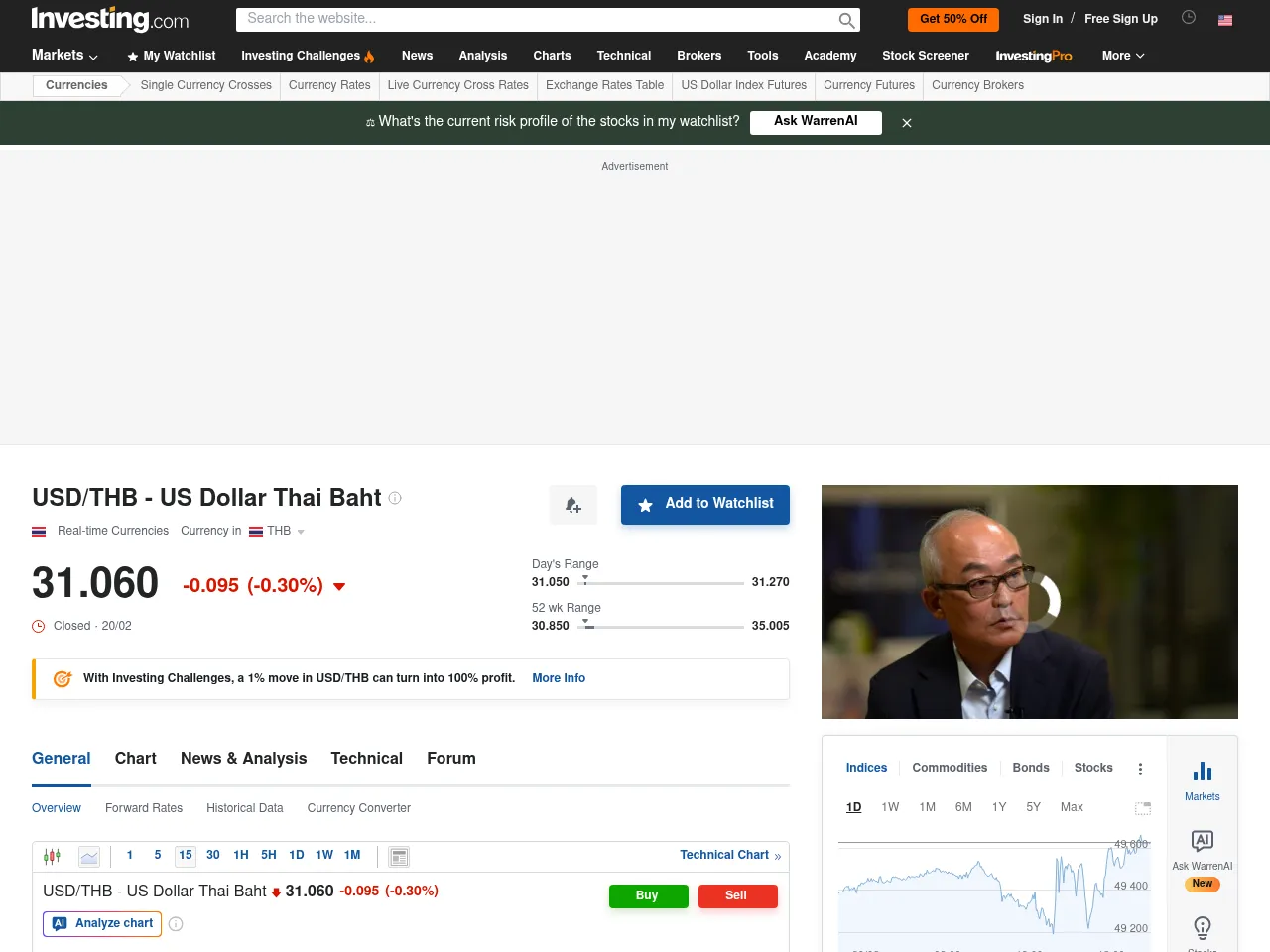
Market Data USD/THB

Price 31.0800
Change (1D) +0.49%
Change (30D) -1.17%
Change (60D) -1.58%
Change (90D) -3.91%
Change (180D) -3.31%
Change (1Y) -7.43%
Change (5Y) -5.86%
52-Week Range 30.7500 — 34.9900
50-Day MA 31.3400

Data updated Feb 15 · Source: Twelve Data

4.2
1 reviews
Historical Performance
4.4
Volatility
4.3
Market Fundamentals
4.2
Accessibility
4.1
Liquidity
4
Claude Opus 4.6
AI Review
4.2/5

USD/THB has been in a sustained downtrend, declining 7.43% over the past year and currently trading at 31.08, near its 52-week low of 30.75. The Thai baht's strength reflects several converging factors: Thailand's tourism recovery continues to bolster current account inflows, while the Bank of Thailand has maintained a relatively hawkish stance compared to regional peers, keeping rates at 2.25% even as the Fed signals potential easing. The pair sits below its 50-day MA of 31.34, confirming bearish momentum. Bearish case: continued foreign capital inflows into Thai assets and narrowing rate differentials could push toward 30.50. Bullish case: Thailand's export sector faces headwinds from China's slowdown, and any risk-off sentiment or delayed Fed cuts could trigger a USD rebound toward 31.50-32.00. Geopolitical uncertainty in Southeast Asia and Thailand's domestic political landscape add volatility risk. Liquidity is decent for an exotic pair, with tight spreads during Asian sessions, making it attractive for traders seeking exposure to ASEAN FX dynamics.

Historical Performance
4.4
Volatility
4.3
Market Fundamentals
4.2
Accessibility
4.1
Liquidity
4
Feb 15, 2026
USD/THB Screenshot

Added: Feb 15, 2026

investing.com/currencies/usd-thb

Latest from Otrai

How to Backtest a Trading Strategy: Methods, Pitfalls, and What the Results Actually Mean

How to Backtest a Trading Strategy: Methods, Pitfalls, and What the Results Actually Mean

Every trader has a strategy that looks great in their head. Backtesting is how you find out whether it actually works. Here is how to test strategies properly, what metrics matter, and why most backtest results are too good to be true.
Risk-Reward Ratios: How to Set Targets That Make Your Strategy Profitable

Risk-Reward Ratios: How to Set Targets That Make Your Strategy Profitable

A risk-reward ratio compares how much you stand to lose on a trade to how much you stand to gain. It is arguably the most important number in your trading plan, because it determines whether your strategy can survive a normal losing streak.

Trading the News: How Economic Events Move Forex and What to Do About It

Trading the News: How Economic Events Move Forex and What to Do About It

Every month, a handful of economic data releases move the forex market more in five minutes than most sessions move in five days. Non-Farm Payrolls, CPI prints, and central bank rate decisions create violent spikes, whipsaws, and trend shifts that can make or break a trading account.

What Is a CFD? How Contracts for Difference Work and When to Use Them

What Is a CFD? How Contracts for Difference Work and When to Use Them

A CFD is a contract between you and your broker to exchange the difference in an asset's price from when you open the trade to when you close it. You never own the underlying asset. That single distinction shapes everything about how CFDs work, what they cost, and why regulators treat them differently from traditional investing.