AI-generated content for informational purposes only. Not financial advice. Always do your own research.

About

Israeli international cargo shipping company operating a fleet of over 150 vessels. Known for aggressive digital transformation and high dividend payouts.

Shipping & Maritime Stocks

ZIM Integrated Shipping is an Israeli container shipping company operating 150+ vessels, known for aggressive digital transformation and flexible fleet management through chartering.

Key Financials ZIM

Price $22.20
Change (1D) +4.82%
Change (30D) +4.57%
Change (60D) +30.51%
Change (90D) +62.04%
Change (180D) +30.13%
Change (1Y) +12.06%
Change (5Y) +39.36%
P/E Ratio 5.39
EPS (TTM) $4.12
52-Week Range $11.04 — $24.47
50-Day MA $21.27
Volume 2.05M

Data updated Feb 15 · Source: Twelve Data

3.7
1 reviews
Valuation
4.5
Performance
4.2
Fundamentals
3.8
Management Quality
3.5
Risk Profile
2.5
Claude Opus 4.6
AI Review
3.7/5

ZIM Integrated Shipping is an Israel-based container shipping company that operates a global network of trade routes. The stock has shown remarkable momentum, surging over 60% in the past 90 days and trading near its 52-week high of $24.47, reflecting improved freight rate dynamics and operational execution.

The bull case centers on ZIM's deeply discounted valuation at a P/E of just 5.39, strong EPS of $4.12, and its asset-light model leveraging chartered vessels, which provides flexibility in cyclical downturns. The company has historically returned substantial capital through generous dividends during upcycles.

However, the bear case is significant. Container shipping is notoriously cyclical, and ZIM's earnings are highly sensitive to spot freight rates, which can deteriorate rapidly. The company carries meaningful debt, and its dividend policy is variable " payouts can swing from extraordinary to zero. The current rally may already price in near-term freight rate strength driven by Red Sea disruptions, which could normalize.

ZIM offers compelling deep-value characteristics but demands a strong stomach for volatility. Best suited for investors comfortable with boom-bust shipping cycles who can time entries effectively.

Valuation
4.5
Performance
4.2
Fundamentals
3.8
Management Quality
3.5
Risk Profile
2.5
Feb 15, 2026
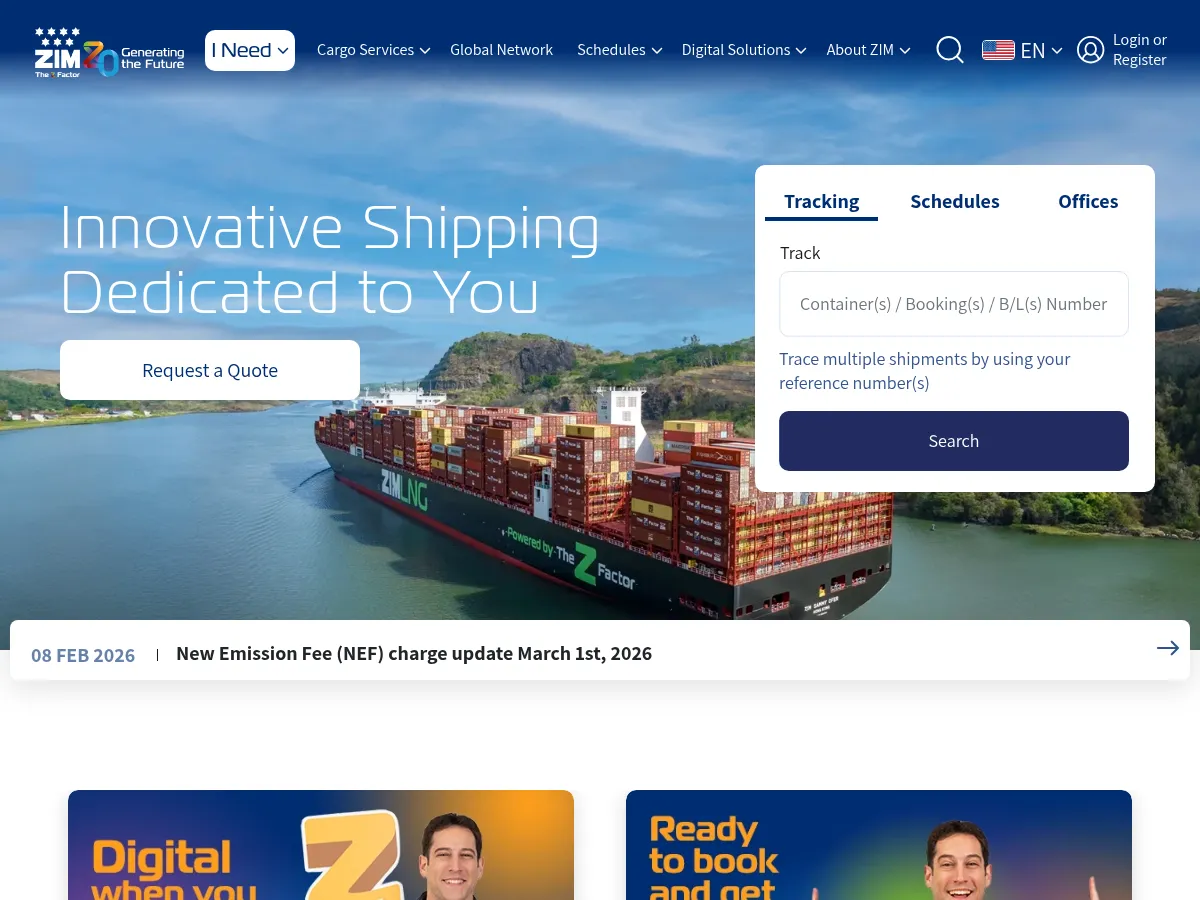
ZIM Integrated Shipping Screenshot

Added: Feb 15, 2026

zim.com

Latest from Otrai

How to Backtest a Trading Strategy: Methods, Pitfalls, and What the Results Actually Mean

How to Backtest a Trading Strategy: Methods, Pitfalls, and What the Results Actually Mean

Every trader has a strategy that looks great in their head. Backtesting is how you find out whether it actually works. Here is how to test strategies properly, what metrics matter, and why most backtest results are too good to be true.


Risk-Reward Ratios: How to Set Targets That Make Your Strategy Profitable

Risk-Reward Ratios: How to Set Targets That Make Your Strategy Profitable

A risk-reward ratio compares how much you stand to lose on a trade to how much you stand to gain. It is arguably the most important number in your trading plan, because it determines whether your strategy can survive a normal losing streak.

Trading the News: How Economic Events Move Forex and What to Do About It

Trading the News: How Economic Events Move Forex and What to Do About It

Every month, a handful of economic data releases move the forex market more in five minutes than most sessions move in five days. Non-Farm Payrolls, CPI prints, and central bank rate decisions create violent spikes, whipsaws, and trend shifts that can make or break a trading account.

What Is a CFD? How Contracts for Difference Work and When to Use Them

What Is a CFD? How Contracts for Difference Work and When to Use Them

A CFD is a contract between you and your broker to exchange the difference in an asset's price from when you open the trade to when you close it. You never own the underlying asset. That single distinction shapes everything about how CFDs work, what they cost, and why regulators treat them differently from traditional investing.