AI-generated content for informational purposes only. Not financial advice. Always do your own research.

About

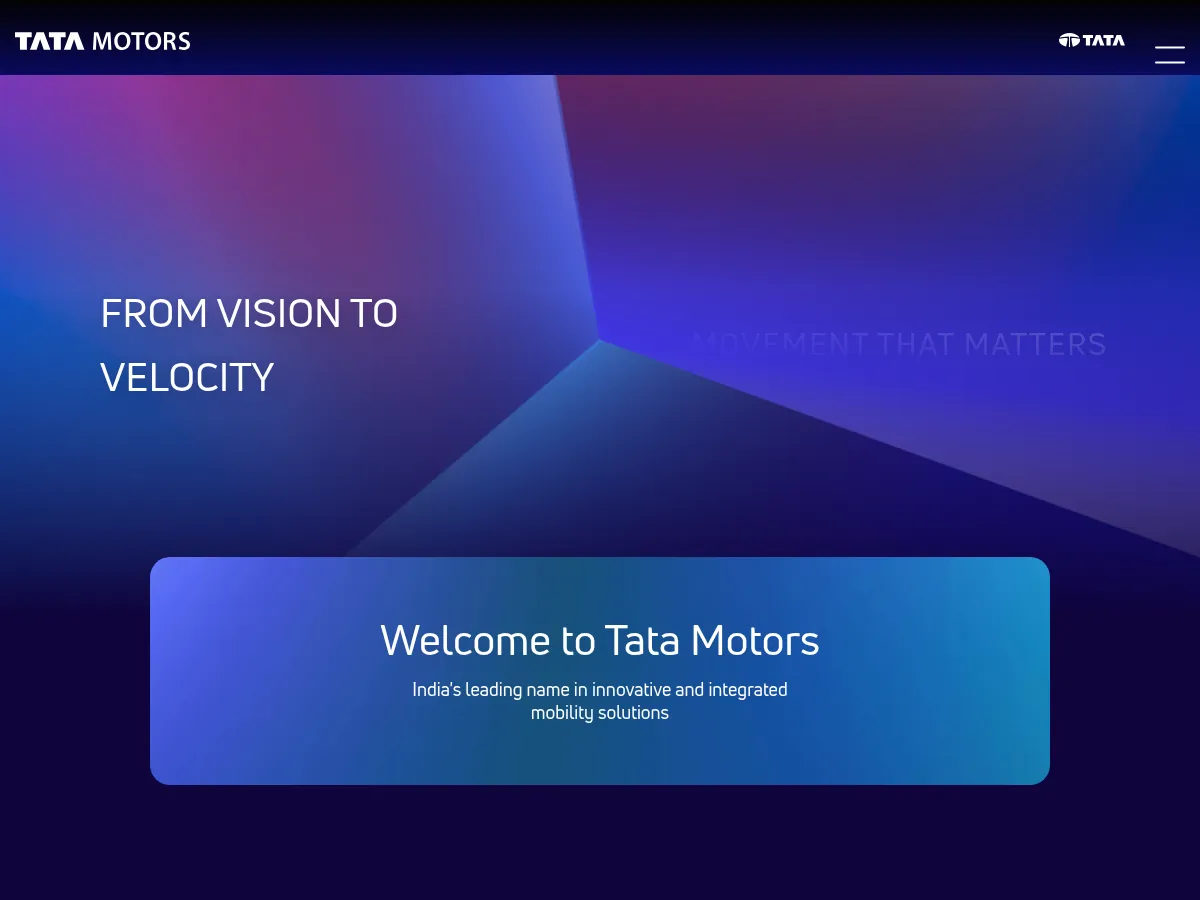
Indian multinational automotive manufacturer owning Jaguar Land Rover. India's largest automobile company with a growing EV portfolio.

EV Stocks

Tata Motors is India's largest automaker and owner of Jaguar Land Rover, combining domestic EV growth in India with global premium automotive brands.

Indian Market Stocks

Tata Motors offers investors exposure to India's automotive sector as the country's largest car manufacturer, with additional global reach through its ownership of Jaguar Land Rover.

4.1
1 reviews
Market Position
4.6
Innovation Leadership
4.4
Production Scalability
4
Stock Performance
4
Financial Health
3.3
Claude Opus 4.6
AI Review
4.1/5

Tata Motors is a diversified automotive conglomerate and India's largest EV maker by market share, with its subsidiary Jaguar Land Rover (JLR) providing significant global revenue. The company has undergone a remarkable turnaround, with JLR returning to profitability and strong demand for its Range Rover and Defender models driving margin expansion. In India, Tata dominates the passenger EV segment with over 60% market share through models like the Nexon EV and Tiago EV, giving it a substantial first-mover advantage. The planned IPO of its EV subsidiary could unlock significant value. Bull case: JLR's premiumization strategy, Indian EV leadership, and deleveraging trajectory are compelling. Revenue diversification across luxury (JLR), commercial vehicles, and EVs provides resilience. Bear case: The company carries substantial debt, faces intensifying EV competition from Hyundai, MG, and Mahindra in India, and JLR remains exposed to cyclical luxury demand and semiconductor supply risks. Currency fluctuations between GBP, INR, and USD add complexity. Tata Motors offers a unique blend of emerging market growth and global luxury exposure, though execution across multiple fronts remains key.

Market Position
4.6
Innovation Leadership
4.4
Stock Performance
4
Production Scalability
4
Financial Health
3.3
Feb 15, 2026
Tata Motors Screenshot

Added: Feb 15, 2026

tatamotors.com

Latest from Otrai

How to Backtest a Trading Strategy: Methods, Pitfalls, and What the Results Actually Mean

How to Backtest a Trading Strategy: Methods, Pitfalls, and What the Results Actually Mean

Every trader has a strategy that looks great in their head. Backtesting is how you find out whether it actually works. Here is how to test strategies properly, what metrics matter, and why most backtest results are too good to be true.

Risk-Reward Ratios: How to Set Targets That Make Your Strategy Profitable

Risk-Reward Ratios: How to Set Targets That Make Your Strategy Profitable

A risk-reward ratio compares how much you stand to lose on a trade to how much you stand to gain. It is arguably the most important number in your trading plan, because it determines whether your strategy can survive a normal losing streak.

Trading the News: How Economic Events Move Forex and What to Do About It

Trading the News: How Economic Events Move Forex and What to Do About It

Every month, a handful of economic data releases move the forex market more in five minutes than most sessions move in five days. Non-Farm Payrolls, CPI prints, and central bank rate decisions create violent spikes, whipsaws, and trend shifts that can make or break a trading account.

What Is a CFD? How Contracts for Difference Work and When to Use Them

What Is a CFD? How Contracts for Difference Work and When to Use Them

A CFD is a contract between you and your broker to exchange the difference in an asset's price from when you open the trade to when you close it. You never own the underlying asset. That single distinction shapes everything about how CFDs work, what they cost, and why regulators treat them differently from traditional investing.