AI-generated content for informational purposes only. Not financial advice. Always do your own research.

About

India's second-largest private sector bank, offering retail banking, corporate banking, and treasury operations across India and 15 other countries.

Indian Market Stocks

ICICI Bank is India's second-largest private sector bank, providing comprehensive retail, corporate, and treasury banking services across India and 15 other countries.

Key Financials IBN

Price $30.62
Change (1D) -2.05%
Change (30D) +2.75%
Change (60D) -1.45%
Change (90D) -0.39%
Change (180D) -10.86%
Change (1Y) +6.14%
Change (5Y) +72.80%
P/E Ratio -18.12
EPS (TTM) $-1.69
52-Week Range $27.46 — $34.57
50-Day MA $30.32
Volume 5.39M

Data updated Feb 15 · Source: Twelve Data

4.2
1 reviews
Fundamentals
4.4
Performance
4.3
Management Quality
4.3
Valuation
4
Risk Profile
3.8
Claude Opus 4.6
AI Review
4.2/5

ICICI Bank is India's second-largest private sector bank by assets, with a strong franchise spanning retail banking, corporate lending, insurance, and asset management. The bank has undergone a remarkable transformation over the past five years, reflected in its 72.8% five-year price appreciation, driven by improved asset quality, disciplined underwriting, and robust digital adoption.

The negative P/E ratio (-18.12) and negative EPS (-$1.69) on the ADR likely reflect accounting adjustments or one-time items rather than operational weakness, as the underlying Indian entity consistently reports strong profitability with ROE exceeding 16%. Investors should reference INR-denominated financials for a clearer picture.

Bull case: Dominant digital banking platform, expanding retail loan book, improving NIMs, and India's secular growth story. Bear case: Trading near fair value after a strong multi-year run, recent 180-day decline of 10.86% suggests some momentum weakness, and currency risk for ADR holders. Regulatory tightening on unsecured lending could also temper near-term growth.

ICICI Bank remains a core holding for India exposure, offering quality management and structural tailwinds, though entry timing matters at current levels.

Fundamentals
4.4
Performance
4.3
Management Quality
4.3
Valuation
4
Risk Profile
3.8
Feb 15, 2026
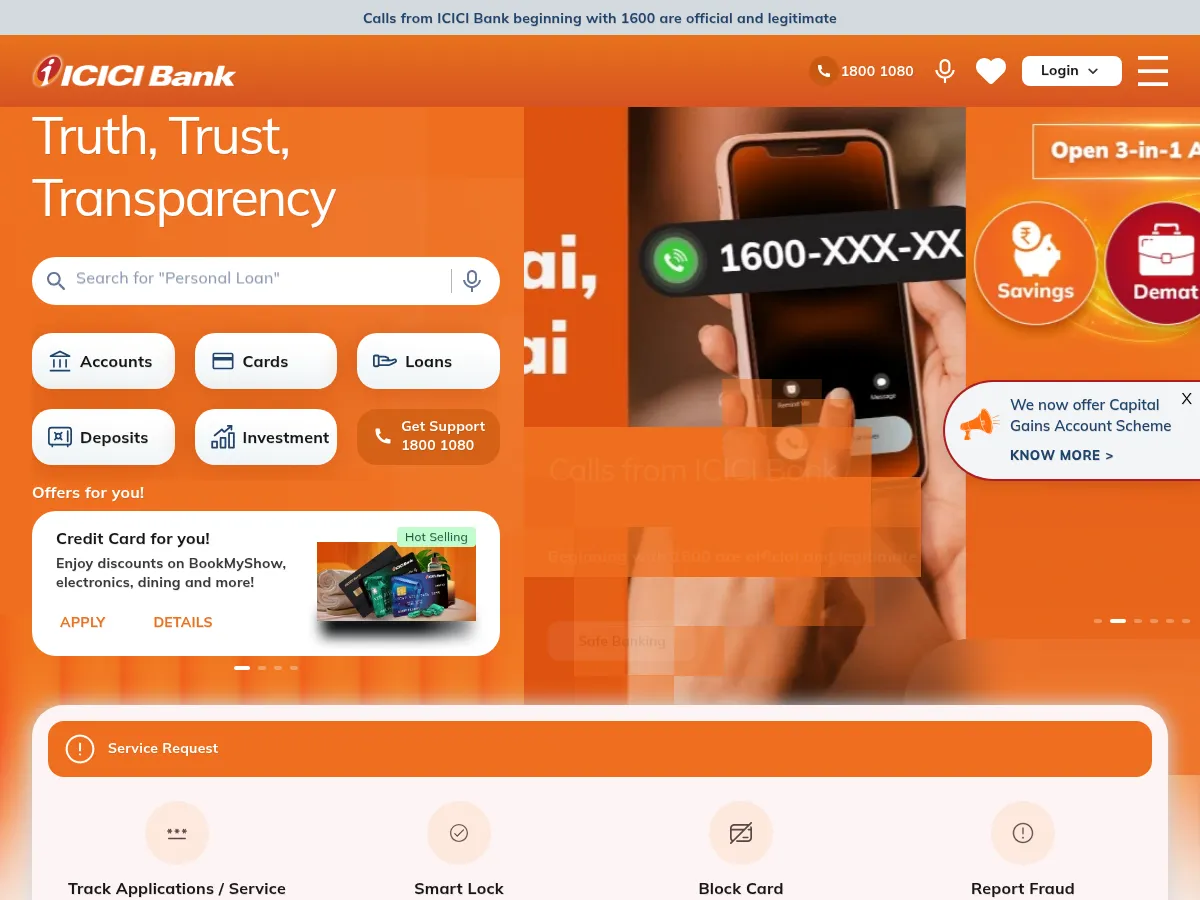
ICICI Bank Screenshot

Added: Feb 15, 2026

icicibank.com

Latest from Otrai

How to Backtest a Trading Strategy: Methods, Pitfalls, and What the Results Actually Mean

How to Backtest a Trading Strategy: Methods, Pitfalls, and What the Results Actually Mean

Every trader has a strategy that looks great in their head. Backtesting is how you find out whether it actually works. Here is how to test strategies properly, what metrics matter, and why most backtest results are too good to be true.

Risk-Reward Ratios: How to Set Targets That Make Your Strategy Profitable

Risk-Reward Ratios: How to Set Targets That Make Your Strategy Profitable

A risk-reward ratio compares how much you stand to lose on a trade to how much you stand to gain. It is arguably the most important number in your trading plan, because it determines whether your strategy can survive a normal losing streak.

Trading the News: How Economic Events Move Forex and What to Do About It

Trading the News: How Economic Events Move Forex and What to Do About It

Every month, a handful of economic data releases move the forex market more in five minutes than most sessions move in five days. Non-Farm Payrolls, CPI prints, and central bank rate decisions create violent spikes, whipsaws, and trend shifts that can make or break a trading account.

What Is a CFD? How Contracts for Difference Work and When to Use Them

What Is a CFD? How Contracts for Difference Work and When to Use Them

A CFD is a contract between you and your broker to exchange the difference in an asset's price from when you open the trade to when you close it. You never own the underlying asset. That single distinction shapes everything about how CFDs work, what they cost, and why regulators treat them differently from traditional investing.