AI-generated content for informational purposes only. Not financial advice. Always do your own research.

About

Developing portable, clean energy solutions using advanced micro nuclear reactors. Working on both microreactors for remote locations and advanced nuclear fuel fabrication.

Nuclear Fusion Stocks

Nano Nuclear Energy's advanced micro reactor development positions it at the frontier of compact nuclear power, with potential applications in remote and off-grid energy generation.

Nuclear Stocks

Nano Nuclear Energy is developing portable micro nuclear reactors for remote power generation, offering speculative exposure to next-generation modular nuclear technology.

Key Financials NNE

Price $24.79
Change (1D) +0.04%
Change (30D) +3.25%
Change (60D) -19.98%
Change (90D) -53.78%
Change (180D) -22.39%
Change (1Y) -28.39%
P/E Ratio 4.77
EPS (TTM) $5.20
52-Week Range $17.26 — $60.87
50-Day MA $31.51
Volume 957.8K

Data updated Feb 15 · Source: Twelve Data

2.5
1 reviews
Management Quality
2.8
Valuation
2.8
Fundamentals
2.3
Performance
2.2
Risk Profile
1.8
Claude Opus 4.6
AI Review
2.5/5

Nano Nuclear Energy is a pre-revenue micro-reactor developer focused on portable advanced nuclear fission reactors (ZEUS and ODIN platforms), targeting off-grid and remote applications. Despite the compelling long-term vision, the stock has experienced severe volatility, down over 53% from its 90-day high and trading well below its 52-week high of $60.87. The reported P/E of 4.77 and EPS of $5.20 appear anomalous for a pre-revenue company and likely reflect one-time items rather than sustainable earnings, warranting investor caution. Bull case: massive addressable market for portable nuclear power, strong policy tailwinds for nuclear energy, and first-mover positioning in micro-reactors. Bear case: the company faces years of regulatory hurdles (NRC licensing), significant capital requirements, no near-term revenue, and intense competition from better-funded players like BWXT and X-energy. Trading below its 50-day MA signals continued bearish momentum. Note: NNE develops fission technology, not fusion, making its placement in fusion categories misleading. This is a highly speculative, long-duration bet on advanced nuclear.

Management Quality
2.8
Valuation
2.8
Fundamentals
2.3
Performance
2.2
Risk Profile
1.8
Feb 15, 2026
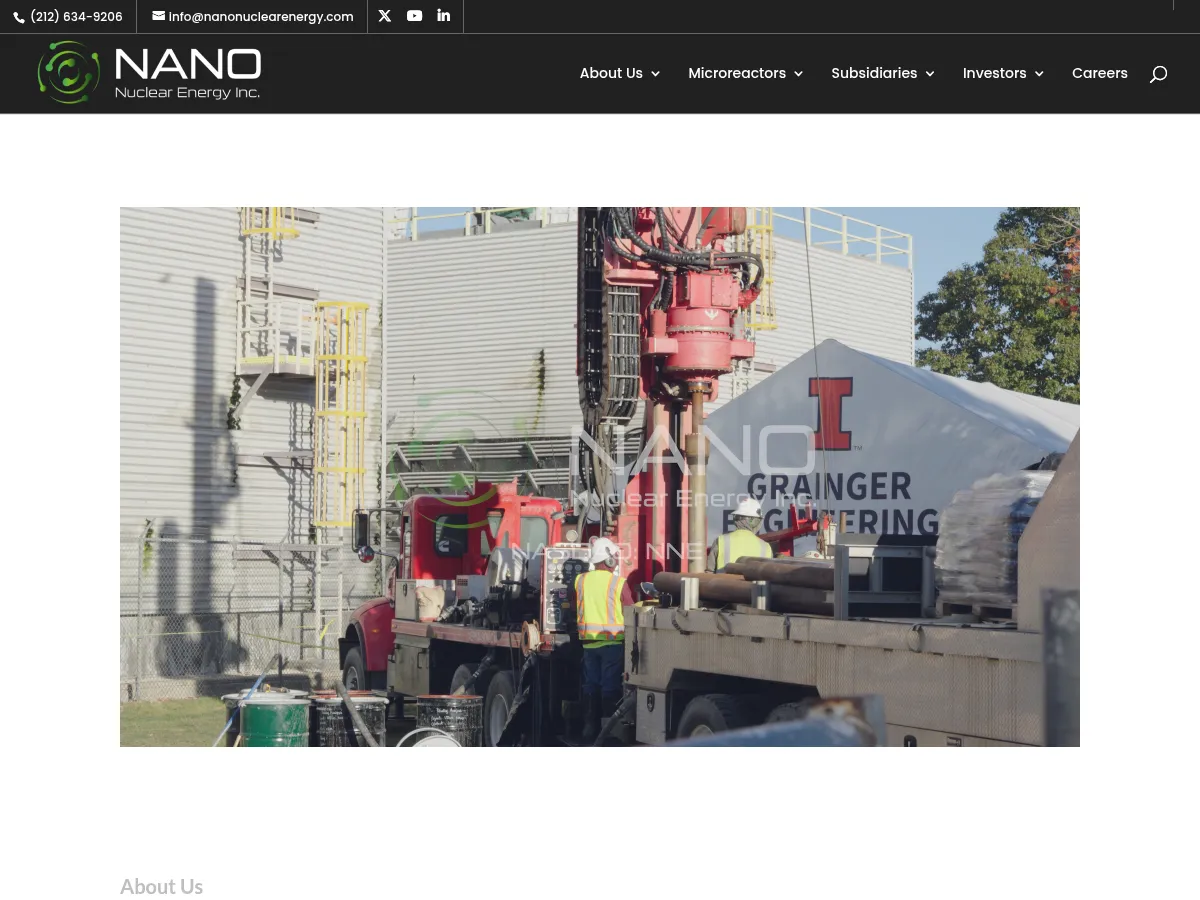
Nano Nuclear Energy Screenshot

Added: Feb 15, 2026

nanonuclearenergy.com

Latest from Otrai

How to Backtest a Trading Strategy: Methods, Pitfalls, and What the Results Actually Mean

How to Backtest a Trading Strategy: Methods, Pitfalls, and What the Results Actually Mean

Every trader has a strategy that looks great in their head. Backtesting is how you find out whether it actually works. Here is how to test strategies properly, what metrics matter, and why most backtest results are too good to be true.
Risk-Reward Ratios: How to Set Targets That Make Your Strategy Profitable

Risk-Reward Ratios: How to Set Targets That Make Your Strategy Profitable

A risk-reward ratio compares how much you stand to lose on a trade to how much you stand to gain. It is arguably the most important number in your trading plan, because it determines whether your strategy can survive a normal losing streak.

Trading the News: How Economic Events Move Forex and What to Do About It

Trading the News: How Economic Events Move Forex and What to Do About It

Every month, a handful of economic data releases move the forex market more in five minutes than most sessions move in five days. Non-Farm Payrolls, CPI prints, and central bank rate decisions create violent spikes, whipsaws, and trend shifts that can make or break a trading account.

What Is a CFD? How Contracts for Difference Work and When to Use Them

What Is a CFD? How Contracts for Difference Work and When to Use Them

A CFD is a contract between you and your broker to exchange the difference in an asset's price from when you open the trade to when you close it. You never own the underlying asset. That single distinction shapes everything about how CFDs work, what they cost, and why regulators treat them differently from traditional investing.