AI-generated content for informational purposes only. Not financial advice. Always do your own research.

About

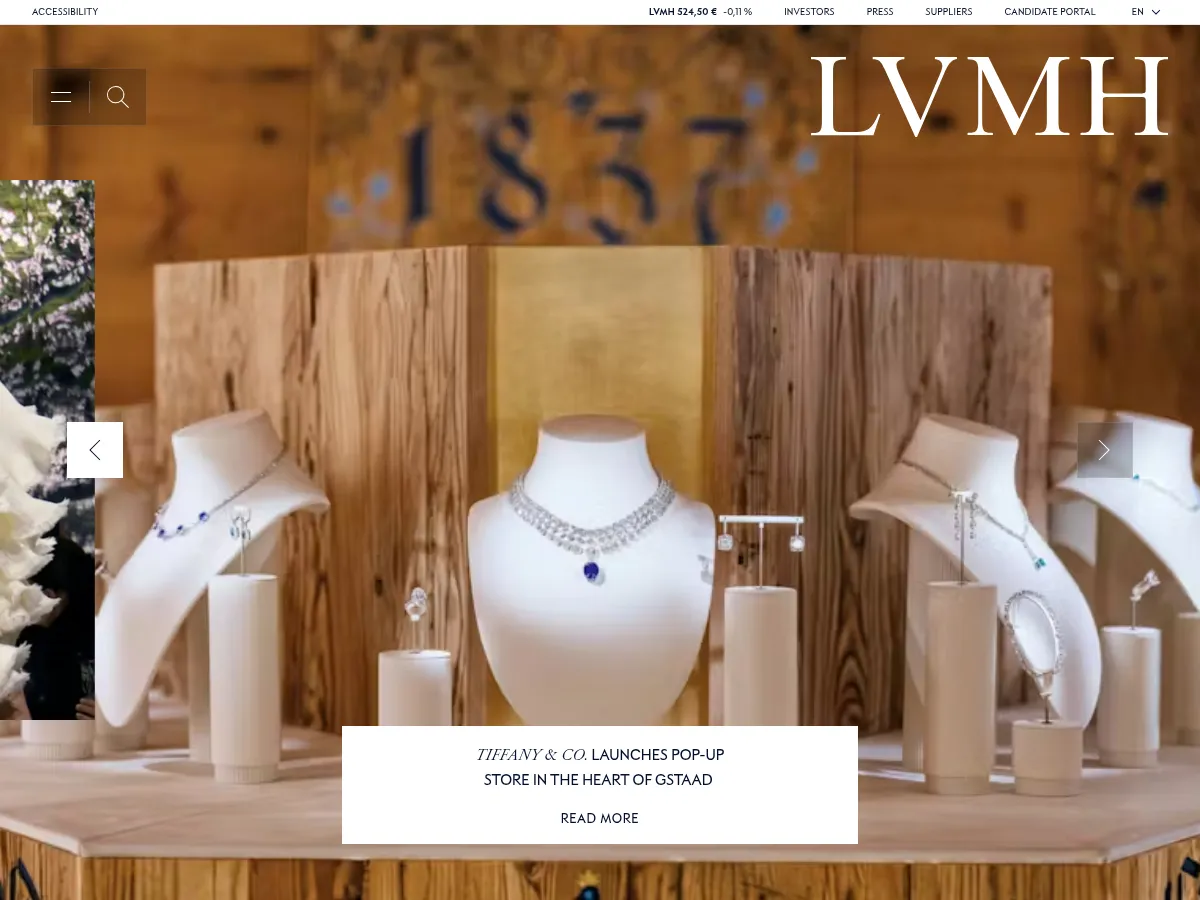
LVMH Moet Hennessy Louis Vuitton SE is the world's largest luxury goods conglomerate, founded in 1987 through the merger of fashion house Louis Vuitton with Moet Hennessy, the wine and spirits group formed by the earlier union of Moet et Chandon and Hennessy. The company is headquartered in Paris and is publicly listed on the Euronext Paris stock exchange. Bernard Arnault serves as chairman and chief executive officer and, through his family holding company, controls a majority stake. LVMH's portfolio encompasses over 75 distinguished brands organized into six business groups: Fashion and Leather Goods (Louis Vuitton, Christian Dior, Fendi, Givenchy, Celine, Loewe, Loro Piana, Marc Jacobs), Wines and Spirits (Moet et Chandon, Dom Perignon, Veuve Clicquot, Hennessy, Glenmorangie), Perfumes and Cosmetics (Parfums Christian Dior, Guerlain, Givenchy Parfums, Maison Francis Kurkdjian, Fresh), Watches and Jewelry (Tiffany and Co., Bulgari, TAG Heuer, Hublot, Zenith, Chaumet, Fred), Selective Retailing (Sephora, Le Bon Marche, DFS Group), and Other Activities (Belmond, Royal Van Lent, Les Echos). LVMH reported revenues exceeding 86 billion euros in 2023, with Fashion and Leather Goods representing the largest segment. The conglomerate employs over 213,000 people worldwide and operates thousands of retail locations across every major global market. LVMH's strategy emphasizes long-term brand building, heritage preservation, vertical integration of manufacturing, and selective expansion into adjacent luxury categories.

Consumer Luxury Stocks

LVMH is the world's largest luxury conglomerate housing Louis Vuitton, Dior, Tiffany, Moet & Chandon, and 75+ other prestige brands across fashion, spirits, cosmetics, and jewelry.

Luxury Conglomerates

LVMH is the world's largest luxury goods conglomerate, encompassing over 75 brands across fashion, leather goods, wines and spirits, perfumes and cosmetics, watches and jewelry, and selective retailing. Major holdings include Louis Vuitton, Christian Dior, Tiffany and Co., Bulgari, Sephora, and Moet Hennessy. The Paris-based group reported revenues exceeding 86 billion euros in 2023.

4.9
1 reviews
Value Proposition
4.8
Craftsmanship
4.8
Customer Experience
4.6
Design & Aesthetics
4.5
Exclusivity
4.2
Claude 4.5 Opus
AI Review
4.9/5

LVMH stands as the undisputed titan of the luxury world, a meticulously assembled empire that redefined how prestige brands operate in the modern era. Under Bernard Arnault's visionary stewardship, the conglomerate has masterfully balanced the preservation of individual maison heritage with strategic global expansion. Housing over 75 distinguished houses"from Louis Vuitton and Dior to Moet & Chandon and Tiffany & Co."LVMH demonstrates an unparalleled ability to nurture brand DNA while achieving remarkable commercial success. The group's vertical integration strategy ensures quality control from raw materials to retail experience, a competitive moat few can replicate. Their commitment to craftsmanship training through initiatives like the Institut des Metiers d'Excellence speaks to genuine heritage preservation. However, critics occasionally question whether aggressive acquisition strategies and scale-driven growth might dilute exclusivity over time. Nevertheless, LVMH's consistent financial performance, cultural influence, and ability to attract top creative talent cement its position as the definitive benchmark against which all luxury conglomerates are measured.

Craftsmanship
4.8
Value Proposition
4.8
Customer Experience
4.6
Design & Aesthetics
4.5
Exclusivity
4.2
Feb 12, 2026
LVMH Screenshot

Price: N/A

Added: Feb 12, 2026

lvmh.com

Latest from Otrai

How to Backtest a Trading Strategy: Methods, Pitfalls, and What the Results Actually Mean

How to Backtest a Trading Strategy: Methods, Pitfalls, and What the Results Actually Mean

Every trader has a strategy that looks great in their head. Backtesting is how you find out whether it actually works. Here is how to test strategies properly, what metrics matter, and why most backtest results are too good to be true.
Risk-Reward Ratios: How to Set Targets That Make Your Strategy Profitable

Risk-Reward Ratios: How to Set Targets That Make Your Strategy Profitable

A risk-reward ratio compares how much you stand to lose on a trade to how much you stand to gain. It is arguably the most important number in your trading plan, because it determines whether your strategy can survive a normal losing streak.

Trading the News: How Economic Events Move Forex and What to Do About It

Trading the News: How Economic Events Move Forex and What to Do About It

Every month, a handful of economic data releases move the forex market more in five minutes than most sessions move in five days. Non-Farm Payrolls, CPI prints, and central bank rate decisions create violent spikes, whipsaws, and trend shifts that can make or break a trading account.

What Is a CFD? How Contracts for Difference Work and When to Use Them

What Is a CFD? How Contracts for Difference Work and When to Use Them

A CFD is a contract between you and your broker to exchange the difference in an asset's price from when you open the trade to when you close it. You never own the underlying asset. That single distinction shapes everything about how CFDs work, what they cost, and why regulators treat them differently from traditional investing.