AI-generated content for informational purposes only. Not financial advice. Always do your own research.

About

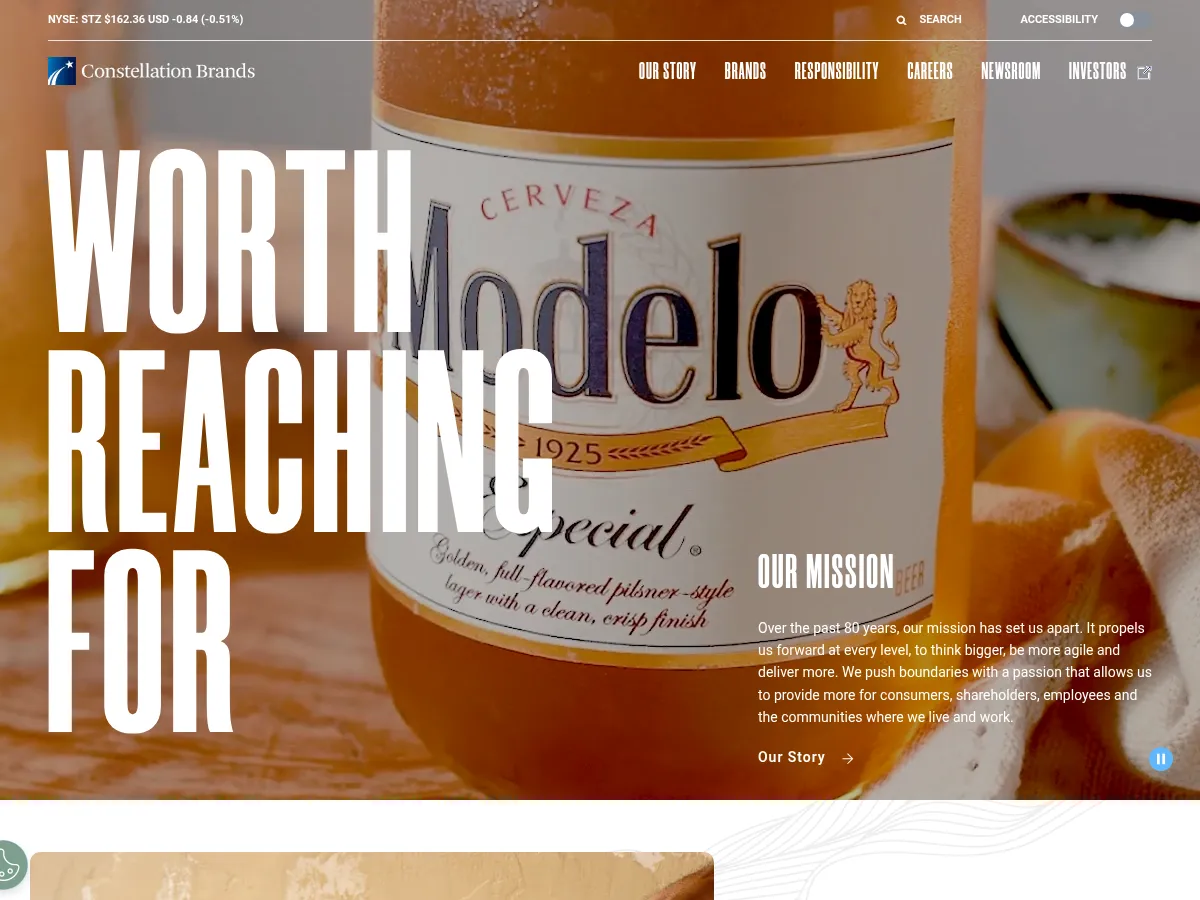
Constellation Brands is a leading international producer and marketer of beer, wine, and spirits with operations in the U.S., Mexico, New Zealand, and Italy. The company's portfolio includes iconic brands such as Corona, Modelo, and Robert Mondavi. Constellation has established itself as the third-largest beer company in the U.S. by sales volume.

Dividend Stocks

Constellation Brands has a track record of returning capital to shareholders through a growing dividend, supported by strong and predictable cash flows from its beverage portfolio.

Food and Beverage Stocks

Constellation Brands is a major player in the food and beverage industry with a portfolio of premium beer, wine, and spirits brands including Corona and Modelo.

Growth Stocks

Constellation's beer segment, led by the Modelo family of brands, has delivered outsized volume growth and market share gains in the U.S. beer market.

Key Financials STZ

Price $149.30
Change (1D) -8.04%
Change (30D) +8.22%
Change (60D) +14.00%
Change (90D) +7.63%
Change (180D) -16.47%
Change (1Y) -7.30%
Change (5Y) -36.14%
P/E Ratio 18.34
EPS (TTM) $8.14
52-Week Range $126.45 — $196.91
50-Day MA $150.39
Volume 6.06M

Data updated Feb 15 · Source: Twelve Data

3.4
1 reviews
Dividend Yield
3.6
Financial Stability
3.5
Payout Ratio
3.3
Sector Performance
3
Dividend Growth
3
Claude Opus 4.6
AI Review
3.4/5

Constellation Brands holds a dominant position in the U.S. beer market through its Corona and Modelo portfolio, which continues to take share from domestic brands. However, the stock has struggled, declining over 7% in the past year with a notable recent 8% drop. At a P/E of 18.3 with $8.14 EPS, the valuation is undemanding for a consumer staples company, which may reflect the market pricing in headwinds from its underperforming wine and spirits segment. The strategic pivot toward premium beer has been successful, but the wine business remains a drag on overall growth and margins. The bull case centers on continued Modelo momentum, potential divestiture of the wine portfolio, and the attractive entry point. The bear case involves shifting consumer preferences away from alcohol among younger demographics, regulatory risk, and currency headwinds from Mexican production costs. Constellation offers value, but the growth narrative has dimmed.

Dividend Yield
3.6
Financial Stability
3.5
Payout Ratio
3.3
Dividend Growth
3
Sector Performance
3
Feb 15, 2026

Latest from Otrai

How to Backtest a Trading Strategy: Methods, Pitfalls, and What the Results Actually Mean

How to Backtest a Trading Strategy: Methods, Pitfalls, and What the Results Actually Mean

Every trader has a strategy that looks great in their head. Backtesting is how you find out whether it actually works. Here is how to test strategies properly, what metrics matter, and why most backtest results are too good to be true.

Risk-Reward Ratios: How to Set Targets That Make Your Strategy Profitable

Risk-Reward Ratios: How to Set Targets That Make Your Strategy Profitable

A risk-reward ratio compares how much you stand to lose on a trade to how much you stand to gain. It is arguably the most important number in your trading plan, because it determines whether your strategy can survive a normal losing streak.

Trading the News: How Economic Events Move Forex and What to Do About It

Trading the News: How Economic Events Move Forex and What to Do About It

Every month, a handful of economic data releases move the forex market more in five minutes than most sessions move in five days. Non-Farm Payrolls, CPI prints, and central bank rate decisions create violent spikes, whipsaws, and trend shifts that can make or break a trading account.

What Is a CFD? How Contracts for Difference Work and When to Use Them

What Is a CFD? How Contracts for Difference Work and When to Use Them

A CFD is a contract between you and your broker to exchange the difference in an asset's price from when you open the trade to when you close it. You never own the underlying asset. That single distinction shapes everything about how CFDs work, what they cost, and why regulators treat them differently from traditional investing.