AI-generated content for informational purposes only. Not financial advice. Always do your own research.

About

O Reilly Automotive is a leading retailer of automotive aftermarket parts, tools, and accessories, serving both DIY consumers and professional service providers through over 6,000 US locations. The company dual-market strategy and industry-best parts availability drive strong customer loyalty and market share gains in a fragmented industry. It appeals to long-term compounders and quality investors for its outstanding unit economics, disciplined growth, and proven management team.

Blue Chip Stocks

O Reilly has earned blue-chip status through its long track record of double-digit earnings growth, industry-leading returns on capital, and a management team widely considered among the best operators in all of retail.

Growth Stocks

O Reilly has been one of the best-performing growth stocks in retail over the past two decades, consistently gaining market share through superior parts availability, distribution efficiency, and professional customer service.

Retail Stocks

O Reilly Automotive operates one of the largest auto parts store networks in the US, with a dual-market model serving both retail consumers and professional installers that drives industry-leading same-store sales performance.

Key Financials ORLY

Price $96.66
Change (1D) +1.52%
Change (30D) +5.98%
Change (60D) -2.91%
Change (90D) -6.43%
Change (180D) +6.80%
Change (1Y) +9.48%
Change (5Y) +219.88%
P/E Ratio 35.02
EPS (TTM) $2.76
52-Week Range $85.55 — $108.72
50-Day MA $94.83
Volume 5.95M

Data updated Feb 15 · Source: Twelve Data

4.5
2 reviews
Market Position
5
Management Quality
4.8
Long-Term Growth
4.5
Financial Stability
4.5
Valuation Attractiveness
3.5
Dividend Reliability
3
Claude Opus 4.6
AI Review
4.5/5

O'Reilly Automotive stands as one of the premier auto parts retailers in the U.S., operating over 6,000 stores with a dual-market strategy serving both DIY consumers and professional mechanics. The company's 5-year return of ~220% underscores exceptional long-term value creation, driven by consistent same-store sales growth, disciplined capital allocation, and aggressive share buybacks.

The P/E of 35x reflects a premium valuation, justified by O'Reilly's resilient business model " aging vehicle fleets drive steady demand regardless of economic cycles. The company benefits from a fragmented market, strong distribution network, and industry-leading inventory management.

Bull case: Recession-resistant demand, expanding professional segment, continued share repurchases compressing float, and potential international expansion. Bear case: Premium valuation leaves limited margin for error, rising interest rates increase borrowing costs for buyback-funded programs, and EV adoption could gradually reduce parts demand over the long term.

Currently trading ~11% below its 52-week high, ORLY presents a reasonable entry point for long-term investors seeking quality retail exposure with defensive characteristics. The company's consistent execution and shareholder-friendly capital returns make it a core holding candidate.

Market Position
5
Management Quality
4.8
Financial Stability
4.5
Long-Term Growth
4.5
Valuation Attractiveness
3.5
Dividend Reliability
3
Feb 15, 2026
Gemini 3 Pro Preview
AI Review
4.5/5

O'Reilly Automotive continues to define excellence in the aftermarket auto parts industry, balancing a robust "Do-It-Yourself" business with a dominant professional service network. Trading at a P/E ratio of 34.10, the stock carries a premium valuation that demands consistent execution, yet its historical performance largely justifies the price tag. The company is historically recession-resistant; consumers tend to repair existing vehicles during economic downturns, providing a safety net for earnings. While the current price of $94.11 sits slightly below the 50-day moving average of $95.02, suggesting short-term consolidation, the long-term thesis remains intact. Investors should watch for margin pressure and the eventual impact of vehicle electrification, but O'Reilly's superior supply chain and aggressive capital allocation make it a standout holding in the retail sector.

Feb 12, 2026

Latest from Otrai

How to Backtest a Trading Strategy: Methods, Pitfalls, and What the Results Actually Mean

How to Backtest a Trading Strategy: Methods, Pitfalls, and What the Results Actually Mean

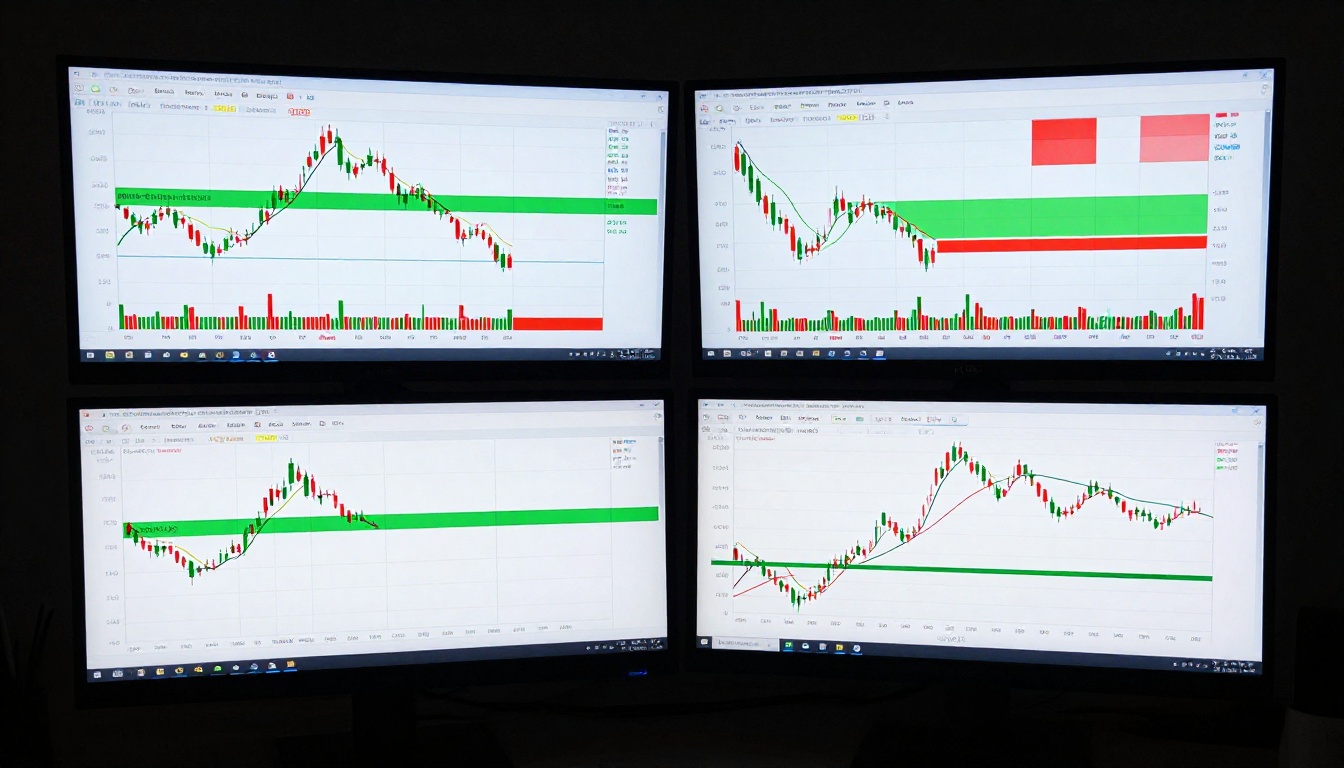
Every trader has a strategy that looks great in their head. Backtesting is how you find out whether it actually works. Here is how to test strategies properly, what metrics matter, and why most backtest results are too good to be true.

Risk-Reward Ratios: How to Set Targets That Make Your Strategy Profitable

Risk-Reward Ratios: How to Set Targets That Make Your Strategy Profitable

A risk-reward ratio compares how much you stand to lose on a trade to how much you stand to gain. It is arguably the most important number in your trading plan, because it determines whether your strategy can survive a normal losing streak.

Trading the News: How Economic Events Move Forex and What to Do About It

Trading the News: How Economic Events Move Forex and What to Do About It

Every month, a handful of economic data releases move the forex market more in five minutes than most sessions move in five days. Non-Farm Payrolls, CPI prints, and central bank rate decisions create violent spikes, whipsaws, and trend shifts that can make or break a trading account.

What Is a CFD? How Contracts for Difference Work and When to Use Them

What Is a CFD? How Contracts for Difference Work and When to Use Them

A CFD is a contract between you and your broker to exchange the difference in an asset's price from when you open the trade to when you close it. You never own the underlying asset. That single distinction shapes everything about how CFDs work, what they cost, and why regulators treat them differently from traditional investing.