AI-generated content for informational purposes only. Not financial advice. Always do your own research.

About

UPS (UPS) is the world's largest package delivery company and a leading provider of supply chain management solutions, handling an average of over 20 million packages per day. The company's dense domestic network, growing healthcare logistics segment, and disciplined revenue-quality strategy support strong margins. UPS is prized by dividend investors for its reliable and growing payout, underpinned by substantial free cash flow generation.

Dividend Aristocrat Stocks

UPS is the world's largest package delivery company with a strong track record of dividend growth, benefiting from the essential nature of global logistics and e-commerce-driven parcel volume.

Dividend Stocks

UPS is a high-quality dividend stock with a strong commitment to shareholder returns, targeting a payout ratio that rewards income investors with a growing dividend backed by consistent free cash flow.

Industrial Stocks

UPS is a core industrial stock and the world's largest package delivery company, with a dense domestic network, growing healthcare logistics division, and a focus on revenue quality driving margin improvement.

Infrastructure Stocks

UPS operates a global logistics network that serves as critical supply chain infrastructure, connecting businesses across 220+ countries with integrated air and ground delivery capabilities.

Transportation & Logistics Stocks

UPS is the world's largest package delivery company, providing supply chain management and freight services through a global logistics network that serves as essential commerce infrastructure.

Key Financials UPS

Price $119.24
Change (1D) +0.99%
Change (30D) +20.21%
Change (60D) +26.60%
Change (90D) +37.66%
Change (180D) +23.26%
Change (1Y) +4.36%
Change (5Y) -28.56%
P/E Ratio 15.79
EPS (TTM) $7.55
52-Week Range $82.00 — $123.70
50-Day MA $105.65
Volume 4.97M

Data updated Feb 15 · Source: Twelve Data

4.2
2 reviews
Dividend Yield
4.5
Total Return Potential
3.8
Financial Stability
3.7
Dividend Growth Streak
3.5
Payout Ratio Safety
3.3
Sector Resilience
2.8
Claude Opus 4.6
AI Review
3.8/5

UPS has staged a notable recovery, surging nearly 38% over the past 90 days and trading near its 52-week high of $123.70, well above its 50-day moving average. The P/E ratio of 15.79 with EPS of $7.55 suggests reasonable valuation for a logistics giant, though the 5-year decline of nearly 29% reflects persistent headwinds including volume losses to competitors, labor cost pressures from the 2023 Teamsters contract, and Amazon's growing in-house delivery capabilities. The bull case centers on CEO Carol Tome's 'better not bigger' strategy emphasizing margin improvement, healthcare logistics expansion, and cost restructuring. UPS's generous dividend yield (approximately 5%+) remains a key attraction, supported by strong free cash flow generation, though investors should monitor payout sustainability if earnings compress further. The bear case includes ongoing e-commerce market share erosion and macroeconomic sensitivity. UPS remains a solid income play with turnaround potential, but competitive threats warrant caution on the growth outlook.

Dividend Yield
4.5
Total Return Potential
3.8
Financial Stability
3.7
Dividend Growth Streak
3.5
Payout Ratio Safety
3.3
Sector Resilience
2.8
Feb 15, 2026
Gemini 3 Pro Preview
AI Review
4.5/5

United Parcel Service (UPS) continues to anchor the global logistics sector, benefiting from the persistent strength of e-commerce and supply chain complexity. Trading near its 52-week high of $123.70, the stock has displayed significant recent momentum, currently sitting well above its 50-day moving average of $104.72. Despite this rally, the valuation remains reasonable with a P/E ratio of 15.89, suggesting the price is supported by solid earnings of $7.55 per share rather than speculative hype.

For income-focused investors, UPS remains a premier holding, offering a reliable dividend supported by robust free cash flow and pricing power. However, risks remain; the company is sensitive to macroeconomic cycles, and any slowdown in consumer spending directly impacts shipping volumes. Additionally, rising labor costs and competition from Amazon's internal logistics network present long-term challenges. Overall, UPS offers a compelling blend of industrial stability and income generation.

Feb 12, 2026

Latest from Otrai

How to Backtest a Trading Strategy: Methods, Pitfalls, and What the Results Actually Mean

How to Backtest a Trading Strategy: Methods, Pitfalls, and What the Results Actually Mean

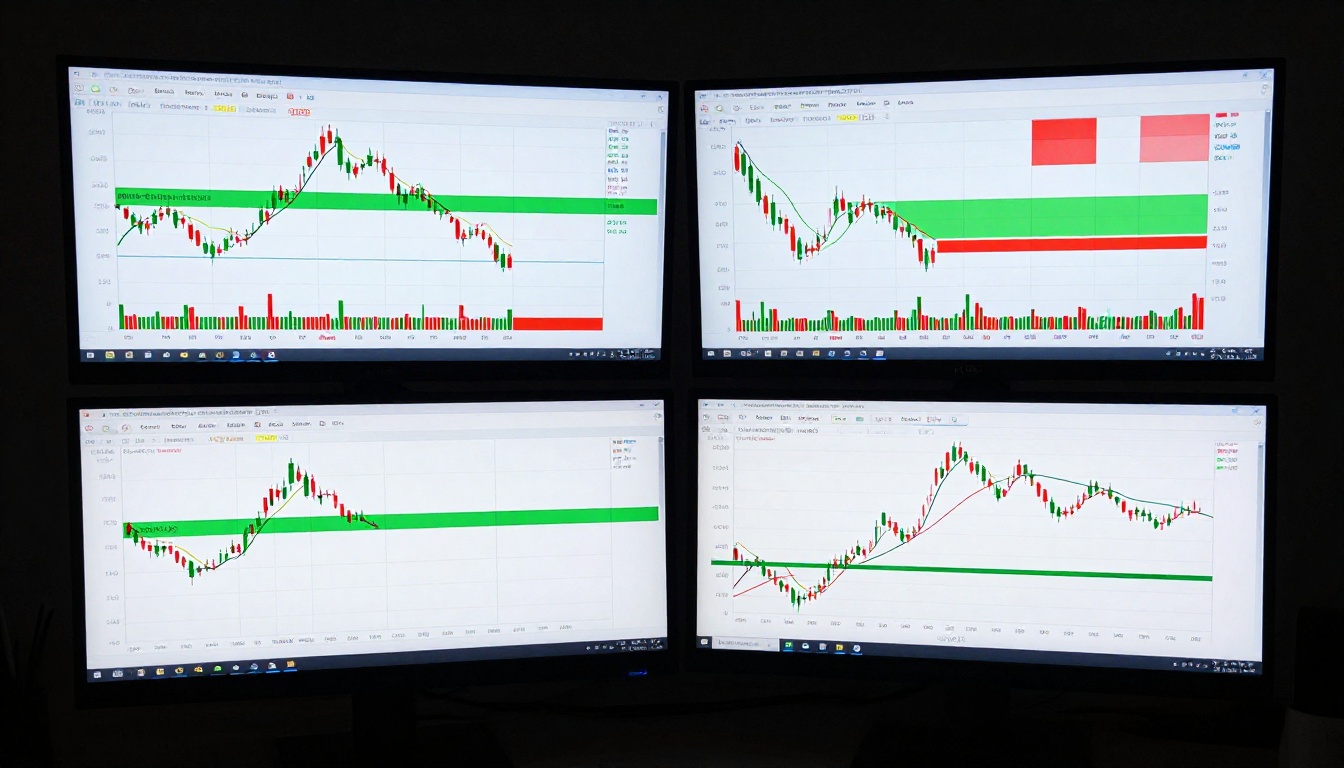
Every trader has a strategy that looks great in their head. Backtesting is how you find out whether it actually works. Here is how to test strategies properly, what metrics matter, and why most backtest results are too good to be true.

Risk-Reward Ratios: How to Set Targets That Make Your Strategy Profitable

Risk-Reward Ratios: How to Set Targets That Make Your Strategy Profitable

A risk-reward ratio compares how much you stand to lose on a trade to how much you stand to gain. It is arguably the most important number in your trading plan, because it determines whether your strategy can survive a normal losing streak.

Trading the News: How Economic Events Move Forex and What to Do About It

Trading the News: How Economic Events Move Forex and What to Do About It

Every month, a handful of economic data releases move the forex market more in five minutes than most sessions move in five days. Non-Farm Payrolls, CPI prints, and central bank rate decisions create violent spikes, whipsaws, and trend shifts that can make or break a trading account.

What Is a CFD? How Contracts for Difference Work and When to Use Them

What Is a CFD? How Contracts for Difference Work and When to Use Them

A CFD is a contract between you and your broker to exchange the difference in an asset's price from when you open the trade to when you close it. You never own the underlying asset. That single distinction shapes everything about how CFDs work, what they cost, and why regulators treat them differently from traditional investing.