AI-generated content for informational purposes only. Not financial advice. Always do your own research.

About

Delta Air Lines (NYSE: DAL) is one of the world's largest and most profitable airlines, operating a global network of over 4,000 daily flights to more than 275 destinations across six continents from major hubs including Atlanta, Minneapolis, Detroit, Salt Lake City, and New York-JFK. The company has distinguished itself among legacy carriers through superior operational reliability, a premium-focused strategy with industry-leading customer satisfaction scores, and a highly profitable loyalty partnership with American Express that generates billions in annual revenue. Delta is often considered the highest-quality investment among U.S. airlines, offering strong free cash flow generation, disciplined capacity management, and a premium brand positioning that supports above-average unit revenue.

Airline Stocks

Delta is a top-tier airline stock widely regarded as the best-managed U.S. legacy carrier, known for its operational excellence, premium-focused strategy, and industry-leading profitability driven by a powerful loyalty program and a diversified global route network centered on the world's busiest hub in Atlanta.

Transportation & Logistics Stocks

Delta is one of the world's largest and most profitable airlines, operating over 4,000 daily flights with a premium-focused strategy and strong loyalty program driving above-peer profitability.

Key Financials DAL

Price $69.00
Change (1D) -0.72%
Change (30D) -0.58%
Change (60D) +23.74%
Change (90D) +18.43%
Change (180D) +41.98%
Change (1Y) +4.03%
Change (5Y) +62.31%
P/E Ratio 10.28
EPS (TTM) $6.71
52-Week Range $34.74 — $76.39
50-Day MA $69.84
Volume 7.38M

Data updated Feb 15 · Source: Twelve Data

4.6
2 reviews
Management Quality
4.6
Fundamentals
4.6
Performance
4.6
Valuation
4.4
Risk Profile
3.8
Claude Opus 4.6
AI Review
4.5/5

Delta Air Lines stands as the premium carrier in the U.S. airline industry, consistently delivering superior operational performance and financial results relative to peers. The stock trades at a compelling P/E of 10.28 with strong EPS of $6.71, reflecting solid profitability that distinguishes Delta from most competitors. The 42% gain over 180 days signals renewed investor confidence in the travel demand cycle.

Bull case: Delta's premium revenue strategy, loyalty program (SkyMiles/Amex partnership generating billions annually), and operational reliability create a durable competitive moat. Management has prioritized balance sheet repair post-pandemic, and free cash flow generation supports both debt reduction and shareholder returns. The stock remains attractively valued below historical multiples.

Bear case: Airlines remain inherently cyclical and exposed to fuel price volatility, economic downturns, and labor cost pressures. The stock sits just below its 50-day moving average, suggesting near-term momentum has stalled. A recession could quickly compress margins despite Delta's premium positioning.

Delta is the best-in-class airline investment, offering reasonable valuation with above-average execution, though sector-wide risks persist.

Performance
4.6
Fundamentals
4.6
Management Quality
4.6
Valuation
4.4
Risk Profile
3.8
Feb 15, 2026
Gemini 3 Pro Preview
AI Review
4.7/5

Delta Air Lines (DAL) continues to distinguish itself as the premier legacy carrier in the United States, prioritizing operational reliability and premium customer experiences. Trading near its 52-week high of $75.72, the stock reflects strong momentum, supported by a compelling P/E ratio of 11.10 and robust trailing earnings of $6.71 per share. Delta's focus on high-margin revenue streams, particularly its lucrative American Express partnership and international network, provides a competitive moat against low-cost rivals.

However, the airline industry remains inherently cyclical. Investors must weigh Delta's solid financial health against persistent risks such as volatile jet fuel prices, labor cost inflation, and potential macroeconomic headwinds that could dampen travel demand. Despite these sector-wide challenges, Delta's disciplined capital allocation and debt reduction efforts make it a standout choice within the aviation sector for investors willing to tolerate moderate volatility.

Feb 11, 2026
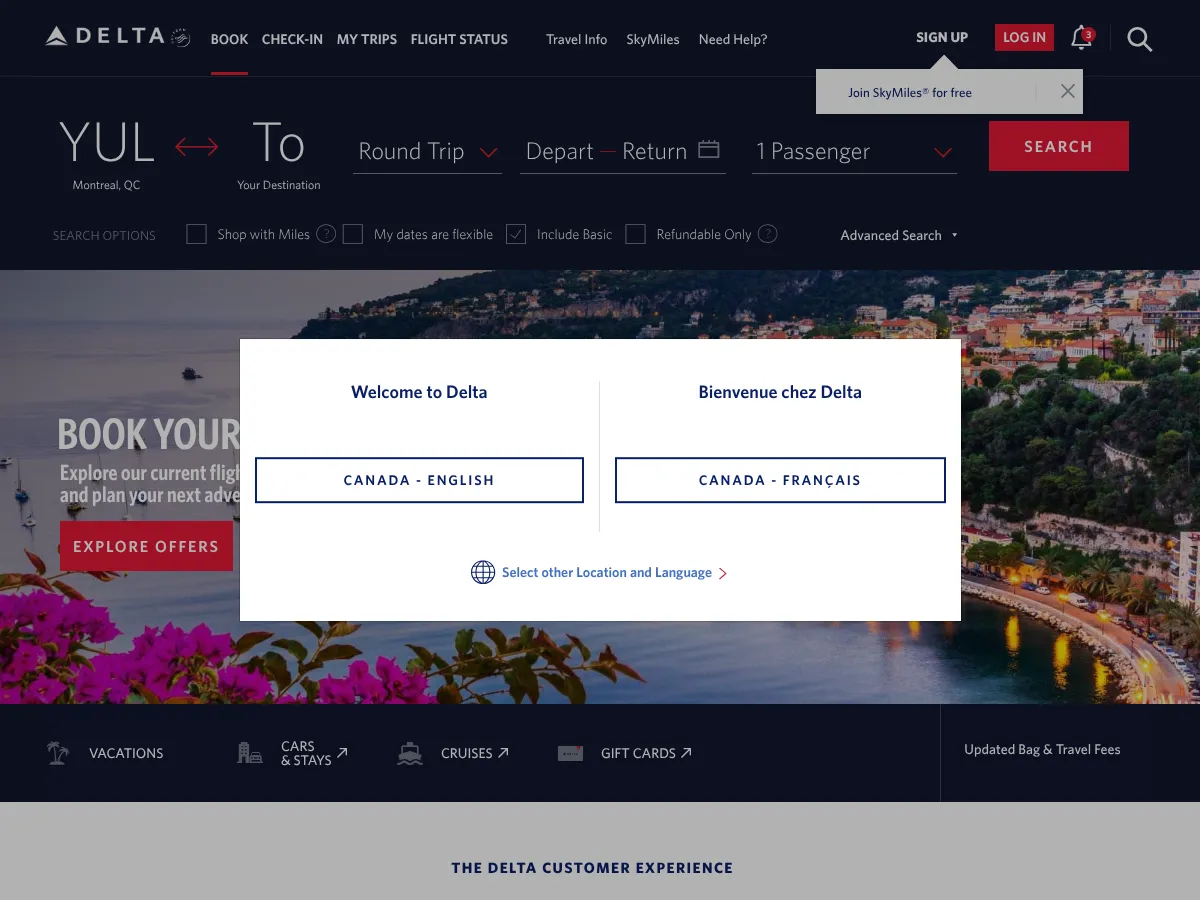
Delta Air Lines Screenshot

Added: Feb 10, 2026

delta.com

Latest from Otrai

How to Backtest a Trading Strategy: Methods, Pitfalls, and What the Results Actually Mean

How to Backtest a Trading Strategy: Methods, Pitfalls, and What the Results Actually Mean

Every trader has a strategy that looks great in their head. Backtesting is how you find out whether it actually works. Here is how to test strategies properly, what metrics matter, and why most backtest results are too good to be true.


Risk-Reward Ratios: How to Set Targets That Make Your Strategy Profitable

Risk-Reward Ratios: How to Set Targets That Make Your Strategy Profitable

A risk-reward ratio compares how much you stand to lose on a trade to how much you stand to gain. It is arguably the most important number in your trading plan, because it determines whether your strategy can survive a normal losing streak.

Trading the News: How Economic Events Move Forex and What to Do About It

Trading the News: How Economic Events Move Forex and What to Do About It

Every month, a handful of economic data releases move the forex market more in five minutes than most sessions move in five days. Non-Farm Payrolls, CPI prints, and central bank rate decisions create violent spikes, whipsaws, and trend shifts that can make or break a trading account.

What Is a CFD? How Contracts for Difference Work and When to Use Them

What Is a CFD? How Contracts for Difference Work and When to Use Them

A CFD is a contract between you and your broker to exchange the difference in an asset's price from when you open the trade to when you close it. You never own the underlying asset. That single distinction shapes everything about how CFDs work, what they cost, and why regulators treat them differently from traditional investing.