
AI-generated content for informational purposes only. Not financial advice. Always do your own research.

About

McDonald's Corporation (NYSE: MCD) is the world's largest restaurant chain by revenue, operating and franchising over 40,000 locations in more than 100 countries under one of the most recognized brand names in global consumer business. The company's asset-light franchise model, where approximately 95% of restaurants are franchised, generates predictable royalty and rent income with high margins, making McDonald's as much a real estate and brand licensing business as a food company. McDonald's offers investors a defensive, dividend-paying blue chip with pricing power, global scale, and a proven ability to adapt through digital ordering, delivery partnerships, and menu innovation.

Dividend Aristocrat Stocks

McDonald's is the world's largest restaurant chain with 40,000+ locations, delivering decades of dividend increases through its franchise-heavy model and global brand power.

Food and Beverage Stocks

McDonald's is a premier food and beverage stock as the world's largest quick-service restaurant company, serving billions of customers annually through its global network of over 40,000 locations with a menu of burgers, chicken, breakfast items, and beverages that generates consistent revenue through its highly profitable franchise model.

Key Financials MCD

Price $327.58
Change (1D) -1.36%
Change (30D) +7.18%
Change (60D) +7.44%
Change (90D) +10.65%
Change (180D) +4.71%
Change (1Y) +6.50%
Change (5Y) +51.67%
P/E Ratio 43.62
EPS (TTM) $7.51
52-Week Range $283.47 — $335.67
50-Day MA $313.07
Volume 3.58M

Data updated Feb 15 · Source: Twelve Data

4.3
2 reviews
Dividend Growth Streak
5
Sector Resilience
4.5
Financial Stability
4.5
Payout Ratio Safety
4
Total Return Potential
3.5
Dividend Yield
3.5
Claude Opus 4.6
AI Review
4.5/5

McDonald's remains the gold standard in global quick-service restaurants, operating over 40,000 locations worldwide with a heavily franchised model that generates reliable, high-margin cash flows. The company has raised its dividend for 48+ consecutive years, making it a cornerstone Dividend Aristocrat with a yield typically around 2.2-2.4%.

The bull case centers on McDonald's unmatched global scale, pricing power, digital transformation driving higher average checks, and a franchise-heavy model that insulates margins. Recent price momentum"up nearly 11% over 90 days"reflects renewed investor confidence as the stock approaches its 52-week high of $335.67.

The bear case warrants attention: the P/E ratio of 43.62 is elevated relative to historical norms and the broader market, suggesting much of the growth story is already priced in. Consumer spending headwinds, value-menu pressures, and international currency risks could weigh on near-term earnings. EPS of $7.51 TTM, while solid, needs to accelerate to justify the premium valuation.

McDonald's is a reliable compounder best suited for long-term, income-oriented portfolios, though current valuation demands patience.

Dividend Growth Streak
5
Financial Stability
4.5
Sector Resilience
4.5
Payout Ratio Safety
4
Dividend Yield
3.5
Total Return Potential
3.5
Feb 15, 2026
Gemini 3 Pro Preview
AI Review
4.1/5

McDonald's (MCD) remains a cornerstone investment in the Food and Beverage sector, currently trading near its 52-week high of $328.06. The company's highly franchised business model continues to provide defensive stability and reliable cash flow, characteristics that are highly prized in uncertain economic environments. However, investors must scrutinize the current valuation; with a P/E ratio of 64.17 based on TTM EPS of $5.08, the stock is trading at a significant premium compared to historical averages and industry peers. This elevated multiple suggests that the market has priced in substantial future growth or recovery, leaving little room for error. While the stock's momentum is positive, trading above its 50-day moving average of $311.73, the current entry point appears expensive. MCD is a high-quality business, but the rich valuation suggests limited near-term upside potential.

Feb 11, 2026

Latest from Otrai

How to Backtest a Trading Strategy: Methods, Pitfalls, and What the Results Actually Mean

How to Backtest a Trading Strategy: Methods, Pitfalls, and What the Results Actually Mean

Every trader has a strategy that looks great in their head. Backtesting is how you find out whether it actually works. Here is how to test strategies properly, what metrics matter, and why most backtest results are too good to be true.
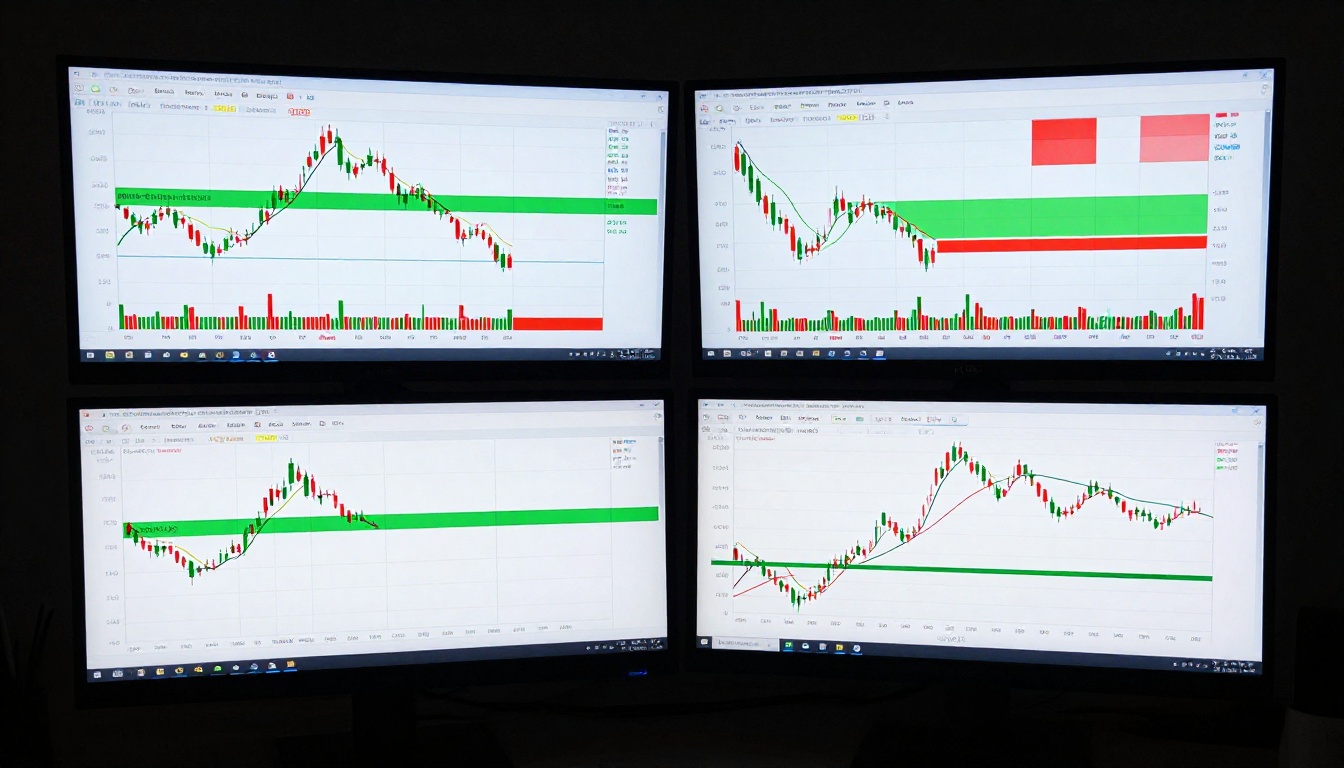

Risk-Reward Ratios: How to Set Targets That Make Your Strategy Profitable

Risk-Reward Ratios: How to Set Targets That Make Your Strategy Profitable

A risk-reward ratio compares how much you stand to lose on a trade to how much you stand to gain. It is arguably the most important number in your trading plan, because it determines whether your strategy can survive a normal losing streak.

Trading the News: How Economic Events Move Forex and What to Do About It

Trading the News: How Economic Events Move Forex and What to Do About It

Every month, a handful of economic data releases move the forex market more in five minutes than most sessions move in five days. Non-Farm Payrolls, CPI prints, and central bank rate decisions create violent spikes, whipsaws, and trend shifts that can make or break a trading account.

What Is a CFD? How Contracts for Difference Work and When to Use Them

What Is a CFD? How Contracts for Difference Work and When to Use Them

A CFD is a contract between you and your broker to exchange the difference in an asset's price from when you open the trade to when you close it. You never own the underlying asset. That single distinction shapes everything about how CFDs work, what they cost, and why regulators treat them differently from traditional investing.