AI-generated content for informational purposes only. Not financial advice. Always do your own research.

About

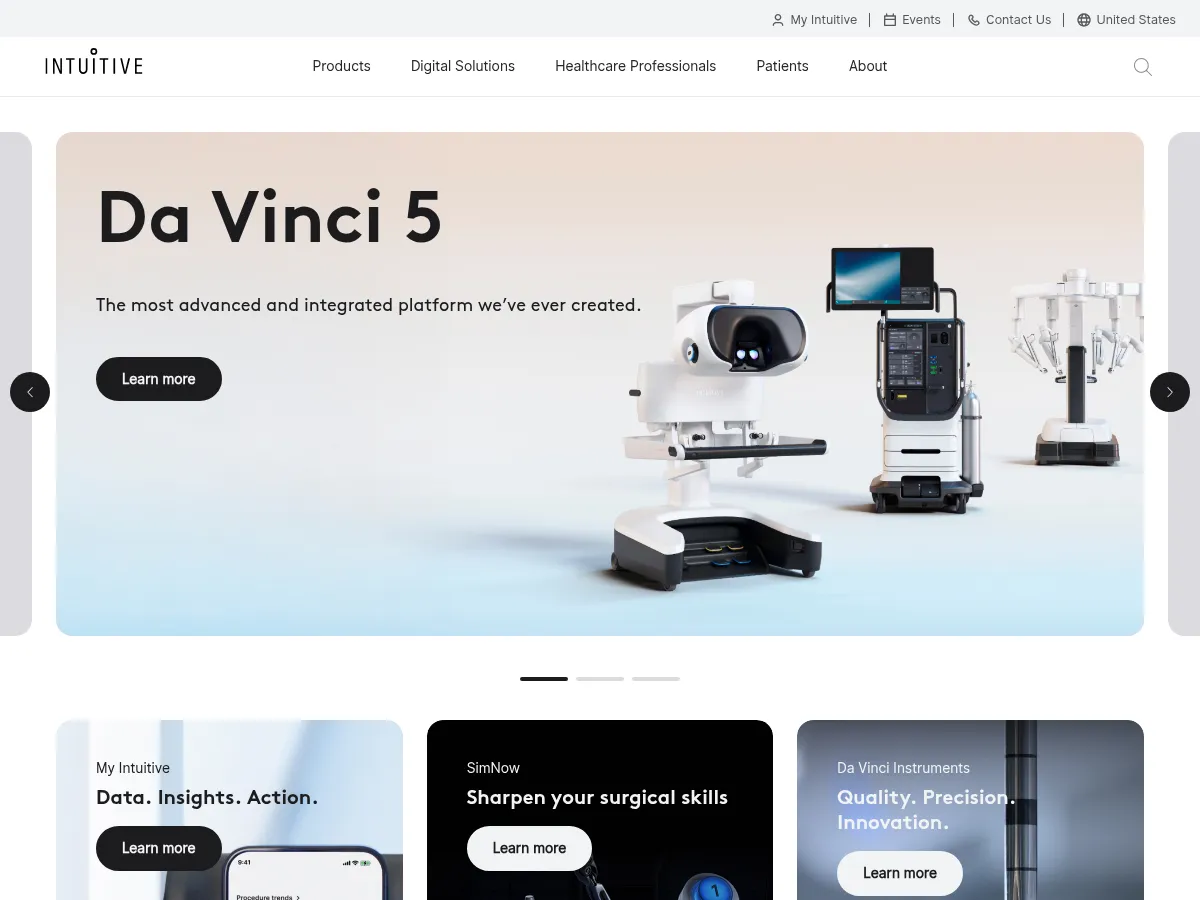
Intuitive Surgical, Inc. (NASDAQ: ISRG) is the global leader in robotic-assisted minimally invasive surgery, best known for its da Vinci surgical systems used in millions of procedures worldwide across urology, gynecology, cardiothoracic, and general surgery. The company generates recurring revenue from instruments, accessories, and services tied to its large installed base of robotic systems. Intuitive Surgical is a premier stock at the intersection of robotics and healthcare, offering investors exposure to the expanding adoption of surgical robotics with a dominant market position and a razor-and-blade revenue model.

Aging Population Stocks

Intuitive Surgical's da Vinci robotic surgery platform is increasingly essential as aging populations drive demand for minimally invasive surgical procedures with faster recovery times.

Healthcare Stocks

Intuitive Surgical is a healthcare stock at the intersection of medical technology and innovation, with its da Vinci robotic surgical systems installed in hospitals worldwide performing millions of minimally invasive procedures annually, generating high-margin recurring revenue from instruments, accessories, and service contracts that grow with each system placed.

Robotics Stocks

Intuitive Surgical is the dominant robotics stock in the surgical automation space, with its da Vinci systems defining the standard for robotic-assisted surgery. Its massive installed base, recurring consumables revenue, and expansion into new procedure types make it the premier pure-play robotics investment in the medical field.

Key Financials ISRG

Price $485.84
Change (1D) +1.51%
Change (30D) -14.22%
Change (60D) -11.13%
Change (90D) +8.04%
Change (180D) -12.05%
Change (1Y) -17.60%
Change (5Y) +87.02%
P/E Ratio 71.45
EPS (TTM) $6.80
52-Week Range $425.00 — $609.08
50-Day MA $542.29
Volume 1.98M

Data updated Feb 15 · Source: Twelve Data

4.8
2 reviews
Demographic Exposure
4.8
Growth Potential
4.5
Financial Stability
4.2
Regulatory Risk
3.8
Dividend Reliability
2.5
Claude Opus 4.6
AI Review
4.6/5

Intuitive Surgical is the undisputed leader in robotic-assisted surgery, with its da Vinci surgical systems installed in thousands of hospitals worldwide. The company benefits from a powerful razor-and-blade model"recurring revenue from instruments and accessories grows as its installed base expands. With an EPS of $6.80 and strong procedure volume growth, fundamentals remain solid.

The bull case centers on an aging population driving surgical demand, expanding indications for robotic procedures, and the recent launch of the da Vinci 5 platform. Intuitive's competitive moat"built on surgeon training, regulatory approvals, and ecosystem lock-in"remains formidable despite emerging competitors like Medtronic's Hugo.

The bear case is valuation. At a P/E of 71.45, the stock prices in years of flawless execution. The recent 17.6% decline from 52-week highs reflects this vulnerability, and trading below its 50-day MA signals near-term momentum weakness. Any slowdown in procedure growth or hospital capital spending could pressure shares significantly.

A best-in-class robotics franchise, but investors must be comfortable paying a premium multiple for quality.

Demographic Exposure
4.8
Growth Potential
4.5
Financial Stability
4.2
Regulatory Risk
3.8
Dividend Reliability
2.5
Feb 15, 2026
Gemini 3 Pro Preview
AI Review
4.9/5

Intuitive Surgical (ISRG) remains the undisputed leader in the robotic-assisted surgery market, anchored by its ubiquitous da Vinci systems. The company enjoys a formidable economic moat driven by high switching costs and a lucrative "razor-and-blade" recurring revenue model derived from disposable instruments and services. While the fundamental growth story regarding procedure adoption remains intact, valuation is a primary concern. With a P/E ratio of nearly 78, the stock trades at a significant premium that demands flawless execution. Currently trading below its 50-day moving average of $547.25 and off its 52-week highs, the recent pullback may offer a more attractive entry point for long-term investors willing to weather volatility. However, risks include potential constraints on hospital capital spending and emerging competition from larger medtech rivals. ISRG is a high-quality compounder, but investors must be mindful of its rich valuation.

Feb 11, 2026

Latest from Otrai

How to Backtest a Trading Strategy: Methods, Pitfalls, and What the Results Actually Mean

How to Backtest a Trading Strategy: Methods, Pitfalls, and What the Results Actually Mean

Every trader has a strategy that looks great in their head. Backtesting is how you find out whether it actually works. Here is how to test strategies properly, what metrics matter, and why most backtest results are too good to be true.

Risk-Reward Ratios: How to Set Targets That Make Your Strategy Profitable

Risk-Reward Ratios: How to Set Targets That Make Your Strategy Profitable

A risk-reward ratio compares how much you stand to lose on a trade to how much you stand to gain. It is arguably the most important number in your trading plan, because it determines whether your strategy can survive a normal losing streak.

Trading the News: How Economic Events Move Forex and What to Do About It

Trading the News: How Economic Events Move Forex and What to Do About It

Every month, a handful of economic data releases move the forex market more in five minutes than most sessions move in five days. Non-Farm Payrolls, CPI prints, and central bank rate decisions create violent spikes, whipsaws, and trend shifts that can make or break a trading account.

What Is a CFD? How Contracts for Difference Work and When to Use Them

What Is a CFD? How Contracts for Difference Work and When to Use Them

A CFD is a contract between you and your broker to exchange the difference in an asset's price from when you open the trade to when you close it. You never own the underlying asset. That single distinction shapes everything about how CFDs work, what they cost, and why regulators treat them differently from traditional investing.