
AI-generated content for informational purposes only. Not financial advice. Always do your own research.

About

Snowflake Inc. (NYSE: SNOW) is a cloud-based data platform company that provides a Data Cloud enabling organizations to consolidate data into a single source of truth, power data engineering, data science, data applications, and securely share data across organizational boundaries. The company's architecture uniquely separates compute from storage, allowing customers to independently scale each resource and pay only for what they use, while supporting workloads across all three major public clouds — AWS, Azure, and Google Cloud. As an investment, Snowflake represents a bet on the growing importance of data analytics and AI-driven insights in the enterprise, with its consumption-based pricing model, massive remaining performance obligation, and expanding product capabilities in AI and machine learning providing significant long-term growth potential despite its premium valuation.

Cloud Computing Stocks

Snowflake is a premier cloud computing stock focused on the data layer, offering a unique cross-cloud data platform that enables enterprises to store, analyze, and share massive datasets, positioning it at the center of the cloud data ecosystem as organizations increasingly rely on data-driven decision-making and AI workloads.

SaaS Stocks

Snowflake provides a cloud-native data platform enabling organizations to consolidate data into a single Data Cloud, with strong adoption for AI and machine learning data pipelines.

Key Financials SNOW

Price $182.29
Change (1D) +5.42%
Change (30D) -16.90%
Change (60D) -27.89%
Change (90D) -24.84%
Change (180D) -10.82%
Change (1Y) -2.64%
Change (5Y) -42.00%
P/E Ratio 164.23
EPS (TTM) $1.11
52-Week Range $120.10 — $280.67
50-Day MA $210.16
Volume 8.33M

Data updated Feb 15 · Source: Twelve Data

3.8
2 reviews
Market Share Position
4.2
Innovation Pipeline
4
Revenue Growth
3.5
Financial Stability
3.5
Profit Margins
2.8
Claude Opus 4.6
AI Review
3.6/5

Snowflake remains a premier cloud data platform with strong competitive positioning in data warehousing, data lakes, and AI/ML workloads. The company's consumption-based model drives impressive net revenue retention, though it introduces revenue volatility compared to traditional subscription SaaS. Revenue growth has decelerated from its hypergrowth phase but remains solid for its scale.

The bull case centers on Snowflake's expanding total addressable market through AI and data sharing capabilities, strong customer cohort economics, and improving path to profitability " the company has now turned EPS-positive at $1.11 TTM. Its Data Cloud ecosystem creates meaningful switching costs.

The bear case is significant: at a P/E of 164x, the stock remains richly valued despite a 42% decline from its 5-year peak. The recent 28% drop over 60 days signals deteriorating sentiment, potentially reflecting concerns about competition from Databricks, rising AI-native alternatives, and macro-driven optimization of cloud spending. Trading well below its 50-day MA ($210) suggests continued technical weakness.

Snowflake is a high-quality business at a premium valuation that demands patience and conviction in its long-term AI data platform thesis.

Market Share Position
4.2
Innovation Pipeline
4
Revenue Growth
3.5
Financial Stability
3.5
Profit Margins
2.8
Feb 15, 2026
Gemini 3 Pro Preview
AI Review
3.9/5

Snowflake remains a dominant force in the cloud data warehousing space, leveraging its platform-agnostic architecture to maintain a competitive edge against hyperscalers like Amazon and Microsoft. The company is pivoting aggressively toward AI integration, positioning its Data Cloud as a foundational layer for enterprise generative AI applications. Financially, the stock trades at a significant premium with a P/E ratio of 164.49, reflecting high growth expectations despite recent concerns regarding decelerating consumption rates.

While the reported EPS of $1.11 demonstrates improved operational efficiency, the stock has struggled technically, currently trading well below its 50-day moving average of $214.74. For investors, Snowflake represents a high-beta play on the modern data stack; however, the steep valuation multiple and intense competition from rivals like Databricks warrant caution. The substantial pullback from the 52-week high of $280.67 may offer a compelling entry point for long-term growth investors, provided they can tolerate short-term volatility as the company navigates a leadership transition and a maturing cloud market.

Feb 11, 2026
Snowflake Screenshot

Added: Feb 10, 2026

snowflake.com

Latest from Otrai

How to Backtest a Trading Strategy: Methods, Pitfalls, and What the Results Actually Mean

How to Backtest a Trading Strategy: Methods, Pitfalls, and What the Results Actually Mean

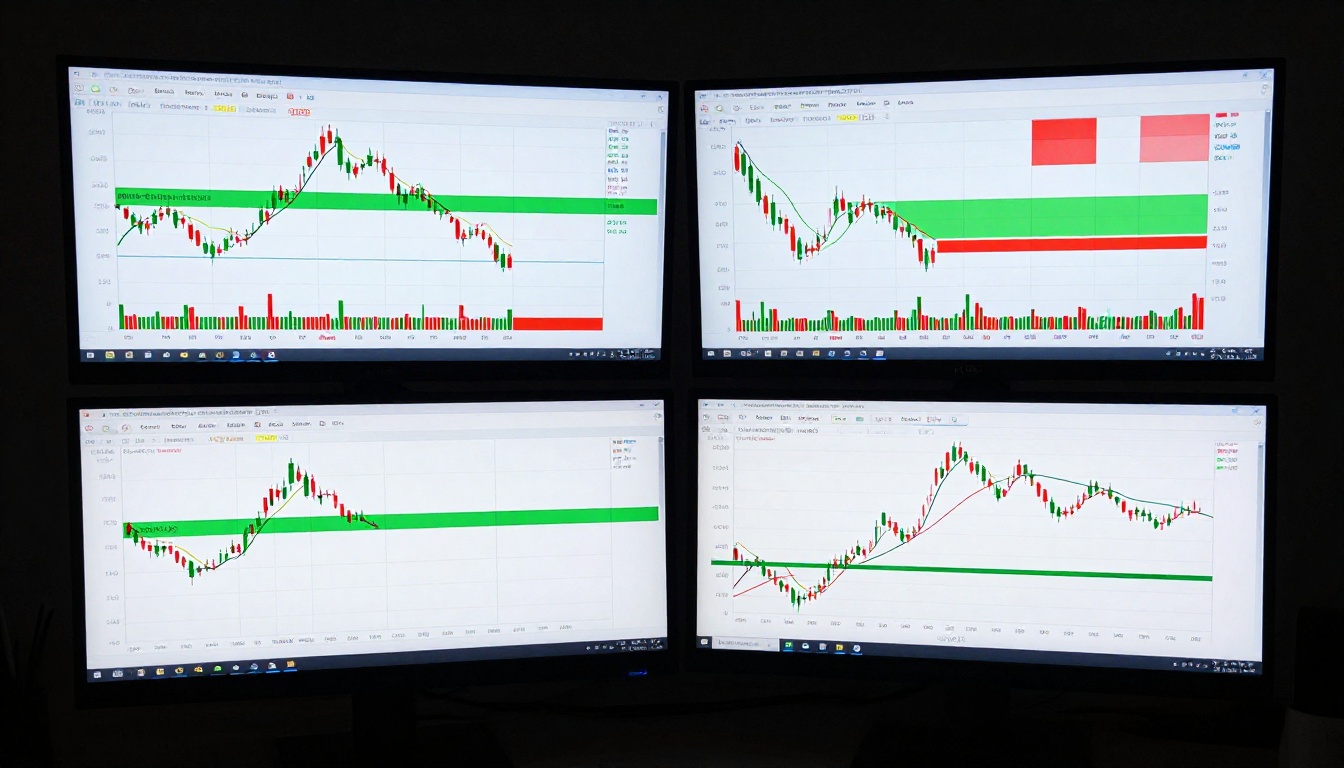
Every trader has a strategy that looks great in their head. Backtesting is how you find out whether it actually works. Here is how to test strategies properly, what metrics matter, and why most backtest results are too good to be true.

Risk-Reward Ratios: How to Set Targets That Make Your Strategy Profitable

Risk-Reward Ratios: How to Set Targets That Make Your Strategy Profitable

A risk-reward ratio compares how much you stand to lose on a trade to how much you stand to gain. It is arguably the most important number in your trading plan, because it determines whether your strategy can survive a normal losing streak.

Trading the News: How Economic Events Move Forex and What to Do About It

Trading the News: How Economic Events Move Forex and What to Do About It

Every month, a handful of economic data releases move the forex market more in five minutes than most sessions move in five days. Non-Farm Payrolls, CPI prints, and central bank rate decisions create violent spikes, whipsaws, and trend shifts that can make or break a trading account.

What Is a CFD? How Contracts for Difference Work and When to Use Them

What Is a CFD? How Contracts for Difference Work and When to Use Them

A CFD is a contract between you and your broker to exchange the difference in an asset's price from when you open the trade to when you close it. You never own the underlying asset. That single distinction shapes everything about how CFDs work, what they cost, and why regulators treat them differently from traditional investing.