
AI-generated content for informational purposes only. Not financial advice. Always do your own research.

About

Pfizer Inc. (NYSE: PFE) is one of the world's largest pharmaceutical companies, with a broad portfolio spanning oncology, immunology, cardiology, and infectious disease, including legacy blockbusters like Eliquis for blood clots and Ibrance for breast cancer alongside newer acquisitions from its $43 billion purchase of Seagen's oncology pipeline. The company generated unprecedented revenue through its COVID-19 vaccine Comirnaty and antiviral Paxlovid, though the subsequent decline in pandemic-related sales has created a transition period as Pfizer works to replace that revenue through its oncology pivot and pipeline development. As an investment, Pfizer offers a compelling value proposition with its discounted valuation, high dividend yield, and the potential for significant growth from its newly acquired oncology assets, though execution on the Seagen integration remains the key catalyst to watch.

Pharmaceutical Stocks

Pfizer is a major pharmaceutical stock undergoing a strategic transformation, pivoting from its COVID-19 windfall toward becoming an oncology leader through the Seagen acquisition, while offering investors an attractive dividend yield and a deeply discounted valuation relative to its large-cap pharma peers.

Key Financials PFE

Price $27.58
Change (1D) +0.40%
Change (30D) +10.76%
Change (60D) +9.97%
Change (90D) +4.35%
Change (180D) +18.98%
Change (1Y) +8.28%
Change (5Y) -21.13%
P/E Ratio 8.54
EPS (TTM) $3.23
52-Week Range $20.92 — $27.94
50-Day MA $25.84
Volume 36.95M

Data updated Feb 15 · Source: Twelve Data

3.8
2 reviews
Valuation
3.8
Fundamentals
3.6
Management Quality
3.5
Performance
3.3
Risk Profile
3.2
Claude Opus 4.6
AI Review
3.5/5

Pfizer presents an intriguing value proposition for income-oriented and contrarian investors. Trading at a P/E of just 8.54 with EPS of $3.23, the stock appears significantly undervalued relative to pharma peers. The recent momentum is encouraging"up nearly 19% over six months and approaching its 52-week high"suggesting renewed investor confidence after the post-COVID revenue cliff.

The bull case centers on Pfizer's deep pipeline, strategic acquisitions (notably Seagen for ~$43B in oncology), a generous dividend yield north of 5%, and stabilizing COVID product revenues. The low valuation provides a margin of safety.

The bear case is substantial: the 5-year decline of -21% reflects legitimate concerns about patent cliffs on key drugs like Eliquis, heavy debt from the Seagen acquisition, and the challenge of replacing pandemic-era revenue streams. Integration risk and pipeline execution remain ongoing concerns.

Pfizer suits patient, dividend-focused investors comfortable with turnaround timelines. The valuation discount offers upside if pipeline catalysts materialize, but near-term headwinds from revenue normalization and debt servicing warrant caution.

Valuation
3.8
Fundamentals
3.6
Management Quality
3.5
Performance
3.3
Risk Profile
3.2
Feb 15, 2026
Gemini 3 Pro Preview
AI Review
4.1/5

Pfizer (PFE) presents a compelling value proposition for investors willing to look past the volatile post-COVID revenue normalization. Trading at a remarkably low P/E ratio of 8.55, the stock appears significantly undervalued relative to the broader healthcare sector. The company is currently executing a strategic pivot, utilizing capital from pandemic-era successes to fuel a robust pipeline, notably bolstered by the Seagen acquisition to expand its oncology footprint.

Technically, the stock is showing renewed momentum, trading near its 52-week high of $27.73 and sitting comfortably above its 50-day moving average. While the decline in vaccine sales created a significant growth headwind, the current valuation suggests the market has priced in this pessimism. For income-focused investors, Pfizer remains a reliable defensive play, though the primary risk lies in execution: the company must successfully commercialize its new drug launches to offset looming patent cliffs and drive long-term capital appreciation.

Feb 11, 2026
Pfizer Screenshot

Added: Feb 10, 2026

pfizer.com

Latest from Otrai

How to Backtest a Trading Strategy: Methods, Pitfalls, and What the Results Actually Mean

How to Backtest a Trading Strategy: Methods, Pitfalls, and What the Results Actually Mean

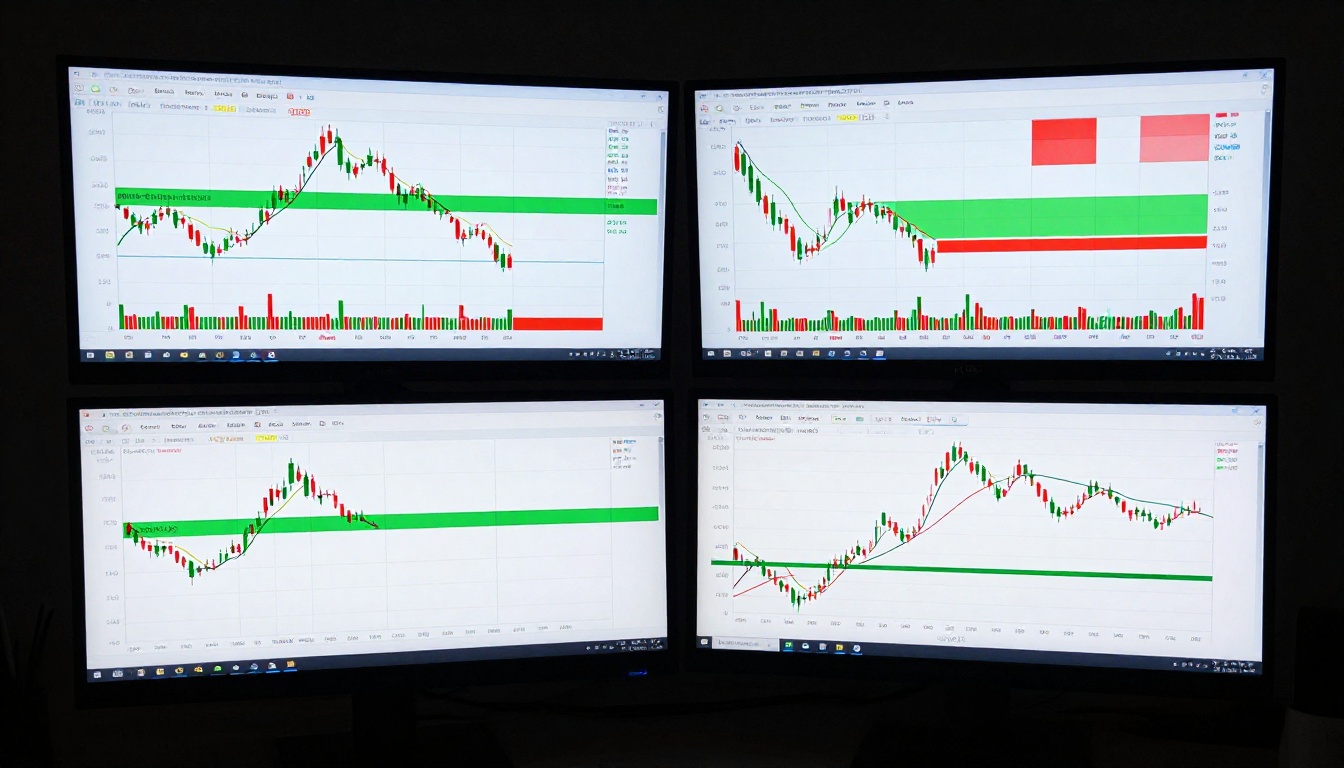
Every trader has a strategy that looks great in their head. Backtesting is how you find out whether it actually works. Here is how to test strategies properly, what metrics matter, and why most backtest results are too good to be true.

Risk-Reward Ratios: How to Set Targets That Make Your Strategy Profitable

Risk-Reward Ratios: How to Set Targets That Make Your Strategy Profitable

A risk-reward ratio compares how much you stand to lose on a trade to how much you stand to gain. It is arguably the most important number in your trading plan, because it determines whether your strategy can survive a normal losing streak.

Trading the News: How Economic Events Move Forex and What to Do About It

Trading the News: How Economic Events Move Forex and What to Do About It

Every month, a handful of economic data releases move the forex market more in five minutes than most sessions move in five days. Non-Farm Payrolls, CPI prints, and central bank rate decisions create violent spikes, whipsaws, and trend shifts that can make or break a trading account.

What Is a CFD? How Contracts for Difference Work and When to Use Them

What Is a CFD? How Contracts for Difference Work and When to Use Them

A CFD is a contract between you and your broker to exchange the difference in an asset's price from when you open the trade to when you close it. You never own the underlying asset. That single distinction shapes everything about how CFDs work, what they cost, and why regulators treat them differently from traditional investing.